


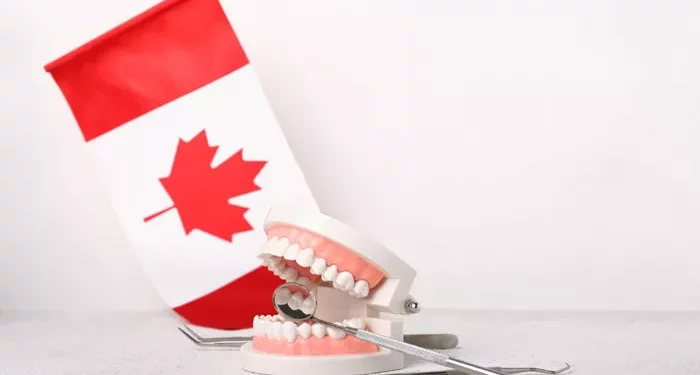
As the Canadian Federal Dental Care Program (CDCP) continues to receive complaints from applicants about high rejection rates and paperwork delays, Health Canada said it is taking proactive steps to shorten approval times and provide more support to dental service providers.
In response to media inquiries, Lindy Vanamburg, director of the Oral Health Division of Health Canada, revealed that from November 1, 2024 to June 20, 2025, 49% of pre-authorization applications for complex dental treatments were rejected.
According to data from the Canadian Broadcasting Corporation (CBC) on July 13, this proportion was as high as 52% during a certain period of time.
The reasons for rejection are complex and are mostly related to incomplete information
The Ministry of Health clarified that the rejection rate is based on pre-authorization applications, not all submitted claims. Pre-authorization applications currently account for only 1% of the total number of claims submitted by the CDCP. The high rejection rate is mostly due to incomplete submission of materials, non-compliance with the program scope, and repeated applications.
For example, some treatments such as crown applications often lack key information, while partial dentures usually come with more complete information. Some applications are not covered by the plan and are therefore systematically rejected.
Processing time has improved significantly, but challenges remain
As of the week of July 11, 2024, more than 80% of pre-authorization applications can be processed within 7 days. Despite the backlog caused by poor submission quality and slow mailing of paper materials in the early stage, Health Canada said that Sun Life and its cooperation are continuously optimizing the processing process and have made significant improvements.
The Ministry of Health has not set a specific time benchmark, but said it will continue to promote process automation and improve efficiency.
Expand automatic coverage? Not considered for the time being
Currently, CDCP has included standard root canal treatment of anterior teeth, bicuspids and molars in the automatic coverage without pre-authorization. Crown treatment still requires pre-authorization and must meet the standards specified in the plan.
The Ministry of Health emphasized that the plan will continue to be evaluated and adjusted based on expert advice, data analysis and policy experience in various regions to better serve the public.
The most common missing documents and support tools
To reduce refusals due to missing documents, the Ministry of Health points out that common missing documents include X-rays, periodontal records and treatment plan details. To this end, auxiliary checklists, teaching videos and guides have been provided to assist dentists in submitting applications correctly.
Continuous improvement and streamlining the process in collaboration with Sun Life
Since the implementation of the pre-authorization system, the Ministry of Health of Canada has continued to work with Sun Life to optimize the approval process, including adjusting the benefit statement, increasing staff, conducting educational seminars and strengthening communication with medical service providers to reduce repeated applications due to incomplete information.
No formal complaints from provinces, patient data is not tracked
To date, the Ministry of Health has not received any formal complaints from provincial governments regarding denial rates or delays in patient care. At the same time, the Ministry of Health of Canada does not track the number of patients who give up treatment due to denied claims, so there is no specific data to share.
The participation rate of service providers is high and the withdrawal rate is extremely low
As of May 2025, more than 25,600 medical service providers have joined CDCP, and only 17 have chosen to withdraw and have not submitted any claims since then, indicating that professionals are generally accepting of the plan.
The program expenditure is within a controllable range
Although the federal government has allocated up to 13 billion Canadian dollars to CDCP (including 4.4 billion in ongoing investment), the Ministry of Health stated that the current budget is in line with expectations, there is no risk of overspending, and the financial sustainability of the plan is trustworthy.