


For modern people, teeth are a key tool for chewing food. However, a new study has overturned this common sense: the role of teeth in their initial evolution was not for chewing, but for sensing the external environment.
A research team led by paleontologist Yara Halliday of the University of Chicago discovered this amazing clue when analyzing the fish fossil Eriptychius from the Middle Ordovician period 460 million years ago.
Using high-energy CT scans, researchers revealed that these primitive “teeth” are actually sensors growing on the skin, not biting organs in the mouth.
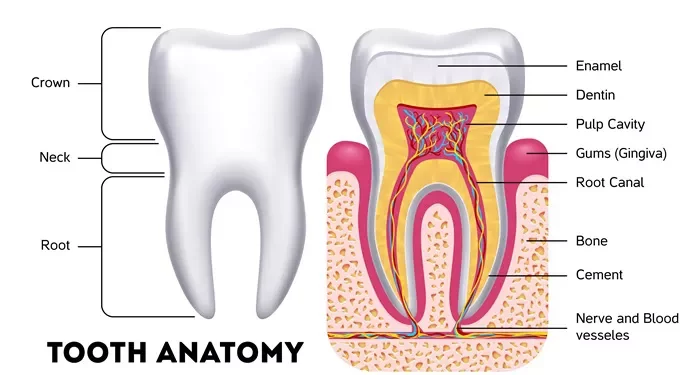
These tooth-like protrusions on the skin are called “dentine units”, which contain a pulp cavity and a network of small tubes connected to the outside, which are very suitable for sensing pressure and temperature.
The study pointed out that this structure is similar to the dentin still preserved in human teeth, which is the core material for sensing pain. The earliest function of these “teeth” may be more like a highly sensitive tactile instrument.
This discovery not only changes our understanding of the origin of teeth, but also shakes the long-accepted concept of “the first fish”.
The tiny Anatolepis, once thought to be the earliest vertebrate, has lost its title as the earliest fish after being confirmed to be more similar to arthropods by new scanning technology.
The study also revealed that early vertebrates did not abandon their senses when they evolved a hard shell, but instead achieved a balance of functions by embedding sensory nerves into mineralized structures such as armor.
This evolutionary strategy is very similar to the sensory systems of modern crabs and scorpions, which use sensors distributed on their shells to track water flow and vibrations.
When early fish began to actively hunt, these primitive skin tooth-like structures gradually migrated to the oral area and evolved into modern teeth.
CT images show that this process did not introduce a completely new structure, but rather relocated existing tissues to the lips and ridges inside the mouth.
This process also explains why modern people are still so sensitive to cold stimuli. Sensory cells in the dentin still express temperature receptors TRP channels – this is the root cause of the tooth pain caused by ice cream.
About 30% of adults suffer from dentin hypersensitivity, which is essentially caused by the failure of these ancient sensory tubules to be sealed.
The study also provides inspiration for modern dental treatment: using bioactive glass or sealants to seal the dentinal tubules is more effective than simply using anesthetic gel because it directly cuts off the “ancient sensory circuit.”
In addition, this discovery also corrects a major error in the evolution of teeth. In the past, Anatolepis was mistakenly believed to have dentin, which led scientists to mistakenly advance the origin of teeth by nearly 40 million years.
With its classification as an arthropod, the tooth structure that truly belongs to vertebrates was confirmed to have begun in the Middle Ordovician.
This correction not only reshaped the evolutionary timeline of teeth, but also directed scientists to turn their attention to new fossil layers to find the real “first tooth.” This means that teeth are not new structures “born” from deep in the mouth, but a “transfer” of the skin sensory system.
These tooth-like sensory structures are still retained on the skin of modern sharks and rays, and their genetic information has become a key source for tooth regeneration research.
By studying these genes that retain ancient functions, scientists may be able to develop regenerative materials to replace tooth enamel.
Finally, this study highlights that nature often reuses the same biological modules to solve different problems.
From sensory armor, lateral line systems to mammalian whiskers, they all reflect the balance between defense and perception in nature.