


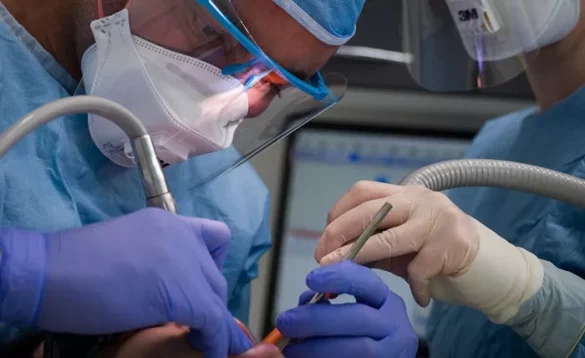
A rising number of people in England are turning to private dental services as NHS appointments become increasingly scarce. According to Healthwatch England, the proportion of individuals using private dentistry has climbed from 22% in 2023 to 32% by late 2025.
The shift is especially pronounced among low-income households. The percentage of financially struggling individuals seeking private care nearly doubled in recent years, rising from 14% to 27%. With NHS dental slots limited, many patients are forced to pay out of pocket for essential treatments such as fillings and extractions.
Private dental care can be expensive. A basic check-up costs around £64 compared to £27.40 on the NHS. Vulnerable groups, including low-income families, pregnant women, and new mothers, are often the hardest hit, as many cannot access free NHS dental services.
Rebecca Curtayne, acting head of policy at Healthwatch England, warned that the system is failing those in greatest need. “For some, there is no NHS dental care left, only private options,” she said.
The rise in private care has drawn concern from the Patients Association. Chief Executive Rachel Power described it as a systemic failure, emphasizing that lack of affordable dental care can lead to physical pain, mental distress, and long-term health consequences.
In response, the Competition and Markets Authority (CMA) has opened an investigation into the £8.4bn private dental sector to ensure fair treatment for consumers. The inquiry will focus on pricing, treatment availability, and accessibility.
While the CMA estimates that only one in five people in the UK use private care, Healthwatch’s figures indicate a higher reliance in England at 32%.
Dentists attribute the trend to underfunding of NHS services. The British Dental Association (BDA) says low NHS reimbursements force many practitioners to offer private services to remain financially viable. BDA chair Eddie Crouch stated, “The government must address the funding gap.”
A Department of Health and Social Care spokesperson acknowledged the challenges but noted ongoing efforts to improve NHS dental access, including contract reforms and preventive initiatives, which delivered 1.8 million more treatments in the first seven months of 2025.
Critics caution that without significant reform, England risks a permanent two-tier dental system, where private care becomes the only practical option for many patients.