


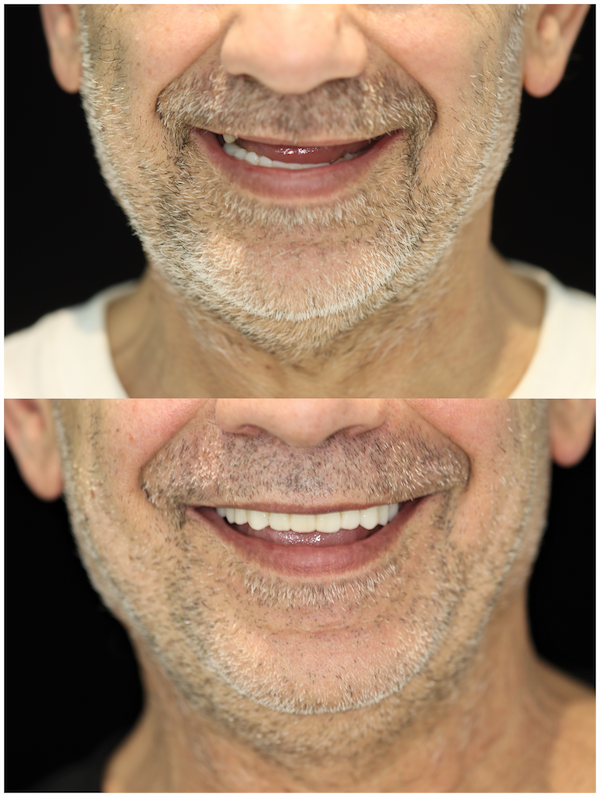
Patient Background
Many patients begin their dental journey with a trusted recommendation. Angelo Tsetinis, a 68-year-old male patient from Australia, first heard about Huangshan International Dental Hospital from a close friend. Then, he researched the clinic online and decided to travel for care. His case shows why more international patients now consider dental implants in China when they need complex oral rehabilitation.
Angelo had missed many upper teeth for several years. In addition, he had decayed teeth, loose teeth, and infection around some remaining teeth. These problems made chewing difficult. Also, they affected his confidence in daily life.
For him, the goal was not only a better smile. More importantly, he wanted to eat comfortably again and feel like himself. Therefore, the dental team needed to rebuild both function and appearance.
His case involved upper jaw tooth loss, periodontal disease, and chronic infection. Because of this, the treatment required careful planning. The team explained different options and helped him choose a plan that matched his needs, health condition, time, and expectations.
Dental Problems Analysis
Tooth loss rarely affects only one part of life. It can change chewing, speech, facial support, and social confidence. In Angelo’s case, the upper jaw had multiple missing teeth for years. As a result, the remaining teeth carried more pressure than they should.
He also had several oral problems at the same time:
- Multiple missing teeth in the upper arch.
- Several decayed teeth.
- Loose teeth caused by severe periodontal disease.
- Chronic apical periodontitis in teeth 65 and 35.
- Reduced chewing comfort.
- Infection risk around diseased teeth.
These problems often connect with each other. For example, gum disease can make teeth loose. Loose teeth can reduce chewing strength. Poor chewing can limit food choices. Meanwhile, chronic infection can damage the surrounding bone.
Therefore, a simple filling or crown could not solve the whole problem. Angelo needed a wider plan for full upper arch reconstruction. This is why the doctors considered implant-supported restoration.
For many patients searching for full mouth restoration in China, the key concern is not only appearance. They also want stable biting, better comfort, and long-term oral health. Angelo’s condition matched this need because his case required both surgical and prosthetic planning.
Diagnosis and Clinical Concerns
The diagnosis included multiple missing upper teeth, chronic root infection, and severe periodontal disease. These terms may sound complex. However, the meaning is clear. The teeth and supporting tissues could no longer provide stable function.
In implant dentistry, doctors must review several important points before treatment:
- Is there enough bone to support implants?
- Are infected teeth still present?
- Does the patient have active gum disease?
- Can the bite remain stable after restoration?
- Can the patient maintain oral hygiene?
- Is immediate loading suitable?
For Angelo, infection control was very important. Diseased teeth can affect the success of future implants. Therefore, the treatment plan included extraction of problem teeth before implant placement.
Bone support also needed attention. When teeth have been missing for a long time, the jawbone may shrink. In some cases, bone grafting can help improve implant support. Angelo’s plan included bone grafting because the doctors wanted to strengthen the foundation for the restoration.
This type of case requires more than one dental skill. It involves implant surgery, periodontal evaluation, prosthetic design, and bite management. Therefore, a multidisciplinary approach can help reduce risk and improve the final result.
Treatment Options Discussed
Before treatment, the dental team explained three possible plans. This step helped Angelo understand the benefits, limits, and timing of each option.
The first plan was upper diseased tooth extraction, followed by upper All-on-6 immediate implant placement and immediate restoration. After bone integration, the final restoration would include a Malo bridge and full ceramic crowns from tooth positions 16 to 26.
The second plan was delayed implant restoration. In this option, the team would remove the diseased teeth first. Then, after healing, they would place upper All-on-6 implants. This plan can suit some patients. However, it takes more time.
The third plan was removable denture restoration. This could replace missing teeth at a lower cost. However, dentures may move during eating or speaking. Also, they may not provide the same chewing stability as implant-supported teeth.
After full communication, Angelo chose the first plan. He preferred a stable and efficient solution. Also, as an international patient, he valued a treatment path that could reduce repeated travel.
Therefore, the planned treatment included local anesthesia, extraction of teeth 15, 16, 23, and 25, upper All-on-6 immediate implant placement, immediate loading, and bone grafting.
Treatment Process
The treatment process started with a full oral evaluation. The dental team reviewed Angelo’s missing teeth, remaining teeth, gum condition, infection status, and bite relationship. Then, they created a plan for upper arch implant restoration.
First, the doctors removed the diseased teeth. This step helped eliminate infection sources. Also, it prepared the upper jaw for implant placement.
Next, the implant dentist placed six implants in the upper jaw. The purpose of the All-on-6 treatment is to use six implants as a strong foundation for a full arch of teeth. This can improve stability when compared with removable dentures.
Then, the team performed bone grafting where needed. Bone grafting can help support implant sites when the bone needs extra volume or reinforcement. It does not replace careful planning. However, it can improve the treatment foundation in suitable cases.
After implant placement, the team arranged immediate loading. This means Angelo could receive a fixed temporary restoration soon after surgery, if implant stability allowed it. However, temporary teeth require careful use. The patient must follow soft diet instructions and avoid heavy biting during healing.
Later, after bone integration, the final restoration would include a Malo bridge and full ceramic crowns. This stage focuses on long-term fit, comfort, appearance, and chewing function.
Before and After Result
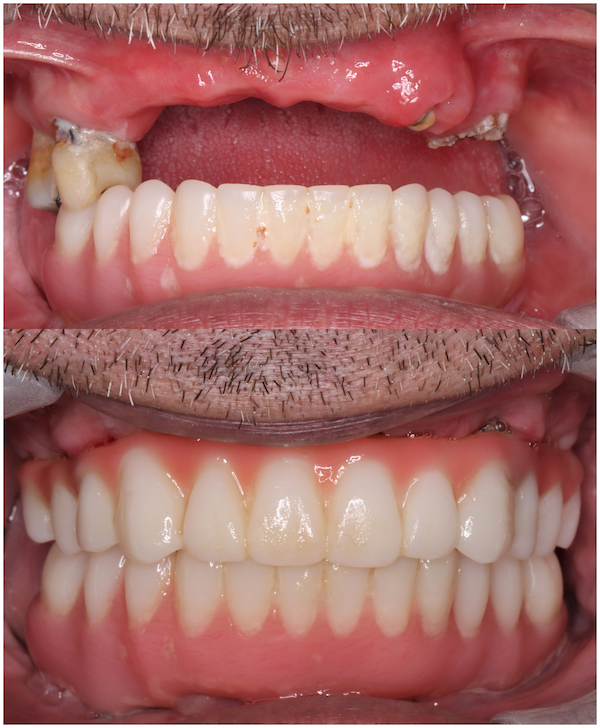
Before treatment, Angelo had many missing upper teeth. He also had loose teeth, tooth decay, and infection. These issues made chewing uncomfortable. They also affected his smile and daily confidence.
After treatment, the goal was to restore a fixed upper arch. With All-on-6 support, the restoration can feel more stable than a removable denture. Also, it can improve smile shape, facial support, and biting comfort.
The expected improvements include:
- Better chewing function.
- A more confident smile.
- Improved speech comfort.
- Less worry when eating in public.
- Better facial support.
- A more natural daily routine.
However, implant success also depends on healing and aftercare. The surgery is only one part of the journey. After that, the patient needs good hygiene, regular checkups, and proper use of the temporary restoration.
Angelo’s story is a strong example of how modern implant treatment can help older adults regain quality of life. He not only received new teeth. He also gained a more comfortable way to eat, speak, and smile.
Why Dental Implants in China Are Becoming Popular
Many international patients now search for dental implants in China because they want high-quality care at a more reasonable cost. In countries such as Australia, the United States, and parts of Europe, full arch implant treatment can be expensive. Therefore, patients often compare global options.
China has developed rapidly in advanced dental care. Many hospitals now use digital imaging, guided planning, implant systems, and in-house dental labs. As a result, patients can receive modern care while controlling treatment costs.
However, patients should not choose a clinic only because of price. A good dental decision should also include the doctor’s experience, technology, communication, hygiene standards, restoration quality, and follow-up service.
For international patients, the treatment journey should feel clear and organized. They should understand:
- The number of appointments.
- The possible need for extractions.
- The possible need for bone grafting.
- The difference between temporary and final teeth.
- The expected healing period.
- The follow-up plan after returning home.
When these details are clear, patients can make a more confident choice. This is especially important for full arch implant cases, because they involve surgery and long-term prosthetic design.
Full Mouth Restoration China: What Patients Should Know
Many people use the term full mouth restoration China when they look for a complete dental solution abroad. However, full mouth restoration does not mean the same treatment for every patient. It may include implants, crowns, veneers, bridges, gum treatment, extractions, or bite reconstruction.
In Angelo’s case, the main treatment focused on the upper jaw. Still, the principles are similar. The dentist must look at the whole mouth, not only one tooth. This helps create a balanced bite and a more stable result.
A full restoration plan usually considers:
- Missing teeth.
- Tooth decay.
- Gum disease.
- Bone loss.
- Bite force.
- Jaw relationship.
- Smile line.
- Tooth color and shape.
- Long-term maintenance.
Therefore, patients should expect a detailed consultation before treatment. A quick plan may not be enough for complex cases. The dentist needs to understand both function and aesthetics.
Also, patients should know that final results take time. Immediate teeth can help during healing, but final ceramic restorations usually come later. This staged approach allows the implants to integrate with the bone before the final bridge or crowns.
For patients with severe tooth loss, full mouth restoration can be life-changing. It can improve comfort, confidence, and nutrition. However, it must be planned with care.
Why Choose Huangshan International Dental Hospital
Huangshan International Dental Hospital offers several advantages that match Angelo’s case. Among them, two are especially relevant: international-level dental expertise and an integrated clinic plus in-house lab model.
First, the hospital has a strong dental team with experience in complex implant cases. The team includes specialists trained at respected institutions, including Nanjing Stomatological Hospital. Also, implant dentists follow international clinical standards comparable to those in Europe and the United States. This matters because full arch implant treatment requires accuracy, experience, and careful risk control.
Second, the hospital operates its own dental laboratory. Dentists and technicians can work together directly. Therefore, restorations can be designed with better communication and faster adjustment. This can improve fit, comfort, and aesthetic outcomes.
This model benefits international patients because time matters during dental travel. When the clinic and lab work closely, the treatment process can become more efficient. Also, patients can receive faster feedback if the temporary or final restoration needs adjustment.
For Angelo, this coordination helped support a treatment plan that included extraction, implant placement, bone grafting, immediate loading, and later final restoration.
Dental Treatment and Travel
For many international patients, dental treatment and travel are connected. They want to solve dental problems while also making the journey organized and less stressful. Huangshan offers a unique advantage because patients can combine treatment with a relaxing travel experience.
Huangshan is known for its mountain views, ancient villages, and traditional Chinese culture. Patients may visit famous places such as Huangshan Mountain, Hongcun, and Xidi when their treatment schedule allows. However, travel plans should always follow medical advice.
Dental travel requires good planning. Patients should prepare before arrival and leave enough time for early recovery. This is especially important after implant surgery.
Helpful preparation steps include:
- Send dental records before travel.
- Share medical history clearly.
- Ask about treatment time.
- Confirm hotel and transportation.
- Prepare soft food options.
- Follow post-surgery activity limits.
- Keep contact information ready.
After surgery, patients should avoid intense travel activities. Rest supports healing. Therefore, sightseeing should remain light and flexible.
When planned well, dental tourism can reduce stress. It can also turn a medical trip into a more comfortable experience.
FAQ
Are dental implants in China safe?
Yes, they can be safe when patients choose a qualified hospital with experienced implant dentists, modern technology, strict hygiene standards, and clear treatment planning. Patients should review the clinic carefully before traveling.
How much do dental implants in China cost?
Costs vary by case. The price depends on implant number, bone grafting, extractions, temporary teeth, final restorations, and material choices. Many patients find China more affordable than Australia, Europe, or the United States.
What is All-on-6 dental implant treatment?
All-on-6 uses six implants to support a full arch of teeth. It can provide strong stability for patients who have lost most or all teeth in one jaw.
Can I get teeth in one day?
Some patients can receive immediate temporary teeth after implant placement. However, the dentist must check bone quality, implant stability, infection control, and bite force first.
Is full mouth restoration painful?
Dentists usually use local anesthesia during treatment. Patients may feel pressure, but they should not feel sharp pain. After surgery, swelling and soreness can happen for a few days.
How long should I stay in China for dental implants?
The stay depends on the treatment plan. Some patients need only a short stay for surgery and temporary restoration. However, final restorations often require a later visit after bone integration.
How do I choose the best dental clinic in China?
Look for implant experience, modern diagnostic tools, clear communication, transparent pricing, international patient support, and strong aftercare. Also, ask for a personalized treatment plan.
Can older adults receive dental implants?
Yes, many older adults can receive implants. Age alone does not decide eligibility. Bone condition, general health, gum health, and medical history matter more.
Conclusion
Angelo’s journey shows how the right dental plan can restore more than teeth. It can restore comfort, confidence, and daily quality of life. After hearing about Huangshan International Dental Hospital from a close friend, he researched the clinic online and traveled from Australia for treatment.
His case included upper jaw tooth loss, decayed teeth, loose teeth, chronic infection, and severe periodontal disease. After careful diagnosis, the team discussed several options with him. He chose upper All-on-6 immediate implant placement with extractions, immediate loading, and bone grafting.
For patients considering dental implants in China, Angelo’s case offers a helpful example. A successful journey depends on careful planning, experienced doctors, clear communication, and proper aftercare. Also, for patients interested in full mouth restoration in China, the best dental clinic in China, or dental treatment and travel, Huangshan International Dental Hospital provides a strong combination of clinical care, efficient restoration support, and a comfortable international patient experience.
Every restored smile reminds us why this work matters. If you are considering dental treatment abroad, our team is here to answer your questions and help you explore a plan that fits your needs.