


Understanding Bone Grafts Before Dentures
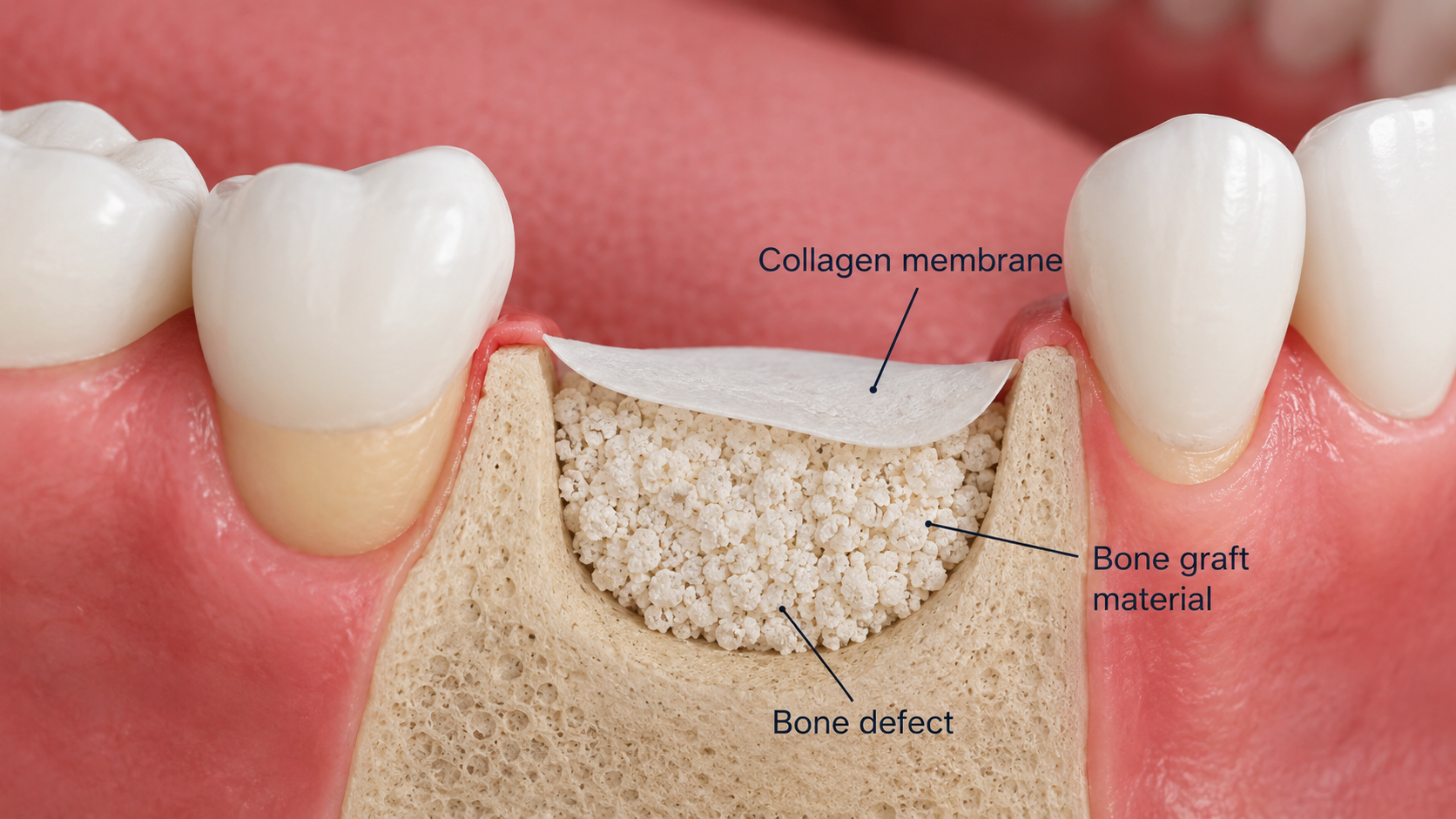
Bone grafts can sound scary at first. However, the idea is simple. A dental bone graft helps rebuild a missing or weak jawbone. It gives the mouth better support when the bone has shrunk after tooth loss, gum disease, infection, or trauma.
Many patients ask one clear question: “Do I need bone grafts if I only want dentures?” In many cases, the answer is no. Traditional removable dentures can often work without grafting. Yet some patients may need grafting if they want stronger support, better shape, or implant-supported dentures.
Therefore, the real answer depends on your treatment plan. It also depends on bone volume, gum shape, bite force, health history, and your expectations. A dentist checks these details before giving advice. As a result, two patients with missing teeth may receive very different treatment plans.
This FAQ guide explains when grafting matters, when it does not, and how patients can choose wisely.
What Are Dentures?
Dentures are removable or fixed dental appliances. They replace missing teeth and surrounding gum tissue. They help restore chewing, speech, facial support, and smile appearance.
There are several common types:
- Full dentures replace all teeth in one arch.
- Partial dentures replace several missing teeth.
- Immediate dentures are placed soon after extractions.
- Implant-supported dentures attach to dental implants.
- Overdentures clip onto implants or remaining tooth roots.
However, each type needs a different level of support. Traditional full dentures rest on the gums and jaw ridge. Partial dentures may also use nearby teeth for support. In contrast, implant-supported dentures need implants. Those implants need enough healthy jawbone.
Therefore, bone condition matters more for implant dentures than for basic removable dentures. Even so, jawbone shape still affects comfort. A flat or thin ridge may make dentures loose. So, dentists often check bone health before making a final denture plan.
Why Jawbone Shrinks After Tooth Loss
Your jawbone needs stimulation to stay strong. Natural teeth provide this stimulation through chewing. When teeth are lost, the bone no longer receives the same pressure. Over time, the jaw ridge may shrink.
This process often happens slowly. However, some patients lose bone faster than others. Common causes include:
- Long-term missing teeth
- Advanced gum disease
- Severe infection
- Tooth extraction trauma
- Poorly fitting dentures
- Smoking
- Uncontrolled diabetes
- Aging and reduced bone density
As the ridge shrinks, dentures may feel loose. They may rub the gums. They may also affect speech or chewing. In addition, the face can look more sunken when bone and gum support decrease.
Therefore, dentists do not only look at missing teeth. They also look at the “foundation” under the gums. A stable denture needs a stable base. When that base changes, the fit can change too.
Are Bone Grafts Always Needed for Traditional Dentures?
No, bone grafting is not always needed for traditional dentures. In fact, many people receive full or partial removable dentures without any grafting.
Traditional dentures sit on the gum tissue. They do not always need thick bone in the same way implants do. If the gum ridge has enough shape, a dentist can often create a denture that fits well.
However, grafting may enter the conversation in certain cases. For example, the ridge may look too thin, uneven, sharp, or collapsed. In that situation, the denture may not sit comfortably. Also, the patient may want a future implant option. A graft may help preserve bone before too much shrinkage occurs.
Therefore, the key point is simple. Bone grafting is usually optional for standard removable dentures. Yet it may become useful when comfort, stability, future implants, or facial support become important goals.
A dental exam and 3D scan can make this answer much clearer.
When Bone Support Matters Most
Bone support matters most when the denture needs firm anchorage. This is especially true for implant-supported dentures. Implants act like artificial tooth roots. They must sit inside the jawbone.
If the jawbone is too thin or too short, the implant may not have enough support. In that case, the dentist may recommend grafting before implant placement. Sometimes, the dentist may also suggest a different implant position, shorter implants, or another prosthetic design.
Bone support also matters when the ridge shape causes pain. A very narrow ridge can create pressure points. As a result, the denture may rock, slip, or create sores.
In addition, bone support affects facial appearance. Teeth and bone help support the lips and cheeks. When the bone shrinks, the lower face may look older or collapsed. A well-designed denture can help, but it cannot fully replace lost bone in every case.
Therefore, grafting may help selected patients achieve a stronger base.
When You May Not Need a Graft
Many patients do not need grafting before dentures. This is especially true when they choose standard removable dentures and have enough ridge shape.
You may not need a graft if:
- Your denture ridge has enough height and width.
- Your gums can support a stable denture.
- You do not plan to get dental implants.
- Your bite force is not unusually heavy.
- Your current denture already fits well.
- Your dentist can improve the fit through relining.
- Your treatment goal is simple: tooth replacement.
Also, some patients prefer a faster and more affordable plan. In those cases, a traditional denture may meet their needs without surgery.
However, skipping grafting does not mean ignoring bone health. Dentists may still track ridge changes over time. They may adjust, reline, or remake dentures as the mouth changes.
So, the decision should not feel automatic. Instead, it should match your anatomy, budget, timeline, and long-term goals.
Traditional Dentures vs Implant-Supported Dentures
Traditional dentures and implant-supported dentures solve the same problem in different ways. Both replace missing teeth. However, they rely on different support systems.
Traditional dentures:
- Rest on the gums
- Can often avoid surgery
- Usually cost less
- May need adhesive
- May move during chewing
- Need relines over time
Implant-supported dentures:
- Attach to dental implants
- Need enough jawbone
- Usually feel more stable
- May improve chewing power
- Often costs more
- May require bone grafting
Therefore, grafting is more common with implant-supported dentures. The implants need bone to hold them firmly. Without enough bone, the implant plan may become less predictable.
However, not every implant denture case needs grafting. Some patients still have enough bone. Others may qualify for special implant positions. A dentist must check the jaw before making that decision.
How Dentists Check If You Need a Graft
Dentists do not guess. They evaluate your mouth, bone, and bite before recommending treatment.
They may check:
- Gum ridge height
- Gum ridge width
- Bone density
- Sinus position in the upper jaw
- Nerve location in the lower jaw
- Bite force
- Current denture fit
- Oral hygiene
- Gum health
- Medical history
A CBCT scan may help when implants are involved. This 3D image shows bone height, width, and important anatomy. As a result, the dentist can plan more safely.
In addition, the dentist may review your goals. Some patients want a simple denture. Others want strong chewing and less movement. Also, some patients want to avoid surgery. These preferences matter.
Therefore, the best plan combines clinical facts and patient needs. A graft should not be recommended only because it is possible. It should solve a clear problem.
Types of Dental Bone Graft Materials
Dentists can use different graft materials. Each type has its own role.
Common graft material types include:
- Autograft: bone from your own body
- Allograft: processed human donor bone
- Xenograft: processed animal-derived bone
- Alloplast: synthetic bone substitute
Each option supports new bone growth in a different way. Your dentist chooses based on the defect size, location, health status, and treatment goal.
Autografts can work well because they come from the patient. However, they may require a second surgical site. Allografts and xenografts avoid that second site. Also, synthetic options may suit certain smaller defects.
Therefore, there is no single best material for every patient. The best choice depends on safety, availability, healing needs, and the final denture or implant plan.
If you have concerns about donor or animal-derived materials, tell your dentist early. They can explain alternatives.
What Is the Most Common Bone Graft?
In dentistry, many clinicians commonly use allograft and xenograft materials. They are widely available and do not require bone removal from another part of the patient’s body.
However, the “most common” graft can vary by country, clinic, case type, and dentist preference. For example, socket preservation after extraction may use one material. Larger ridge reconstruction may use another.
In practical dental care, dentists often choose graft materials that:
- Support bone regeneration
- Have a strong safety record
- Fit the size of the defect
- Match the planned implant timeline
- Reduce the need for extra surgery
Allografts often come from screened and processed human donor bone. Xenografts often come from processed animal sources. Synthetic grafts may use mineral-based materials.
Therefore, patients should not focus only on popularity. Instead, they should ask why a certain material fits their case. The best graft is the one that supports the treatment goal safely and predictably.
What Happens During a Dental Bone Graft?
A dental bone graft is usually a planned surgical procedure. The exact steps depend on the area and defect size.
In many cases, the process includes:
- Local anesthesia or sedation
- Cleaning the treatment area
- Placing graft material
- Covering the area with a membrane if needed
- Closing the gum tissue
- Allowing healing time
Sometimes, a dentist places a graft right after tooth extraction. This can help preserve the socket shape. In other cases, the dentist grafts an older bone defect before implant placement.
After surgery, patients usually receive care instructions. These may include soft foods, gentle rinsing, and avoiding pressure on the area.
However, healing takes time. The graft material must integrate with the body. Then, new bone can form. Therefore, dentists may wait several months before placing implants or final prosthetics.
A careful healing plan can protect the result.
How Long Will a Bone Graft Last?
A successful dental bone graft can become part of your jawbone. Once it heals and integrates, the area may support future dental work for many years.
However, the long-term result depends on several factors:
- Oral hygiene
- Smoking habits
- Gum health
- Bite pressure
- Medical conditions
- Denture fit
- Implant design
- Regular dental visits
If a graft supports an implant, the implant and surrounding bone need long-term care. Poor hygiene or gum inflammation can damage bone over time. Also, a loose or poorly fitting denture can create pressure that affects gum and ridge health.
Therefore, patients should not think of grafting as a one-time magic fix. It creates a better foundation. After that, daily care protects the foundation.
In many cases, a graft can last long term when the patient maintains good oral health. Regular checkups help catch changes early.
Recovery After a Bone Graft
Recovery usually starts with mild swelling, soreness, and careful eating. Most patients can manage early discomfort with dentist-approved medication and basic aftercare.
Helpful recovery tips include:
- Eat soft foods at first.
- Avoid chewing on the graft site.
- Do not smoke.
- Keep the mouth clean.
- Follow rinse instructions.
- Avoid hard brushing near the site.
- Attend follow-up visits.
- Call the clinic if pain worsens.
However, patients should avoid rushing the healing process. Bone regeneration takes longer than gum healing. The surface may feel better quickly, but the deeper bone needs more time.
In addition, dentures may need adjustment during healing. A denture that presses on the graft site can disturb healing. Therefore, dentists may modify a temporary denture or recommend limited use.
Good aftercare can reduce problems and improve comfort. It also protects the long-term treatment plan.
Alternatives If You Do Not Want Grafting
Some patients do not want bone grafting. Others may not be good candidates. Fortunately, dentists may offer alternatives.
Possible options include:
- Traditional removable dentures
- Flexible partial dentures
- Metal framework partial dentures
- Denture relining
- Denture rebasing
- Mini implants in selected cases
- Angled implants in selected cases
- Short implants in selected cases
- A staged treatment plan
However, not every option fits every patient. Mini implants, short implants, and angled implants still need careful planning. They may not replace grafting in severe bone loss.
Also, a well-made traditional denture can still restore appearance and basic function. Many patients choose this route because it is simpler and faster.
Therefore, patients should compare comfort, cost, time, stability, and surgery level. A dentist can explain which option gives the best balance for your mouth.
Cost Factors Patients Should Know
Bone graft cost can vary widely. The final cost depends on the graft size, material, clinic location, imaging, sedation, and whether implants are planned.
Common cost factors include:
- Small socket graft or larger ridge graft
- Upper jaw or lower jaw site
- Sinus lift involvement
- Graft material type
- Number of missing teeth
- Need for membranes
- Sedation choice
- Temporary denture adjustments
- Follow-up appointments
- Implant plan
However, patients should not compare prices alone. A lower price may not include scans, membranes, follow-ups, or prosthetic planning. A higher price may include more complete care.
Therefore, ask for a written treatment plan. It should explain what the fee includes. Also, ask whether the graft supports a future implant denture or only preserves bone after extraction.
Clear pricing helps patients avoid surprises.
Final Thoughts
Bone grafts are helpful in the right situation. However, they are not always required before dentures. A patient who wants simple removable dentures may not need grafting at all. In contrast, a patient who wants implant-supported dentures may need enough jawbone for stable implants.
Therefore, the best answer comes from a proper dental exam. X-rays, 3D scans, gum checks, bite analysis, and medical history all matter. Your goals also matter. Some patients want faster tooth replacement. Others want stronger chewing and long-term implant support.
If your dentist recommends grafting, ask why. Also, ask what will happen if you choose another option. A clear explanation helps you decide with confidence.
In the end, bone grafts should serve a purpose. They should support comfort, function, stability, or future treatment. When the plan is right, grafting can help create a stronger foundation for your new smile.