


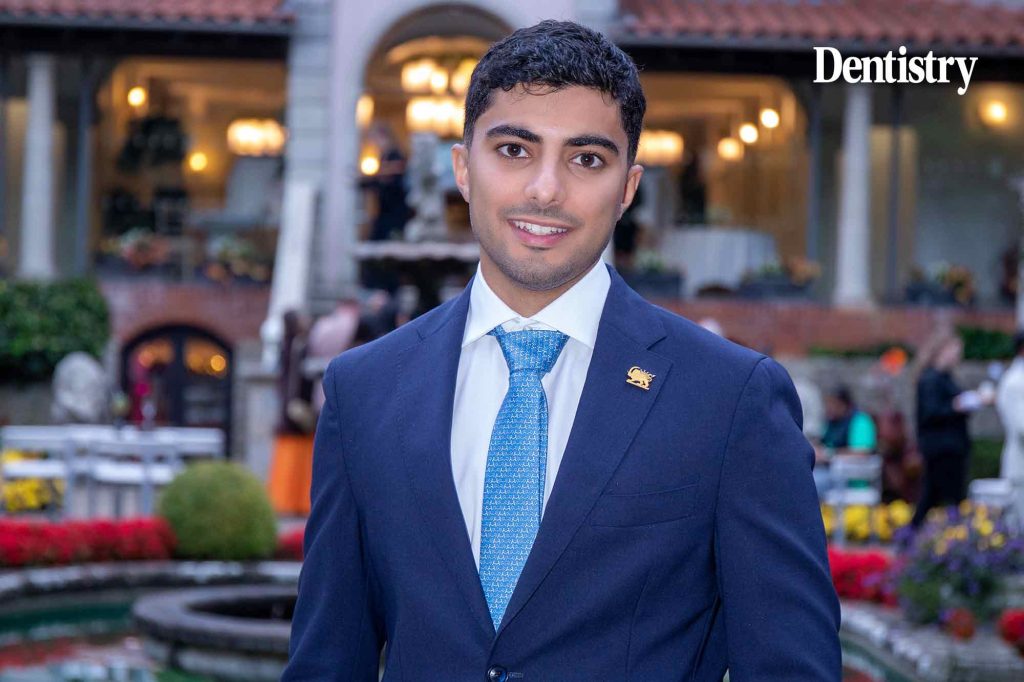
Dentistry spoke to Patric Aria Saraby about why he chose a career in dentistry, his long-term goals and what excites him most about the profession
What first sparked your interest in dentistry?
When I was born, my mother was still a dental student at the Karolinska Institute in Stockholm. My parents were refugees from the Iran-Iraq war, and we didn’t have much since my dad was the only one working while my mum studied. Since they couldn’t always find someone to look after me, my mum would sometimes bring me along to her university lectures. She’d sit me in the corner and tell me to be quiet — so there I was, a three-year-old, listening to dental lectures in Swedish!
Of course, I didn’t understand much at the time, but those early experiences left an impression.
Who or what influenced your decision the most?
I grew up surrounded by dentistry – my mum now owns a clinic and my dad does a lot behind the scenes. I started helping out there as early as 13, so it’s always been a real family business! What first sparked my interest wasn’t the technical side, but the transformation I saw in patients. I watched people walk in with pain or insecurity and leave with confidence and comfort. That impact was powerful.
Were there any particular experiences during dental school that deepened your passion for dentistry?
There were many moments that shaped me during dental school. One that stands out is the transition I went through at UIC Barcelona. My degree started in English for the first two years, but from third year onward, everything – exams, lectures, clinics – was in Spanish. That transition brought intense pressure, but it also forced me to adapt quickly, grow resilient, and stay focused on why I was there.
At the same time, I had this dream to give the graduation speech. It felt like the least I could do to honour my parents, who escaped Iran and sacrificed so much to give my sister and me a better life. I found out that the graduation speaker is typically the class delegate, so I ran for the role in first year.
I was elected by my peers in the English programme and, incredibly, when we merged with the Spanish cohort in third year, they also voted for me, even before knowing me well. That gave me a huge boost of confidence and a sense of responsibility. Holding the delegate role from first through fifth year helped me develop leadership skills that I brought with me into the clinics.
And yes, I did end up giving that graduation speech, in front of my parents and grandparents. It was one of the most emotional and meaningful moments of our lives, and it reminded me why I chose this path. Dentistry isn’t just a profession, it’s how I honour the people who made my journey possible.
What do you love most about being a dentist?
I love the blend of science, art, and personal connection. Dentistry lets me be hands-on, problem-solve creatively, and really get to know people. I love that I can make someone’s day better, whether it’s relieving pain, improving a smile, or just listening. Theres something special about speaking and getting to know my parents and creating that relationship with them.
Is there a particular patient story that reaffirmed your passion for dentistry?
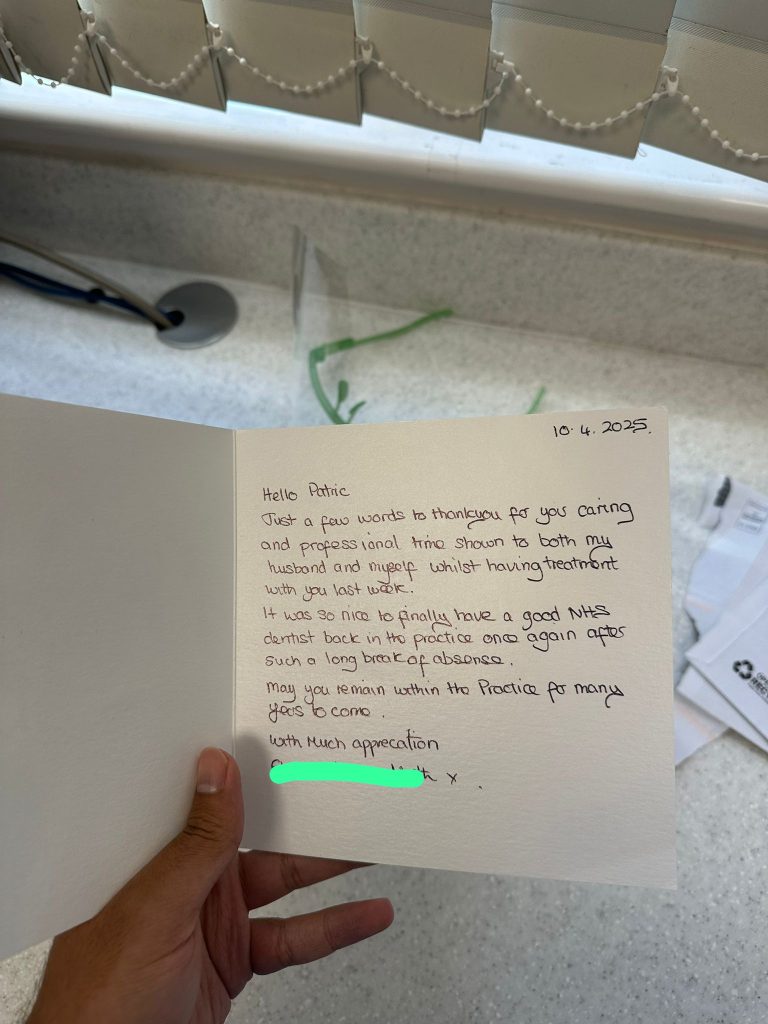
Yes – one moment that really stayed with me happened not too long after I joined Bupa Dental Care in Westbourne. The practice hadn’t had a dentist taking on NHS patients for over two years, so when I started, there was a huge backlog of patients who had been waiting a long time, many in pain or struggling with untreated issues. One patient in particular came in who hadn’t seen a dentist in over five years. She was visibly anxious, overwhelmed, and had multiple urgent dental needs. She told me she had given up trying to get seen and had even started pulling her own teeth at home. That broke my heart. I took the time to really listen to her story, explain the treatment options gently, and reassure her that we’d take it one step at a time.
Over the course of a few appointments, we managed to restore her oral health but more importantly, we restored her trust in dentists. By the end, she was smiling freely and even cracking jokes in the chair. Weeks later she sent me a card through the post thanking me for everything.
That moment reaffirmed everything I believe about dentistry, that it’s not just about fixing teeth, but about caring for people. We have the chance to rebuild trust, restore confidence, and quite literally change someone’s quality of life. It reminded me why I chose this path and why I want to keep showing up every day.
How do you stay motivated and inspired in your daily work?
I stay motivated by the impact I see in patients, whether it’s getting someone out of pain or helping them smile with confidence again. I also carry a strong sense of purpose, knowing the sacrifices my family made to get me here. That keeps me grounded and driven. Plus, I genuinely enjoy learning and staying up to date with new techniques, which keeps things exciting.
What are your career goals for the next few years?
Since graduating, I’ve mapped out a clear and ambitious plan with key milestones. I’ve dreamt of being featured on the cover of Young Dentist magazine, winning the Young Dentist Award, and eventually specialising. I’m particularly drawn to periodontics. I love that it requires building long-term relationships, educating patients, and helping them take control of their oral health to save their teeth.
Alongside that, I also plan to take part in charity dental missions. Giving back has always been a big part of my ‘why’, and I want to use my skills to make a difference in communities with limited access to dental care. It keeps me grounded and reminds me of the bigger picture in healthcare.
Are there any innovations or trends in dentistry that excite you?
I’m really excited about the rise of AI in dentistry, it’s going to change the landscape completely. From diagnostics to treatment planning, AI has the potential to increase accuracy, reduce human error, and improve patient outcomes. For example, AI-assisted radiograph interpretation is already helping detect caries, periapical lesions, and bone loss earlier and more reliably.
But what excites me most is how it can support clinical decision-making while freeing up more time for us to focus on the human side of care – building trust, educating patients, and tailoring treatment to individual needs. I see AI not as a replacement, but as a powerful tool that will elevate the way we practise dentistry in the years to come.
What advice would you give to someone considering a career in dentistry?
Make sure you’re choosing it for the right reasons, not just for the title or security, but because you genuinely care about people and want to make a difference in their lives. Dentistry can be demanding, but it’s incredibly rewarding if you’re passionate about it.
Get as much real-life exposure as you can by shadowing dentists, volunteering, speaking to students and professionals. And remember, it’s a journey of constant growth. The more you’re willing to learn, listen, and adapt, the more fulfilling it becomes.