In today’s busy life, patients may have trouble coordinating their work and home schedules when treatment requires multiple appointments. Typically, when restoration of teeth is related to failing amalgam or composite restorations or the presence of caries, this will require more extensive treatment than just placing another direct restoration and will typically require two appointments. The first appointment involves preparation of the tooth to remove the existing restorative material and caries, impression taking and placement of a provisional restoration. The second appointment is scheduled after laboratory fabrication of the restoration to insert it intra-orally.
3D printing with its advances in printable resin materials and hardware allows the practitioner to create indirect restorations in-office in a single appointment. 3D-printing resins now incorporate higher amounts of ceramic particles to improve the materials’ wear and durability. Two of these new resins are Ceramic Crown and Crown HT (both SprintRay), and they have received market clearance from the US Food and Drug Administration. Ceramic Crown contains more than 50% ceramic particles and is well suited for various restorations, providing natural aesthetics, and is available in Shades A1, A2, B1 and Bleach. When a more aesthetic resin is desired in those patients with bruxism, Crown HT may be selected. This resin contains more than 62% ceramic particles, provides good aesthetics with its high translucency and is currently available in Shades A1, A2 and B1.
Such highly filled resins have posed some problems in their use with traditional 3D-printing technologies owing to their high viscosity. Advances in 3D-printing hardware have allowed higher-quality restorations to be printed with the new resins in shorter fabrication times. With its patented Digital Press Stereolithography and patent-pending Resin Capsule System, the Midas 3D-printing system (SprintRay) overcomes the challenges of printing highly filled viscous materials (Fig. 1). It utilises a unique vacuum-sealed resin capsule that simplifies the workflow, allowing printing of even multiple units in just minutes from a single capsule (Fig. 2) and thus shortening fabrication time and enhancing single-appointment restorative treatment. Most Midas prints are completed under 10 minutes, and the printer has the ability to have up to three capsules printing simultaneously with no time penalty. Both Ceramic Crown and Crown HT are available for Midas in capsule format.
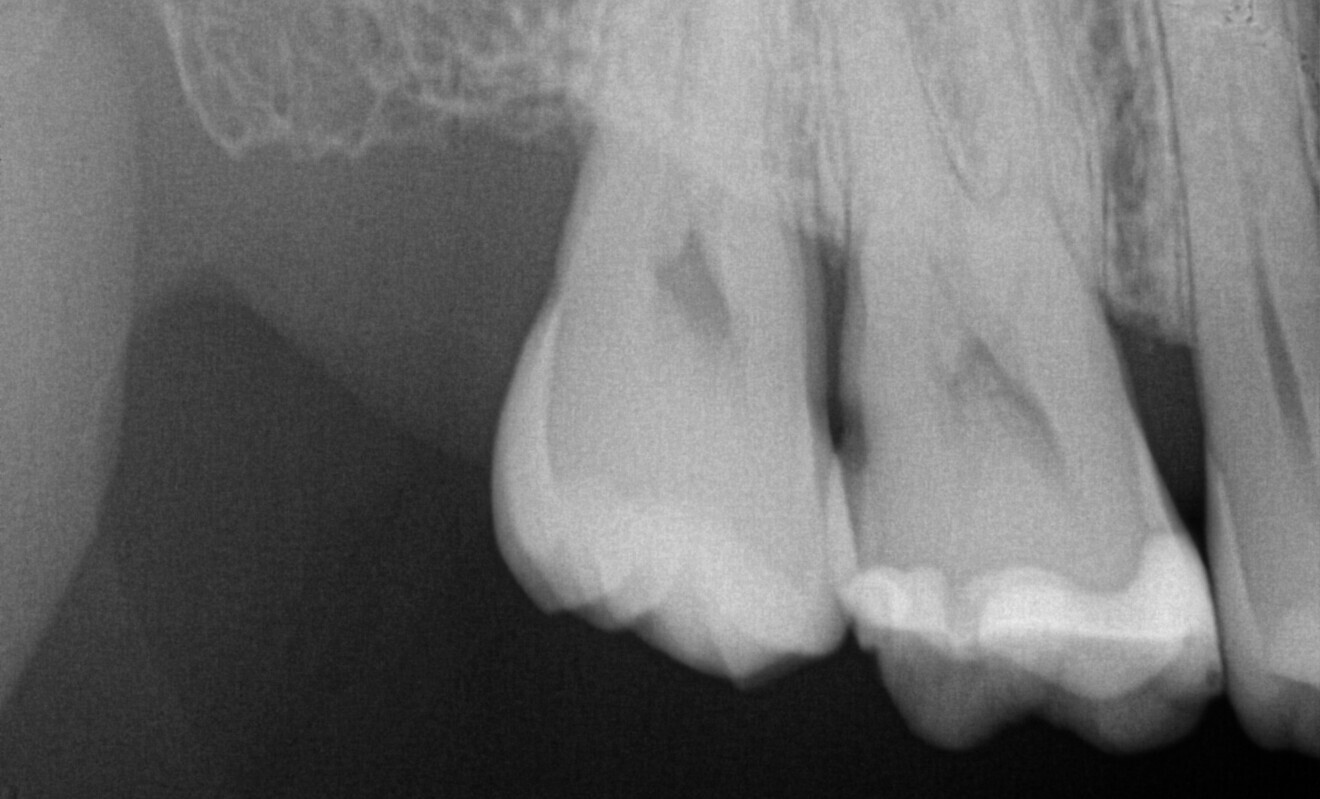
Fig. 3: Pre-op periapical radiograph demonstrating recurrent caries on the distal aspect of the maxillary right first molar.
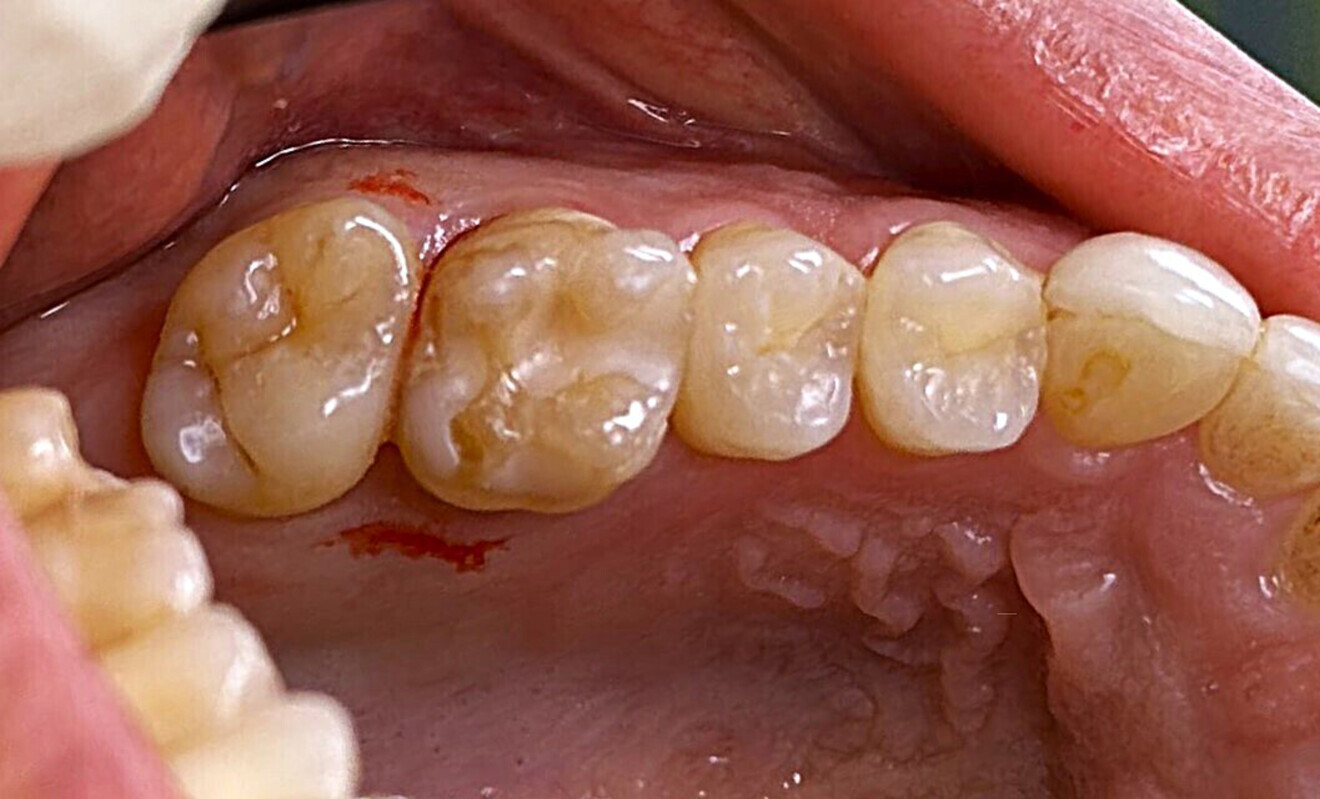
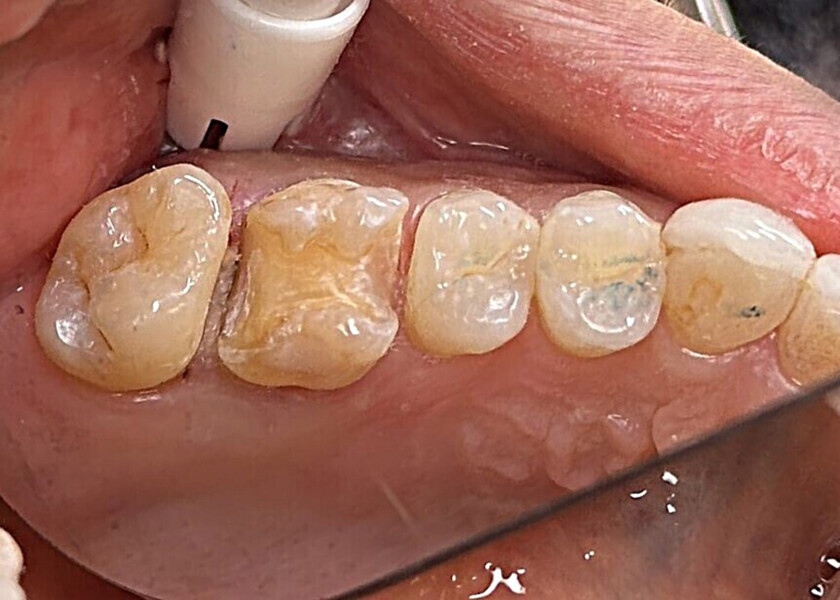
Fig. 4: Clinical view of the occlusal surface of the maxillary right first molar showing the composite present.
Case report: Inlay
A 46-year-old female patient presented for a recall hygiene appointment, and bitewing radiographs were taken. Proximal caries was noted on the distal aspect of the maxillary right first molar radiographically. A periapical radiograph was taken to further evaluate the tooth, and distal recurrent caries was confirmed (Fig. 3). Clinically, a chipped composite restoration on the tooth with clinical signs of composite wear on the mesial–occlusal and occlusal–palatal aspects was noted, as was distal secondary caries (Fig. 4). Removal of the failing composite and of the recurrent caries and replacement with a 3D-printed ceramic resin inlay in one appointment was recommended. The patient accepted treatment, and time in the schedule allowed treatment to be done that day.
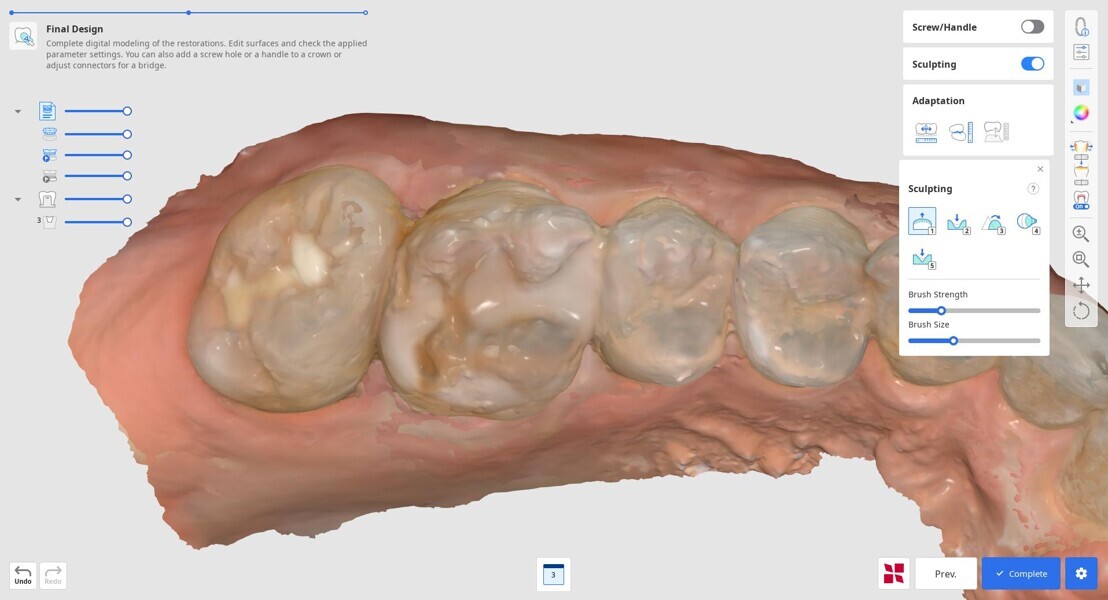
Local anaesthetic was administered as infiltration into the buccal vestibule. A preoperative intra-oral scan was performed with a Medit i900 scanner to aid in virtual planning of the restoration and the resulting scan imported into the Medit ClinicCAD software (Fig. 5). The old composite and recurrent distal caries were removed from the tooth utilising carbide burs in a high-speed handpiece. Caries detector dye (Caries Finder, Danville Materials) was used to ensure complete caries removal. The preparation for the inlay was completed with diamond burs (Fig. 6).
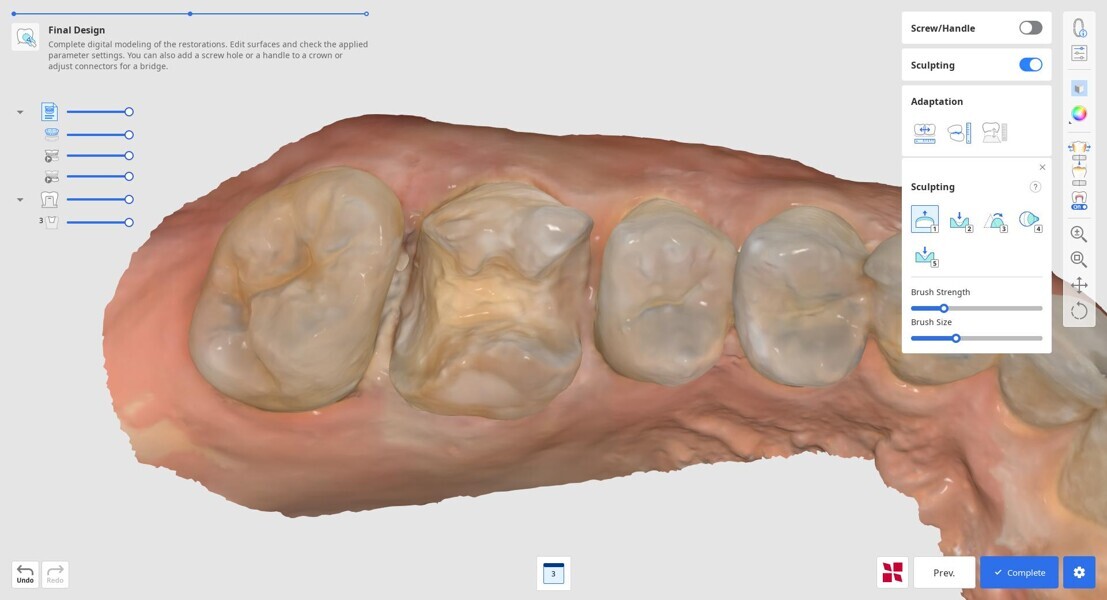
The prepared tooth and adjacent dentition were then scanned with the Medit i900 and the scan imported into the planning software (Fig. 7). The restoration was then designed in the software to mimic the shape of the tooth prior to tooth preparation (Fig. 8). The Medit ClinicCAD settings were a cement gap of 100 μm, occlusal clearance of 200 μm, interproximal clearance of 100 μm and minimum thickness of 0.6 mm. The virtual model was removed, leaving the virtual inlay in preparation for printing set-up (Figs. 9 & 10). Supports were added to the virtual inlay and the design placed on to the virtual build platform (Fig. 11) to proceed with 3D printing on a Midas printer.