


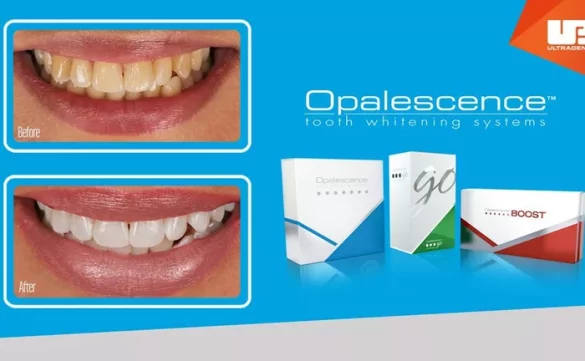
Opalescence is a popular brand of teeth whitening products used by dental professionals and at home. The product contains carbamide peroxide or hydrogen peroxide as its main whitening agents. These chemicals help remove stains and discoloration from the tooth surface. While effective, many patients and consumers wonder if Opalescence can damage teeth.
How Opalescence Works
Teeth whitening works through oxidation. The active ingredient in Opalescence penetrates the enamel and breaks down the molecules responsible for staining. This process can make teeth several shades lighter. The strength of the product varies from 10% to 35% carbamide peroxide or hydrogen peroxide. Professional guidance ensures the treatment is safe and effective.
Potential Risks of Teeth Whitening
Enamel Erosion
One concern is enamel erosion. Enamel is the outer protective layer of teeth. Overuse or high-concentration whitening products can soften enamel temporarily. However, Opalescence products are formulated to minimize enamel damage. Using the product according to instructions and under dental supervision reduces risk.
Tooth Sensitivity
Tooth sensitivity is a common side effect. The peroxide can irritate the nerves inside the teeth. Symptoms may include mild pain or tingling. Sensitivity usually decreases after treatment ends. Products with lower concentrations, such as 10%-16% carbamide peroxide, are less likely to cause discomfort.
Gum Irritation
Improper use can also irritate the gums. Whitening gel that touches the soft tissue may cause redness or inflammation.
Using a dental tray that fits properly and following instructions helps prevent gum irritation.
Scientific Evidence on Safety
Research indicates that Opalescence is safe when used correctly. Clinical studies show that carbamide peroxide and hydrogen peroxide do not cause permanent enamel damage when applied as directed. The American Dental Association (ADA) recognizes professionally supervised whitening as safe. The temporary increase in enamel porosity and sensitivity is reversible and does not lead to long-term harm.
Factors That Can Increase Risk
High Concentration Gels
Using stronger gels without professional guidance increases the risk of sensitivity and gum irritation. Higher concentrations should be applied under dental supervision to ensure safety.
Frequent Whitening
Excessive whitening can wear down enamel. Treatments should follow recommended intervals. Daily use over long periods can be harmful.
Poor Oral Health
Teeth with cavities, cracks, or exposed roots are more vulnerable. Whitening before dental issues are treated can worsen sensitivity and enamel wear.
Best Practices for Safe Use
Consult a Dentist
Professional evaluation ensures the teeth and gums are healthy enough for whitening. Dentists can recommend the correct Opalescence strength and treatment schedule.
Follow Instructions
Careful adherence to the product instructions is crucial. Avoid leaving gel on teeth longer than recommended. Use trays as instructed and avoid swallowing the gel.
Use Desensitizing Products
To reduce sensitivity, consider using fluoride toothpaste or gels. Opalescence also offers desensitizing products that can be used before or after whitening sessions.
Maintain Oral Hygiene
Proper brushing and flossing before and after whitening help reduce risks. Healthy teeth respond better to whitening treatments and are less likely to suffer damage.
Alternatives and Complementary Treatments
Other whitening methods include in-office professional whitening, whitening strips, or toothpaste with whitening agents.
These alternatives vary in concentration and effectiveness. Combining methods should be done carefully to avoid cumulative enamel damage.
Long-Term Effects of Opalescence
Long-term use of Opalescence under professional guidance is generally safe. Enamel returns to normal strength after treatment ends. Occasional touch-ups may be necessary, but overuse can cause sensitivity or minor surface wear. Research shows no permanent structural damage to enamel from typical Opalescence use.
Conclusion
Opalescence is an effective teeth whitening product. When used according to instructions and under professional supervision, it does not cause permanent damage to teeth. Temporary sensitivity or gum irritation may occur but can be managed. Risks increase with high concentration gels, excessive use, or poor oral health. Consulting a dentist and following safe practices ensures optimal results with minimal side effects.