


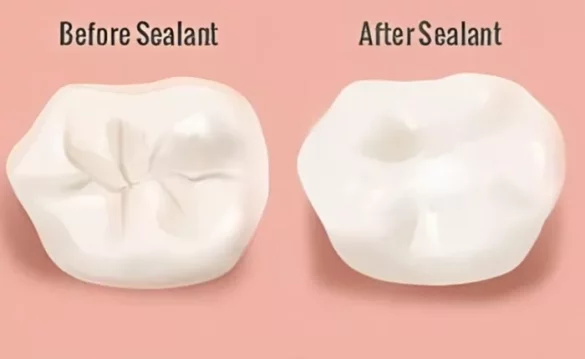
Dental sealants are thin, protective coatings applied to the chewing surfaces of teeth. They form a barrier that shields teeth from decay. Sealants are mostly used on molars and premolars because these teeth have grooves that are difficult to clean.
By filling these grooves, sealants help prevent food and bacteria from causing cavities.
How Dental Sealants Work
Sealants work by creating a smooth surface over the pits and fissures of the teeth. This prevents plaque and food particles from accumulating. The material used is usually a resin-based substance that bonds to the enamel. Once applied, the sealant hardens and can last for several years if properly maintained.
Step-by-Step Application Process
The application of dental sealants is simple and painless. First, the tooth is cleaned thoroughly. Next, it is etched with a mild acid to help the sealant bond better. Then, the sealant is applied to the grooves and hardened using a special light.
Finally, the dentist checks the bite to ensure the sealant does not interfere with chewing.
Effectiveness of Dental Sealants
Dental sealants are highly effective in preventing cavities. Research shows that children without sealants are up to three times more likely to develop decay in molars. Sealants provide long-term protection, especially when combined with regular brushing, flossing, and dental check-ups.
Impact on Children’s Oral Health
Children are the primary beneficiaries of dental sealants. Their newly erupted molars are particularly vulnerable to decay.
Studies indicate that sealants can prevent 80% of cavities in these teeth. Sealants are often recommended as soon as permanent molars appear, typically around ages 6 and 12.
Effectiveness in Adults
Adults can also benefit from dental sealants. While cavities are less common on adult molars, adults with deep grooves or a history of decay may benefit. Sealants can prevent further damage and reduce the need for fillings. However, adults may need sealant replacements more frequently due to wear and tear.
Durability of Dental Sealants
Sealants can last several years. Most sealants remain effective for 5 to 10 years, though some may wear down sooner.
Regular dental visits allow dentists to check the sealant’s condition and reapply if necessary. Proper oral hygiene and avoiding excessive biting on hard objects can extend sealant life.
Factors Affecting Longevity
The lifespan of a sealant depends on several factors:
- Material Quality: Higher-quality resin sealants last longer.
- Oral Hygiene: Good brushing and flossing prevent breakdown of the sealant.
- Diet: Avoiding hard foods or chewing ice can reduce wear.
- Dental Habits: Regular dental check-ups help maintain sealants.
Limitations of Dental Sealants
While dental sealants are effective, they are not a complete solution. They only cover the chewing surfaces, so cavities can still develop between teeth. Sealants can sometimes chip or wear away, reducing effectiveness. Patients should continue brushing, flossing, and visiting their dentist regularly.
Sealants and Fluoride Use
Sealants work best in combination with fluoride treatments. Fluoride strengthens enamel and helps prevent decay. Even with sealants, teeth are not immune to cavities, so fluoride toothpaste and treatments are recommended. This combination provides maximum protection.
Cost and Accessibility
Dental sealants are cost-effective compared to treating cavities. They are often covered by dental insurance, especially for children. Public health programs also provide sealants to reduce decay in children. The relatively low cost and high effectiveness make sealants an attractive preventive measure.
Insurance and Public Health Programs
Many dental insurance plans cover sealants for children and sometimes adults. Public programs like school-based dental clinics often provide sealants at low or no cost. This accessibility has contributed to improved oral health in communities with limited dental care access.
Scientific Evidence Supporting Sealants
Multiple studies confirm the effectiveness of dental sealants. The Centers for Disease Control and Prevention (CDC) reports that sealants can reduce decay in permanent molars by nearly 80%. Clinical trials consistently show that sealants are more effective than fluoride alone in preventing cavities on the chewing surfaces.
Long-Term Studies
Long-term studies show that sealants remain effective for many years. Even after the initial sealant wears down, the grooves are less prone to decay than untreated teeth. Reapplication of sealants can further extend protection. This reinforces the value of sealants as a preventive dental treatment.
Conclusion
Dental sealants are a proven method to prevent cavities. They are most effective on children’s molars but can also benefit adults with susceptible teeth. Sealants provide durable, cost-effective protection and work best when combined with proper oral hygiene and fluoride use. Regular dental check-ups ensure that sealants remain intact and effective.