


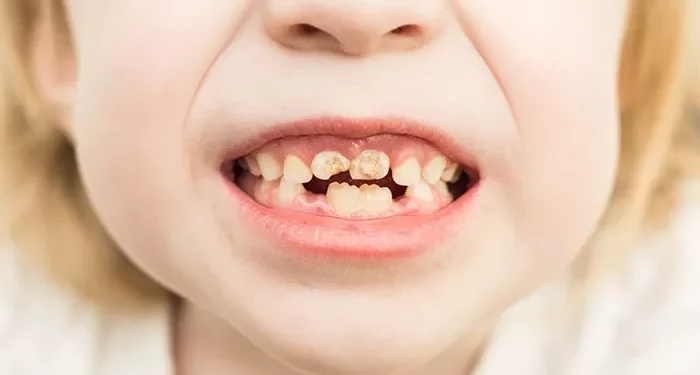
In a groundbreaking study, scientists have found that artificial intelligence (AI) systems can predict the occurrence of early childhood caries (ECC) with high accuracy, opening up new directions for oral disease prevention and control and personalized medicine.
Early childhood caries is one of the most common chronic diseases among children worldwide. Its causes are complex and have long puzzled public health experts and dentists.
A notable feature of ECC is that it is unevenly distributed among teeth – that is, some teeth are more prone to caries than others. However, the specific mechanism that causes this difference has been difficult to clarify.
This study uses the powerful data analysis capabilities of artificial intelligence to dig deep into the oral health records of thousands of children to identify potential patterns and risk factors.
The researchers designed an AI system based on machine learning that can analyze data from multiple dimensions including age, dietary habits, tooth structure, oral flora, fluoride exposure history, and family socioeconomic status.
These factors work together to determine the likelihood that a tooth is more likely to develop caries in early childhood. By training the AI system to identify the interactions between these complex variables, the research team successfully developed a model that can accurately predict high-risk teeth in children’s mouths.
A key finding of the study is that differences in structure and eruption time of different teeth may make them show different susceptibility to contact with bacteria, food residues and acidic environments.
For example, maxillary incisors and first deciduous molars are more susceptible to decay than other teeth in some children. The AI model can not only predict which teeth are most likely to have problems, but also give early warnings before children show obvious symptoms.
The significance of this study is not only to improve the ability to predict ECC risk, but also to provide a scientific basis for personalized prevention and intervention in the future.
The research team said that if this AI prediction technology can be integrated into the daily dental examination process, it is possible to take personalized protective measures in time before children develop caries, such as fixed-point fluoride coating, customized brushing guidance, enhanced dietary education or early minimally invasive treatment.
In addition, this AI-driven analysis also provides a new perspective for understanding the pathological mechanism of ECC. By retrospectively analyzing the formation trajectory and causes of caries, researchers hope to reveal deeper biological mechanisms, such as the causal relationship between oral microecological changes and caries susceptibility. This direction is expected to further promote the development of precision dentistry in the future.
The researchers emphasized that although ECC is highly common worldwide, there is still a large gap in the understanding of its detailed mechanisms in the past.
The introduction of artificial intelligence not only fills this knowledge gap, but also prompts public health policy makers to allocate resources more scientifically, focusing on the most vulnerable groups of children and high-risk teeth, thereby significantly improving the overall intervention efficiency.
At present, this study is further expanding the sample size, and the research team plans to promote the AI system to different countries and ethnic groups to test its universality and cross-cultural application capabilities. If successful, it may become an indispensable part of global children’s oral health management.