


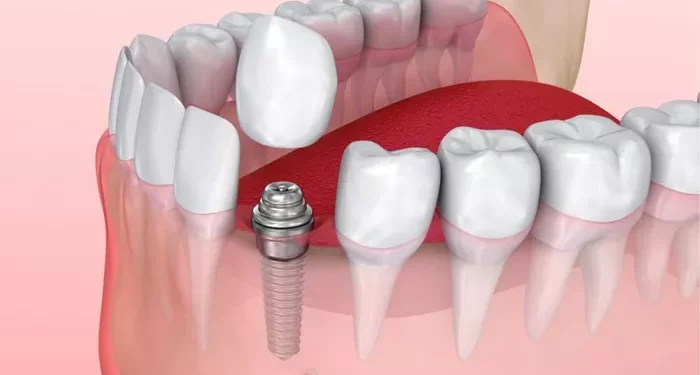
Doctor’s Answer: Before we dive into the factors that influence longevity, let’s address the question everyone is most concerned about: It is possible, but with conditions. Long-term clinical data shows that the 5-year success rate for dental implants exceeds 95%, and the 10-year success rate remains above 90%. With proper care and maintenance, it is common for implants to last 20, 30, or even more years.
Key takeaway: Dental implants are not a “one-and-done” fix. Like natural teeth, they can “get sick” and require meticulous care. If you neglect them, they won’t last long.
5 Key Factors Affecting the Longevity of Dental Implants
1. Periodontal Health: The “Foundation” of Your Implant
Natural teeth are anchored in the jawbone by periodontal tissues, and implants are no different—they rely entirely on healthy surrounding tissue for support. Furthermore, implants lack the periodontal ligament buffer that natural teeth have, making them more delicate and susceptible to inflammation.
If daily oral hygiene is poor, plaque and tartar will accumulate around the implant, triggering peri-implantitis. This condition causes gum swelling, bleeding, pus, and recession, eventually eroding the underlying jawbone. Once bone density decreases, the implant loses its support, becomes loose, and loses chewing strength, leading to premature failure. Conversely, if your periodontal tissue is healthy and kept clean, the implant will remain stable and function effectively for years.
2. Daily Cleaning: More Important Than You Think
Many people mistakenly believe that because implants are artificial, they don’t get cavities and therefore don’t need careful cleaning. While implants won’t develop cavities, they are vulnerable to the much more dangerous peri-implantitis—the #1 cause of implant failure. If the bacteria-induced infection is not treated promptly, the gum and bone supporting the implant will be “eaten away,” eventually causing the implant to loosen and fall out.
The Essentials of Cleaning:
-
Correct Brushing: Brush twice daily using a soft-bristled toothbrush. Focus specifically on the junction between the implant and the gums, where bacteria tend to hide.
-
Supplementary Cleaning: A toothbrush cannot reach the gaps between the implant and adjacent teeth. You must use dental floss or a water flosser.
-
Larger Gaps: If there are wider spaces, use an interdental brush to clear bacteria from those hard-to-reach areas.
3. Regular Check-ups: Proactive Management
Dental implants require regular follow-ups. Many early-stage problems are asymptomatic, meaning you might not feel any pain even when something is wrong. Professional examinations are necessary to detect:
-
Signs of gum inflammation or bleeding.
-
“Silent” bone loss around the implant.
-
Loose dental crowns or worn-down fixation screws.
Recommended frequency: After the crown is placed, your first check-up should be at 3–6 months. Thereafter, schedule a check-up once a year.
4. Usage Habits: The Determining Factor
Natural teeth are connected to the jawbone via a sensitive periodontal ligament containing nerves and blood vessels, which acts as a “buffer” and provides pain feedback when chewing.
Implants, however, have a “rigid connection” to the bone. If you use your implants to chew hard objects (like bones, nuts, crab shells, or sugarcane) or use them as tools (e.g., opening bottle caps or tearing packaging), all the force is transferred directly to the connection point. This can lead to chipped crowns, fractured implants, or even micro-fractures in the surrounding bone.
Best Practices:
-
Avoid biting into hard, crunchy, or tough foods.
-
Never use your teeth as tools.
-
If you suffer from bruxism (teeth grinding) at night, inform your dentist. You may need a night guard to protect your implants.
5. General Health and Lifestyle: The “Invisible” Influencers
Since an implant must “osseointegrate” (bond) with your bone, anything that affects bone metabolism or wound healing will impact its lifespan:
-
Smoking: Nicotine constricts blood vessels and reduces blood flow to the mouth, significantly increasing the risk of peri-implantitis. Studies confirm that smokers are 2–3 times more likely to experience implant failure than non-smokers. It is highly recommended to stop smoking at least 3 months after surgery—ideally, quit permanently.
-
Uncontrolled Blood Sugar: High blood sugar affects the quality of bone integration and increases infection risk. However, there is no need to panic; diabetics can still successfully receive implants provided their fasting blood sugar is kept under 8.8 mmol/L, though more frequent monitoring is required.
-
Osteoporosis and Medications: Long-term use of certain medications for osteoporosis may increase the risk of rare complications. Always disclose your medical history and current medications to your dentist before surgery.