


A South Korean company is aiming to disrupt the global orthodontics market with a high-tech dental aligner it says can outperform Invisalign in speed, cost, and efficiency.
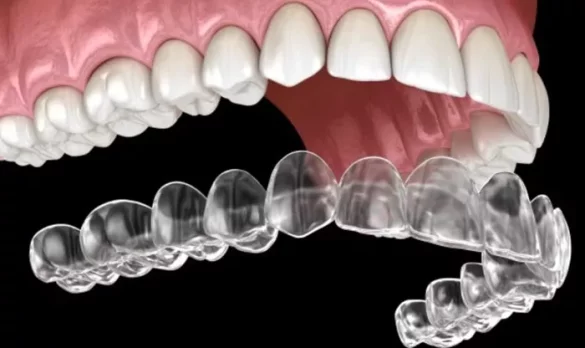
Graphy, a Seoul-based manufacturer specializing in 3D printing materials, has introduced a new orthodontic system called the Shape-Memory Aligner (SMA). The system combines a temperature-responsive resin, 3D printers, and robotic technology to create aligners that can gradually shift teeth back into position—without the metal brackets or attachments used in traditional braces.
“This isn’t just another plastic tray,” said Sim Un-seob, Graphy’s founder and CEO, during a press conference in Seoul. “This is orthodontic force. This is shape memory. This is the next bracket.”
Shape-Memory Technology Offers a New Kind of Force
The aligners are made from a proprietary resin called Tera Harz. Once inserted into the mouth, the material softens at body temperature and clings to the teeth. Over time, it returns to its original printed form, exerting gentle but sustained pressure. Graphy claims this produces “bracket-level force” without the need for wires or repeated adjustments. It also says treatment times can be cut in half.
The technology was discovered by accident in 2017 while Graphy was prototyping surgical splints. Researchers noticed the resin’s ability to return to its original shape after being bent. That discovery sparked the idea to apply the material to orthodontics.
“We realized the resin could remember complex shapes,” Sim said. “From there, orthodontics was the obvious next step.”
Direct-to-Clinic Strategy Targets U.S. Market
Graphy’s aligners are already being used in 37 countries through local distributors. However, the company has set its sights on the U.S. market with a different strategy. Rather than sending aligners to labs for production, Graphy plans to set up 3D printing hubs inside dental clinics. This model allows general dentists, not just orthodontists, to offer aligner treatments.
“Orthodontists take pride in their hand skills,” said Lee Kwon-ki, Graphy’s director of strategic planning. “But SMA changes the equation. A general dentist can be trained in two days.”
By removing the need for outside labs and relying on in-house production, clinics can create aligners faster and at a lower cost. This model, Graphy says, also appeals to general practitioners who may otherwise be locked out of the aligner business.
Graphy Claims Major Cost and Time Savings
According to the company, its aligners offer higher precision and durability compared to traditional thermoformed trays. Graphy’s method eliminates the thermoforming process, which can introduce errors during shaping. Instead, the trays are printed directly in their final form, offering a better fit and consistent force.
During the demonstration, Lee placed a hardened aligner in warm water and bent it nearly in half. The device quickly returned to its original shape.
“This is not plastic,” he said. “This is shape memory. And it returns to its original form every single time.”
Graphy reports a 99.6% fit accuracy based on internal and third-party studies. It says over half of patients complete treatment without needing additional trays. Clinics using SMA materials reportedly spend $150 to $190 per patient—far less than the $1,200 average cost of Invisalign lab fees in Korea.
IPO to Fund U.S. Expansion and Clinic Integration
The company is preparing for a listing on Korea’s Kosdaq exchange on August 21. It plans to raise up to 39 billion won (approximately $28 million) to support its expansion into the United States. That includes setting up a Florida-based subsidiary, acquiring a dental lab, and launching its direct-to-clinic production model.
Graphy is offering 1.95 million shares, priced between 17,000 and 20,000 won each. The projected valuation ranges from 187.7 billion to 220.6 billion won. Public subscriptions are scheduled for August 11 and 12, while institutional bookbuilding closes on August 6. KB Securities and Shinhan Investment are underwriting the offering.
Can It Compete with Invisalign’s Global Dominance?
Graphy’s main challenge will be taking on Align Technology, the maker of Invisalign. Align holds over 3,000 patents and controls about 95% of the Korean aligner market. It also has a global market capitalization of around $15 billion.
But Graphy believes its innovative system, lower costs, and decentralized production model offer something new to dentists and patients alike.
“We know brand matters in the U.S.,” Lee said. “But so does disruption. Tesla wasn’t the first electric vehicle company. We won’t be the first aligner company in the U.S., but we think we’ll be the first to change how aligners are made.”
In addition to aligners, Graphy sells 3D printers, software, and post-processing robots, offering clinics the tools to become mini-factories for dental care. The company says its resins have been exported to over 90 countries and featured in more than 60 peer-reviewed journals. More than 200,000 patients have reportedly received treatment using the SMA system.