


Is a Dental Implant Just “Putting a Screw in the Bone”?
Many people think dental implants are simply:
“a metal screw placed into the jawbone.”
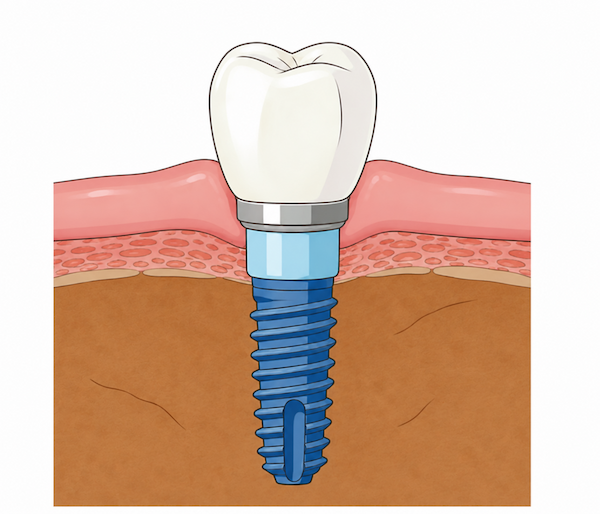
But in reality, a dental implant works more like a house structure:
-
Implant = Foundation (anchored in the jawbone)
-
Crown = Visible tooth (restores function and aesthetics)
-
Soft tissue = Protective barrier (gums and oral mucosa)
Among these, soft tissue is often overlooked – but it plays a critical role.
Soft Tissue: The “Invisible Guardian” of Dental Implants
While bone support is important, it is not the only factor determining implant success.
The quality and quantity of soft tissue are key factors in:
-
Long-term implant stability
-
Risk of peri-implantitis
-
Aesthetic outcomes
Components of peri-implant soft tissue:
-
Keratinized gingiva
-
Attached gingiva
-
Submucosal connective tissue
3 Critical Roles of Soft Tissue in Implant Success
1. Creates a “Biological Seal” Against Bacteria
Unlike natural teeth, implants lack the periodontal ligament structure. Soft tissue forms a protective seal, like a barrier:
-
Prevents bacterial invasion
-
Reduces infection risk
-
Maintains implant stability
2. Provides Blood Supply & Limits Inflammation
Healthy gums:
-
Deliver essential nutrients
-
Improve healing capacity
-
Prevent inflammation from spreading to bone
3. Absorbs Mechanical Stress
During chewing and brushing, soft tissue:
-
Cushions mechanical forces
-
Protects surrounding bone
-
Helps prevent bone loss
How Long Do Dental Implants Last? Soft Tissue Matters
Implant longevity depends on more than just the implant itself.
-
Ideal condition: Keratinized gingiva width ≥ 2mm
If soft tissue is insufficient:
-
Plaque accumulates easily.
-
Gum inflammation increases.
-
Higher risk of peri-implantitis occurs.
-
Progressive bone loss develops.
-
Implant loosening or failure may happen.
Think of it like moisture damaging a building’s foundation over time.
Risks of Poor Soft Tissue Management
Neglecting soft tissue care can lead to:
-
Delayed healing
-
Infection
-
Breakdown of the protective seal
-
Peri-implantitis
-
Implant failure
Essential Aftercare Tips for Dental Implants
Step 1: Avoid Mouthwash for the First 48 Hours
After surgery, a blood clot forms at the site – this is essential for healing.
✔ Recommended:
-
Gently rinse with warm water.
-
Avoid forceful swishing.
-
Think of it as “holding water and letting it fall out.”
Step 2: Gentle Oral Hygiene
✔ Use a soft-bristle toothbrush.
✔ Brush gently along the gumline.
✔ Avoid sutured areas.
When using a water flosser:
-
Set to the lowest pressure.
-
Do not aim directly at stitches.
-
Keep at least 1 cm distance from gums.
Step 3: Quit Smoking (Including Vaping)
Smoking significantly affects healing:
-
Reduces blood supply.
-
Slows tissue regeneration.
-
Weakens the biological seal.
As a result, healing time may double and the risk of implant failure increases significantly.
The “Longevity Formula” for Dental Implants
To ensure long-term success, remember this formula:
When all three are in balance, your implant can:
-
✔ Stay stable for years.
-
✔ Maintain healthy surrounding tissues.
-
✔ Look natural and aesthetic.
Final Thoughts
A dental implant is not just a metal screw – soft tissue is the true key to long-term success.
To protect your implant:
-
✔ Maintain healthy gums.
-
✔ Follow proper aftercare.
-
✔ Schedule regular dental check-ups.
These steps will ensure your implant remains strong, functional, and long-lasting.