


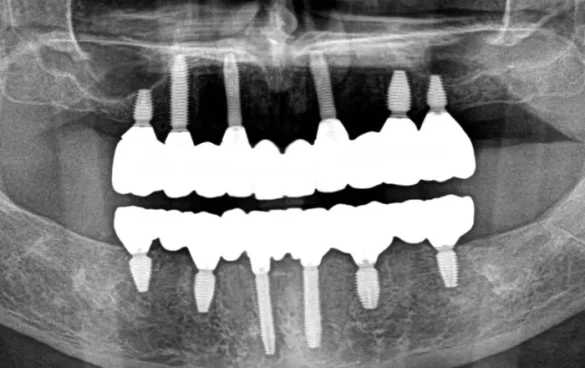
KAT Implants represent a modern dental implant system designed to restore missing teeth with precision, durability, and versatility. The innovation behind KAT Implants lies in their patented Key Assisted Transfer (KAT) system, which offers a unique, screwless, secure abutment connection platform that simplifies implant procedures while enhancing stability.
These implants are widely used in restoring the edentulous maxilla and mandible, providing support for removable dentures, fixed bridges, or as single-tooth replacements. Unlike many other implant systems, KAT Implants have a solid body design, which contributes to their strength and long-term success. Their adaptability allows clinicians to place them in a range of bone qualities, including healed ridges and extraction sites, with the possibility of immediate loading if primary stability is adequate.
Why Choose KAT Implants?
Dental implant technology has evolved considerably, but KAT Implants distinguish themselves with several key advantages that make them a compelling choice for both clinicians and patients:
Screwless Abutment Connection: The patented external locking taper connection eliminates screws, reducing complications related to screw loosening and providing excellent mechanical stability.
Universal Abutment Platform: All KAT implants share the same 3.1 mm diameter post, meaning the same abutments fit implants from 2.5 mm to 5.0 mm in diameter and 6 to 14 mm in length. This simplifies inventory and clinical workflow.
High Stability Under Load: With a solid body design, KAT Implants achieve superb mechanical strength, offering high insertion torque and resistance to functional chewing forces.
Precision Impression Technique: The abutment-incorporated key combined with the Pick-Up Abutment impression method allows extremely accurate implant-level indexing, which improves prosthesis fit and longevity.
Flexibility in Applications: KAT Implants can be used in various clinical situations, including single tooth replacements, multiple splinted implants, and full-arch rehabilitations.
Support for Immediate Loading: Provided good primary stability is achieved, single or splinted KAT implants can be immediately loaded, which benefits patients seeking faster restoration without compromising success.
Choosing KAT Implants can also address concerns common in patients with gum disease or sensitive teeth by providing a stable foundation for restorations and preventing bone loss progression.
Types of KAT Implants and Their Applications
KAT Implants come in diverse sizes and configurations designed to meet specific clinical needs:
Diameter Range: From very narrow (2.5 mm) suitable for anterior regions or lateral incisors, to wide (5.0 mm) for broad molar sites requiring enhanced support.
Length Range: Between 6 mm and 14 mm, allowing selection based on bone height and quality.
Solid Body Design: Unlike hollow or tapered implants, the solid structure provides superior resistance against fractures and deformation.
Straight (Prepable) Abutments: Available in various diameters (4.2 mm to 6.4 mm), suitable for definitive restorations with good emergence profile control.
Applications include:
Single Tooth Replacements: Especially in esthetically critical areas such as lateral incisors or central mandibular incisors using smaller diameter implants.
Multiple Units & Splinted Implants: Provides support for fixed bridges, improving occlusal distribution and preserving alveolar bone.
Removable Denture Support: KAT Implants can anchor overdentures, increasing retention and comfort for patients with compromised gums or bone, often seen in cases with prior gum disease.
Full-Arch Restorations: Suitable for use in All-on-4 style treatments or similar protocols, offering immediate function and aesthetic rehabilitation.
The versatility of KAT Implants accommodates patients with differing anatomical and clinical conditions, including those with thin jawbones or affected by gum disease that require less invasive procedures while maintaining structural integrity.
How Much Do KAT Implants Cost?
The cost of KAT Implants depends on several factors, including the implant size, number of implants placed, surgical complexity, and geographic location. While exact costs may vary by country and clinic, KAT Implants tend to be competitively priced in the market, often favorable compared to premium brands, without compromising quality.
Average Price per Implant: Typically ranges from $600 to $1,200 USD per implant body alone.
Additional Costs: Including abutments, surgical procedures, restorative crowns or bridges, diagnostic imaging, and follow-up care, a full tooth replacement can average $2,000 to $3,500 per tooth.
Complete Arch Solutions: Full jaw restorations using multiple KAT Implants with fixed prosthetics can cost between $10,000 to $25,000 depending on the number of implants and prosthesis type.
The pricing structure reflects KAT’s streamlined design, reducing the need for multiple component types and simplifying inventory, which can lower the cost for providers and patients alike. It is essential to consult with a dental implant specialist to understand the comprehensive cost based on individual treatment plans.
Material of KAT Implants
KAT Implants are primarily fabricated from titanium, a biocompatible metal well-known for its strength, corrosion resistance, and excellent osseointegration properties. Titanium is widely regarded as the gold standard in dental implant material because it integrates with the jawbone and facilitates long-term success.
The solid body design ensures enhanced mechanical stability under functional loads such as chewing, which is especially important for patients with sensitive teeth or compromised bone due to gum disease. By utilizing titanium, KAT Implants support bone healing, prevent implant rejection, and reduce the risk of infection.
While some contemporary implants use zirconia for aesthetic reasons, KAT focuses on titanium to deliver reliability and durability.
Who Is A Candidate for KAT Implants?
Ideal candidates for KAT Implants include:
Patients missing one or multiple teeth due to trauma, decay, or gum disease.
Individuals with good general health and sufficient jawbone density or those amenable to bone augmentation procedures.
Patients suffering from sensitive teeth or oral discomfort who require stable, long-lasting restorations.
Patients seeking immediate or early loading implant protocols.
Individuals requiring fixed or removable prostheses supported by implants.
Those with healed alveolar ridges or extraction sites ready for implant placement.
Contraindications or caution should be observed in:
Patients with uncontrolled systemic diseases (e.g., uncontrolled diabetes).
Heavy smokers or patients with poor oral hygiene, which can worsen gum disease progression.
Patients with inadequate bone volume who are not candidates for bone grafts or sinus lifts.
Cases with Type IV bone (very soft bone), where immediate loading may be less predictable without adequate primary stability.
A thorough clinical and radiographic assessment by a dental implant specialist will determine candidacy and the most appropriate KAT Implant type for each patient.
Clinical Benefits of KAT Implants
The clinical advantages of using KAT Implants go beyond the mechanical and procedural benefits:
Reduced Surgical Time: Thanks to simplified abutment connections and universal components.
Enhanced Accuracy: Implant-level indexing and precise impression-taking reduce prosthetic errors, improving fit and patient comfort.
Improved Healing: The stable connection and solid implant body support better osseointegration, essential for patients with history of gum disease.
Minimized Bone Loss: By supporting the alveolar ridge, KAT Implants help prevent resorption, which is critical for patients with sensitive teeth prone to periodontal issues.
Versatile Restorations: Ability to support single crowns, bridges, and dentures offers flexible treatment planning.
Immediate Function: The possibility of immediate loading shortens treatment times and improves patient satisfaction.
With these benefits, KAT Implants enhance patient quality of life by restoring oral function, aesthetics, and comfort while mitigating complications common in dental implantology.
FAQs
Are KAT Implants suitable for patients with gum disease?
Yes, KAT Implants can be successfully placed in patients with controlled gum disease. Proper treatment of periodontal conditions prior to implant placement is essential. Their design supports bone preservation around the implant.
How long do KAT Implants last?
With proper care, KAT Implants can last a lifetime. Long-term success depends on good oral hygiene, regular dental check-ups, and management of risk factors like sensitive teeth or gum disease.
How do KAT Implants differ from traditional implants?
KAT Implants use a unique screwless locking taper system and a universal abutment platform, simplifying the restoration process and enhancing mechanical stability.
Conclusion
KAT Implants offer a comprehensive solution for dental implant therapy, combining innovation with proven materials and design principles. Their screwless, low-profile locking taper connection and universal abutment platform distinguish them as a user-friendly,reliable choice for restoring teeth in a variety of clinical situations. Ideal for patients with gum disease, sensitive teeth, or those seeking efficient and predictable implant treatment, KAT Implants enable excellent clinical outcomes with favorable aesthetics, function, and longevity.