

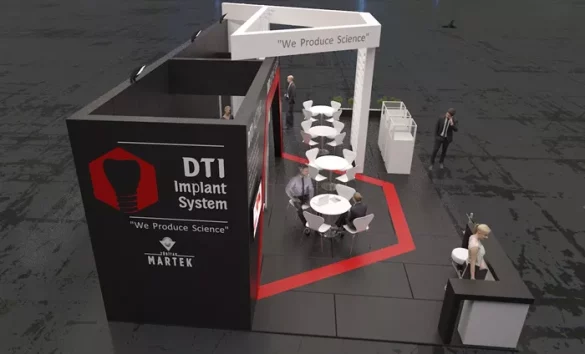
The DTI Implant System is an innovative dental implant brand developed through collaboration among scientists, doctors, and engineers worldwide. Manufactured above international standards in Turkey, the system emphasizes advanced surface technology for optimal osseointegration—the biological process where bone cells attach and grow on the implant surface—ensuring excellent stability and integration with the jawbone. The DTI implants feature a unique “active surface” prepared by plasma activation, which maintains surface energy and hydrophilicity in a dry state until implantation. This active surface design enhances bone cell attachment and accelerates healing, offering superior initial stability and long-term success.
Why Choose DTI Implant System?
Choosing the DTI Implant System means opting for a product that combines cutting-edge research and quality manufacturing with affordability and versatility. Key reasons include:
Innovative Surface Technology: The plasma-activated active surface improves bone to implant contact, leading to faster and more reliable osseointegration.
Wide Product Variety: Offers a comprehensive range of implants suited for different jawbone conditions and prosthetic needs, including mini, standard, and hybrid designs.
High Quality and Standards: Manufactured with precision CNC machining with CE and FDA approvals, ensuring safety, durability, and performance.
Global Scientific Collaboration: Developed through ongoing R&D in partnership with leading European universities and scientific institutions.
Cost-Effective: Provides advanced implant solutions at relatively affordable prices compared to American and European brands without compromising quality.
Versatility: Implants designed with features like open threads for self-tapping and apical designs that allow path changes during surgery, optimizing the surgical outcome.
Types of DTI Implant System Implants and Their Applications
DTI offers implants tailored to various clinical situations, including:
Ultra Mini Implants (Ø3.0 mm): Ideal for patients with limited bone volume or as temporary implants, often used in orthodontic anchoring or narrow spaces.
Bone-Level Implants: Featuring micro-thread structures and hybrid designs for enhanced primary stability and osseointegration, suitable for standard implant placement in both maxillary and mandibular bones.
Short Implants: For cases with insufficient bone height, especially in the lower jaw, reducing the need for invasive bone grafting.
Zygomatic Implants: Though not specifically marketed by DTI, similar advanced implantations are applicable for patients with severe maxillary bone loss to avoid sinus lifts or grafts.
Restore Prosthesis Components: Abutments and transfer copings customized to support various prosthetic needs, including fixed and removable dentures.
These various types are designed to address a broad spectrum of cases, such as replacing teeth lost due to gum disease or trauma, and supporting prosthetics while protecting adjacent structures and soft tissues sensitive to irritation.
How Much Do DTI Implant System Cost?
DTI implants are competitively priced compared to other global implant brands. While exact costs vary by region, clinician, and specific implant type, DTI provides a more affordable yet high-quality option, making dental implant treatment accessible to a wider patient base. The affordability does not compromise the implant’s effectiveness or durability, positioning DTI as a cost-effective solution for patients seeking reliable implants without excessive expense.
The overall cost of dental implant treatment includes implants, abutments, surgical procedures, and prosthetic restorations, so dentists often provide personalized quotes based on these factors.
Material of DTI Implant System
DTI implants are primarily made of commercially pure titanium, a highly biocompatible metal widely recognized as the gold standard in implantology. Titanium’s compatibility with bone and soft tissues reduces the risk of rejection and infection, promotes osseointegration, and offers mechanical strength necessary for chewing forces. The implants’ micro-roughened surface created by plasma activation further enhances bone cell adhesion.
In some cases, dental implants may use other materials like zirconia, but titanium remains the material of choice due to its proven long-term success and stability.
Who is a Candidate for DTI Implant System?
Candidates for DTI implants are generally patients who:
Have lost one or more teeth due to gum disease, trauma, or tooth decay.
Have adequate jawbone quantity and quality or can undergo minor treatments (e.g., bone grafting or sinus lifts) if necessary.
Are in good general and oral health, without uncontrolled systemic diseases that impair healing.
Do not have active infections or severe untreated periodontal disease.
Have no contraindications such as heavy smoking, untreated diabetes, or severe bone resorption that precludes implant placement.
DTI implants can also benefit patients with sensitive teeth who have lost teeth and require stable, durable replacements that do not aggravate sensitivity in surrounding gums and nerves.
Clinical Benefits of DTI Implant System
DTI implants offer numerous clinical benefits:
Optimal Osseointegration: Plasma-activated surface promotes rapid bone healing and strong anchorage.
Stable Implant-Bone Interface: Macro and micro design features absorb occlusal forces effectively, minimizing bone loss and implant failure.
Reduced Surgery Time and Risk: Features like self-tapping threads simplify surgical procedures, reducing trauma to bone and soft tissues.
Versatility in Prosthetic Restorations: Support fixed or removable dentures with precision-designed abutments.
Improved Aesthetics and Functionality: Maintains facial structure, prevents bone resorption, and restores natural chewing and speech.
Longevity and Durability: Titanium implants resist corrosion, mechanical fatigue, and biological degradation.
Enhanced Patient Comfort: The system’s design minimizes post-surgical complications and irritation, benefiting patients with sensitive gums or teeth.
These benefits collectively enhance treatment outcomes for patients confronting dental loss due to gum disease or other conditions.
FAQs
How long does it take for a DTI implant to heal?
Healing typically takes 3 to 6 months for osseointegration, depending on individual health and bone quality.
Are DTI implants suitable for patients with gum disease?
Implants are suitable once gum disease is treated and controlled, as healthy gums are essential for implant success.
What is the success rate of DTI implants?
While specific data are evolving, DTI implants show high success rates comparable to other titanium implants due to their advanced surface technology.
How do I know if I need a mini implant or a standard one?
The choice depends on bone volume and clinical needs; mini implants are for narrow spaces or temporary anchorage, while standard implants are for regular tooth replacement.
Can DTI implants prevent bone loss after tooth extraction?
Yes, implants stimulate the bone and help maintain alveolar bone volume, preventing resorption common after tooth loss.
Conclusion
The DTI Implant System is a cutting-edge, scientifically developed dental implant brand offering advanced surface technology, versatile implant types, and global quality standards. It presents a promising option for patients needing tooth replacement due to gum disease, trauma, or other conditions affecting oral function and aesthetics. Its titanium composition, combined with plasma-activated surfaces, ensures optimal osseointegration, durability, and patient comfort, including those with sensitive teeth. With cost-effective pricing and a comprehensive product range, the DTI Implant System is well-positioned to meet the diverse needs of clinicians and patients worldwide.