


What Is a Same-Day Dental Implant?
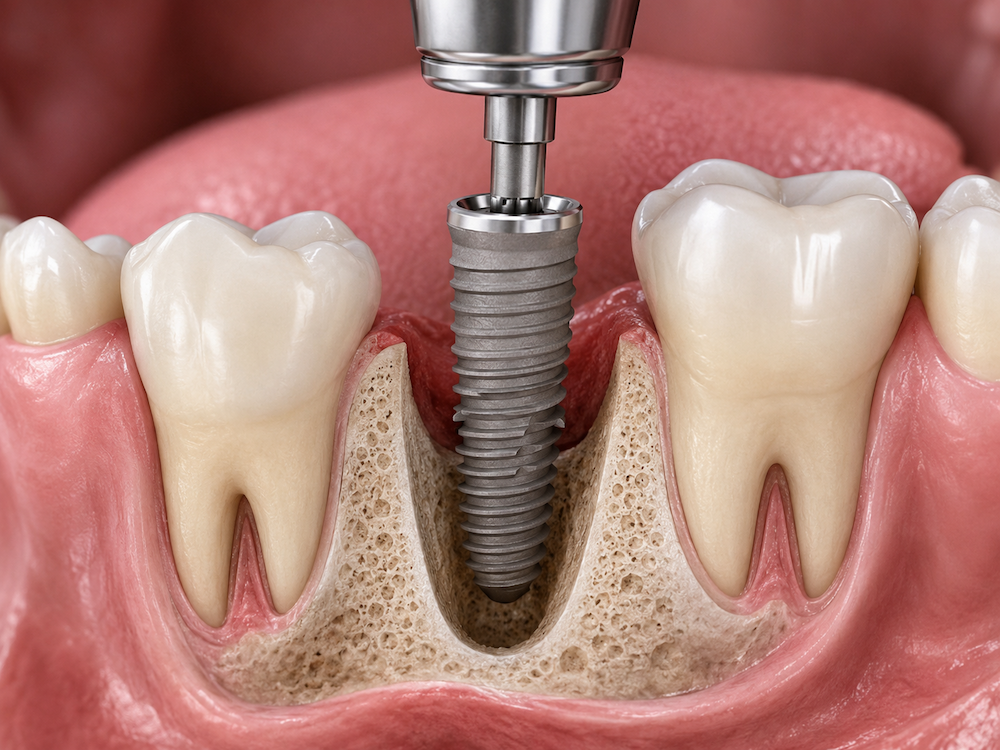
A same-day dental implant means that the dentist places an implant immediately after removing a damaged tooth.
During the same appointment, the dentist first extracts the tooth. The extraction socket is then cleaned carefully. After that, the implant is placed into the jawbone.
Traditional implant treatment usually follows a different process.
First, the dentist removes the tooth. Then, the extraction area heals for several months. Implant surgery takes place only after the bone has recovered.
In many cases, the healing period lasts about three to six months. However, the exact time varies between patients.
A same-day dental implant combines tooth extraction and implant placement into one procedure.
Therefore, it may offer several benefits:
- It may reduce the number of surgical procedures.
- It may shorten the total treatment period.
- It may reduce repeated discomfort.
- It may help maintain the shape of the extraction area.
- It may support the natural contour of the gum.
However, same-day implant treatment is not suitable for every patient.
The dentist must first confirm that the remaining bone can hold the implant firmly. The gum condition, infection level, bite force, and general health also matter.
Therefore, convenience alone cannot determine whether this treatment is appropriate.
Why Does a Same-Day Dental Implant Require Strict Conditions?
A same-day dental implant sounds simple. However, the procedure places high demands on the condition of the extraction site.
After a tooth is removed, an empty socket remains in the jawbone.
The implant must sit firmly inside or beyond this socket. It cannot simply stay loose inside the empty space.
The implant needs enough contact with healthy bone. This contact creates initial stability.
Initial stability is important because the implant must remain still during healing. Excessive movement may interrupt bone healing around the implant.
Therefore, the dentist must assess several conditions before treatment:
- The amount of remaining bone
- The shape of the extraction socket
- The condition of the socket walls
- The location of infection
- The health of the gum tissue
- The patient’s bite pressure
- The position of nearby nerves or sinuses
- The patient’s general health
In addition, the final decision may not be possible until the tooth has been removed.
X-rays and CBCT scans provide useful information. However, the dentist may find unexpected bone damage during extraction.
For example, a thin bone wall may break while the tooth is removed.
Therefore, the dentist may prepare both an immediate plan and a delayed plan before surgery.
Who May Be Suitable for a Same-Day Dental Implant?
A same-day dental implant is more suitable when the extraction site meets several important conditions.
These conditions help the implant remain stable during the healing process.
Good Jawbone Condition
The bone around the extraction socket should be relatively complete.
The socket walls should also provide enough support for the implant.
In particular, the dentist needs healthy bone around or beyond the tooth root. This bone helps hold the implant firmly.
Suitable bone conditions often include:
- Complete or nearly complete socket walls
- Enough bone height
- Enough bone width
- Acceptable bone density
- No large bone defect
- Enough healthy bone for implant stability
If the surrounding bone is too thin, the implant may not remain stable.
In addition, a large bone defect may make correct implant positioning difficult.
Therefore, good bone condition is one of the most important requirements.
No Uncontrolled Acute Infection
The extraction site should not have uncontrolled acute infection.
For example, severe swelling, active pus, spreading infection, or extensive tissue damage may increase treatment risks.
However, the presence of a chronic infection does not always mean immediate placement is impossible.
In selected cases, the dentist may remove the infected tissue completely. The socket can then be cleaned and disinfected.
The implant may still be placed when enough healthy bone remains.
Therefore, the dentist mainly considers:
- Whether the infection can be fully cleaned
- Whether the infection has destroyed the socket walls
- Whether enough healthy bone remains
- Whether the implant can gain initial stability
- Whether the surrounding tissue can heal normally
If these conditions cannot be achieved, delayed implant placement may be safer.
Healthy Gum Tissue
Healthy gum tissue also plays an important role.
The gum helps protect the surgical area. It also affects the appearance of the final implant crown.
When the gum is healthy, the wound often heals more predictably.
Suitable gum conditions usually include:
- No severe active gum inflammation
- No large soft-tissue defect
- Adequate gum thickness
- Good oral hygiene
- Stable gum margins
- No uncontrolled periodontal infection
Thin gum tissue may shrink more easily after surgery.
This problem matters especially in the front teeth. Gum recession may expose the implant surface or make the crown look too long.
Therefore, the dentist may recommend a gum graft in some cases.
Controllable Bite Force
The implant should not receive excessive pressure during early healing.
Although the implant is placed into the bone, it has not yet formed a strong biological connection with the bone.
This healing process takes time.
Therefore, strong chewing pressure may affect implant stability.
The dentist pays close attention to:
- The position of the missing tooth
- The patient’s bite pattern
- Whether the patient grinds the teeth
- Whether the patient clenches the jaw
- Whether the implant will receive direct pressure
- Whether a temporary crown will be used
Back teeth usually receive stronger chewing forces than front teeth.
In addition, patients with nighttime teeth grinding may place repeated pressure on the implant.
Therefore, these patients may need additional protection.
Is a Same-Day Dental Implant the Same as a Same-Day Tooth?
Many patients think a same-day dental implant means they will receive a permanent tooth immediately.
However, these two ideas are different.
A same-day dental implant refers to the time of implant placement.
The dentist places the implant on the same day as the extraction.
However, this does not always mean that the final crown will also be placed that day.
In some cases, the dentist may attach a temporary crown.
However, this temporary crown may not contact the opposing teeth during biting.
The dentist may adjust it to reduce chewing pressure.
In other cases, the implant may remain under the gum or under a healing cap.
The patient may use another temporary restoration during healing.
The final crown is usually placed after the implant has integrated with the jawbone.
Therefore, patients should understand three different steps:
- Tooth extraction
- Implant placement
- Crown placement
These steps may happen at different times.
A same-day dental implant only confirms that extraction and implant placement happen during the same appointment.
Which Patients May Not Be Suitable?
Some conditions make same-day implant placement more difficult or less predictable.
In these situations, the dentist may recommend delayed implant treatment.
This decision does not mean that implant treatment will fail.
Instead, delayed treatment may create a safer and more stable foundation.
Severe Periodontal Disease
Severe periodontal disease may destroy the bone around the tooth.
As the disease progresses, the jawbone slowly absorbs.
Therefore, the extraction socket may not have enough bone to hold an implant.
The gum tissue may also have active inflammation.
Common signs of severe periodontal disease include:
- Deep periodontal pockets
- Loose teeth
- Gum bleeding
- Gum swelling
- Gum recession
- Bad breath
- Significant bone loss
- Pus around the teeth
After the tooth is removed, the socket walls may be thin or incomplete.
In this situation, the implant may not gain enough initial stability.
Therefore, the dentist may first control the periodontal disease.
The patient may need:
- Deep dental cleaning
- Periodontal treatment
- Better plaque control
- Smoking reduction
- Bone grafting
- Regular periodontal maintenance
After the inflammation becomes stable, the dentist can reassess the implant site.
A history of periodontal disease does not automatically prevent implant treatment.
However, active and uncontrolled disease increases the risk of future implant problems.
Severe Root-End Infection or a Large Lesion
A root-end lesion may form when infection spreads beyond the tooth root.
The surrounding bone may gradually become damaged.
Small lesions do not always prevent same-day implant treatment.
The dentist may remove the infected tissue and clean the socket.
However, a large lesion can create a major bone defect.
Examples include:
- A large periapical lesion
- A large granuloma
- A cyst-like bone defect
- Extensive root infection
- Severe bone destruction
- Infection involving several socket walls
After extraction, there may not be enough healthy bone to stabilize the implant.
In this case, the dentist may recommend a staged treatment plan.
The treatment may include:
- Tooth extraction
- Removal of infected tissue
- Socket cleaning
- Bone grafting
- A healing period
- Implant placement after bone recovery
Although this plan takes longer, it may improve implant stability.
It may also allow the dentist to position the implant more accurately.
Therefore, waiting may provide a better long-term result.
Insufficient Bone Volume
Adequate bone is essential for any dental implant.
When the jawbone is too narrow or too low, the implant may not receive enough support.
Bone loss may result from:
- Long-term periodontal disease
- Chronic tooth infection
- Previous trauma
- Long-term tooth loss
- Natural bone remodeling
- A large extraction defect
Insufficient bone often affects the upper back teeth.
The maxillary sinus sits above this area.
When the available bone below the sinus is too short, the implant may not have enough support.
In some cases, the dentist may perform a sinus lift and implant placement during the same appointment.
However, this option requires enough remaining bone for initial stability.
If the bone height is very limited, the dentist may recommend a sinus lift first.
The implant is then placed after healing.
Therefore, a low sinus does not always make same-day treatment impossible.
However, it can make the procedure more complex.
Damage to the Extraction Socket
The extraction socket has several bone walls.
These walls support the gum and help maintain the shape of the jawbone.
If one or more walls have major damage, immediate placement may become difficult.
Common causes include:
- Severe periodontal disease
- Root infection
- Tooth fracture
- Dental trauma
- Difficult tooth extraction
- Thin facial bone
- Previous surgery
The facial bone wall is especially important in the front teeth.
This wall sits on the lip or cheek side of the tooth.
It is often naturally thin.
If this wall is missing, the gum may shrink after extraction.
The final crown may then look longer than nearby teeth.
The dentist may use bone grafting to repair a small defect.
However, a large defect may require separate bone regeneration.
Therefore, the condition of the socket walls affects both implant stability and appearance.
Poorly Controlled Diabetes
Diabetes can affect wound healing and infection control.
However, diabetes does not automatically prevent implant treatment.
The level of blood glucose control is more important than the diagnosis alone.
Patients with well-controlled diabetes may still receive dental implants.
However, poorly controlled diabetes can increase several risks:
- Delayed wound healing
- Higher infection risk
- Slower bone healing
- Gum inflammation
- Peri-implant disease
- Implant failure
Before treatment, the dentist may ask about:
- Recent blood glucose levels
- HbA1c results
- Diabetes medication
- Previous healing problems
- Other diabetes complications
- Oral hygiene habits
If the blood sugar remains unstable, the dentist may recommend improving control before surgery.
Therefore, patients should provide complete medical information.
This information helps the dentist choose the safest treatment time.
Heavy Smoking
Smoking can affect the blood supply to the gum and bone.
It may also reduce the body’s ability to heal after surgery.
As a result, smokers may face a higher risk of implant complications.
Possible problems include:
- Slower wound healing
- Increased infection risk
- Gum recession
- Bone loss
- Peri-implant inflammation
- Implant failure
However, smoking is not always an absolute contraindication.
The dentist must consider the amount of smoking and the condition of the mouth.
A patient who smokes heavily and has severe periodontal disease may have a much higher risk.
By contrast, a light smoker with healthy bone and good oral hygiene may still qualify in selected cases.
Even so, stopping smoking before and after surgery can support healing.
Long-term smoking cessation also helps protect the implant.
Therefore, patients should not hide their smoking habits from the dentist.
Honest information allows more accurate risk assessment.
Teeth Grinding and Excessive Bite Pressure
Teeth grinding can place strong pressure on dental implants.
This habit often happens during sleep.
Many patients do not know they grind their teeth.
Possible signs include:
- Worn tooth surfaces
- Cracked teeth
- Broken fillings
- Morning jaw pain
- Headaches
- Enlarged chewing muscles
- Frequent crown damage
A same-day implant needs protection during early healing.
Strong pressure may cause small movements around the implant.
These movements may interfere with bone integration.
Therefore, the dentist may avoid attaching a temporary crown immediately.
Alternatively, the dentist may adjust the crown so it does not touch during biting.
A night guard may also help protect the implant after treatment.
Teeth grinding does not always prevent same-day implant placement.
However, it may change the temporary restoration plan.
Why May Bone Grafting Still Be Needed?
Some patients believe a same-day dental implant avoids bone grafting.
However, this is not always true.
A natural tooth root and a dental implant have different shapes.
After the implant enters the extraction socket, a gap may remain between the implant and the bone wall.
The dentist may fill this gap with bone graft material.
Bone grafting may help:
- Support new bone formation
- Maintain the shape of the ridge
- Reduce bone collapse
- Support the gum contour
- Fill a small bone defect
However, bone graft material cannot hold an unstable implant.
The implant still needs enough natural bone for initial stability.
Therefore, a graft supports healing, but it does not replace healthy jawbone.
If the bone defect is too large, the dentist may perform grafting first.
Implant placement then takes place after the graft heals.
Why Is Careful Tooth Extraction Important?
The success of a same-day dental implant begins with tooth removal.
The dentist should remove the tooth as carefully as possible.
The goal is to protect the surrounding bone and gum.
For a multi-rooted tooth, the dentist may divide the tooth into sections.
Each root can then be removed separately.
This method may reduce pressure on the socket walls.
After extraction, the dentist examines the area.
The dentist checks:
- Whether the socket walls remain intact
- Whether infection remains
- Whether enough bone is available
- Whether the implant can gain stability
- Whether bone grafting is necessary
- Whether immediate placement is still safe
Sometimes, the actual condition differs from the scan.
For example, a hidden crack may exist in the facial bone.
Therefore, the treatment plan may change during surgery.
This change does not mean the dentist lacks skill.
Instead, the dentist is responding to the real condition of the bone.
What Happens If You Cannot Receive a Same-Day Dental Implant?
Not qualifying for a same-day dental implant does not mean you cannot receive an implant.
It also does not mean your future implant will have a lower success rate.
Traditional delayed implant treatment remains a reliable option.
The treatment process may include several stages.
First, the dentist removes the damaged tooth.
Next, the socket heals.
If necessary, bone grafting may take place at the same time as extraction.
After the bone has healed, the dentist places the implant.
The implant then integrates with the jawbone.
Finally, the dentist installs the final crown.
This process takes longer.
However, it may offer several advantages:
- Infection has more time to resolve.
- Bone grafting has more time to heal.
- The dentist can assess the healed ridge.
- Implant placement may become more predictable.
- The gum can become more stable.
- The implant may gain stronger bone support.
Therefore, delayed implant placement is not an inferior treatment.
In many complex cases, it is the safer choice.
How Long Does Traditional Implant Treatment Take?
The original Chinese article states that traditional implant treatment often takes four to six months.
This estimate is reasonable for many straightforward cases.
However, the total period varies.
Some patients may complete treatment sooner.
Others may need more time.
The treatment period depends on:
- Bone healing
- Bone grafting
- Sinus lift surgery
- Infection control
- Gum treatment
- Implant stability
- The location of the implant
- General health
- The design of the final restoration
For example, a patient who needs a large bone graft may wait longer.
A patient with a simple extraction and good bone may have a shorter process.
Therefore, patients should not compare treatment plans only by total months.
The quality of healing matters more than the speed of treatment.
What Should Patients Ask Before Treatment?
Before choosing a same-day dental implant, patients should understand the full plan.
Useful questions include:
- Is the tooth definitely impossible to save?
- Is there enough bone for immediate placement?
- Are the socket walls complete?
- Is there active infection?
- Will bone grafting be necessary?
- Will I receive a temporary tooth?
- Can I chew with the temporary tooth?
- When will I receive the final crown?
- What happens if immediate placement is not possible?
- Do smoking or diabetes affect my treatment?
- How should I clean the implant area?
- How often should I return for follow-up visits?
The dentist should explain both the preferred plan and the backup plan.
This preparation helps patients avoid unrealistic expectations.
It also reduces anxiety if the plan changes during surgery.
How Should You Care for the Implant After Surgery?
Good postoperative care supports implant healing.
Patients should follow the dentist’s instructions carefully.
Common recommendations include:
- Avoid chewing hard food on the surgical side.
- Do not touch the implant with your tongue or fingers.
- Keep the mouth clean.
- Brush the nearby teeth gently.
- Use mouthwash only as directed.
- Take medication as prescribed.
- Avoid smoking.
- Attend follow-up appointments.
- Report increasing pain or swelling.
- Avoid strong pressure on the temporary crown.
Mild swelling or discomfort may occur after surgery.
However, symptoms should gradually improve.
Patients should contact the dentist if they notice:
- Increasing swelling
- Severe pain
- Continuous bleeding
- Pus or a bad taste
- Fever
- Implant movement
- Temporary crown movement
Early treatment of problems can protect the implant.
Final Summary
A same-day dental implant combines tooth extraction and implant placement during one appointment.
It may shorten treatment time and reduce the number of surgical procedures.
It may also help preserve the shape of the extraction area.
However, it is not suitable for every patient.
Good candidates usually have enough healthy bone, manageable infection, stable gum tissue, good oral hygiene, and controllable bite pressure.
By contrast, severe periodontal disease, major bone loss, a large root-end lesion, uncontrolled diabetes, heavy smoking, or strong teeth grinding may increase treatment risks.
These factors are not always absolute contraindications.
However, the dentist must evaluate their severity.
When immediate placement is unsafe, delayed implant treatment may provide a more stable result.
Therefore, patients should not focus only on speed.
A treatment that takes longer may protect the bone, gum, implant, and final crown.
When a dentist recommends waiting, bone grafting, or infection control, the goal is not to make treatment more complicated.
The goal is to help the implant remain stable and functional for many years.
Ultimately, the best same-day dental implant plan is not simply the fastest plan.
It is the plan that offers the safest healing process and the most reliable long-term result.