


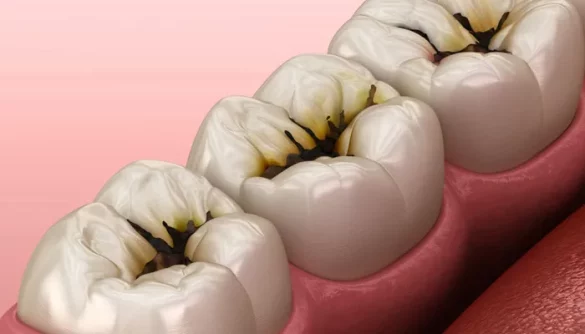
Scientists have identified a natural compound that may dramatically reduce the sticky film behind plaque and cavities. Found in certain vegetables, the low-toxicity molecule has the potential to be added to toothpaste and mouthwash, helping teeth stay cleaner, stronger, and healthier.
Millions of people worldwide struggle with plaque and tooth decay, either chronically or at some point in their lives. While regular brushing, flossing, mouthwash, and dental visits help, researchers say more effective solutions are still needed.
A team from Ben-Gurion University of the Negev, working with colleagues at Sichuan University and the National University of Singapore, discovered a naturally occurring compound called 3,3′-Diindolylmethane (DIM), also known as bisindole. Laboratory tests show that DIM can reduce the biofilms responsible for plaque and cavities by up to 90%. The compound is also known for its anti-carcinogenic properties. Their findings were published in the journal Antibiotics.
How the Molecule Targets Plaque
The human mouth is an ideal environment for bacteria such as Streptococcus mutans, a leading cause of tooth decay. After eating, this bacteria thrives in warm, sugary conditions, forming a sticky biofilm on teeth. This film contributes to plaque buildup, weakens enamel, and leads to cavities.
In lab tests, bisindole disrupted the biofilm by 90%, preventing the bacteria from multiplying.
Potential Impact on Oral Health
“The molecule, which has low toxicity, could be added to toothpastes and mouthwashes to significantly improve dental hygiene,” said Prof. Ariel Kushmaro, lead author and member of the Avram and Stella Goldstein-Goren Department of Biotechnology Engineering. He is also affiliated with the Ilse Katz Institute for Nanoscale Science and Technology and the Goldman Sonnenfeldt School of Sustainability and Climate Change.
The study, titled “3,3′-Diindolylmethane (DIM): A Potential Therapeutic Agent against Cariogenic Streptococcus mutans Biofilm,” was conducted by Prof. Kushmaro along with his student Yifat Baruch, Dr. Karina Golberg, Prof. Robert S. Marks, Qun Sun of Sichuan University, and Karina Yew-Hoong Gin of the National University of Singapore. The research received support from the International Research and Development Program of Sichuan and Singapore’s SMART innovation grant.
Caution: Laboratory Findings Only
Since the study was first published in 2023, no human or clinical trials have confirmed the effectiveness of DIM in preventing dental plaque or cavities. The reported 90% reduction of S. mutans biofilm was observed in laboratory conditions only. Currently, DIM is not approved as an active ingredient in over-the-counter dental products and is not included in commercially available toothpastes or mouthwashes making anticaries claims.