


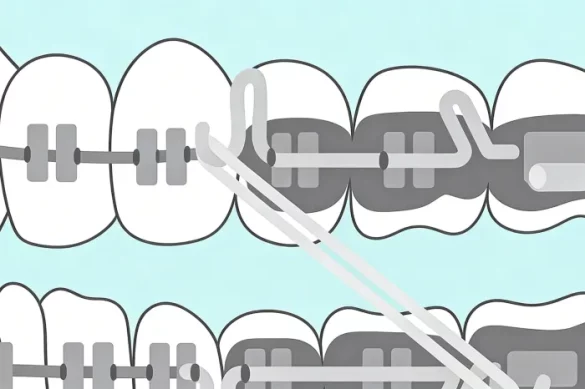
Orthodontic remedy with braces is predicated on numerous specific additives to obtain a healthy, immediately smile. Among those additives, the archwire is one of the maximum important. The sort of fabric used withinside the archwire at once impacts how tooth move, how cushty the enjoy is, or even how regularly modifications are needed. But what precisely are archwires made of, and why are those substances chosen?
What Is an Archwire?
Archwires are thin, bendy wires that join dental brackets throughout your tooth. When you put on braces, the archwire threads thru the brackets connected to every enamel. By making use of non-stop, mild strain, the archwire publications tooth into right alignment over time. While it seems like a easy twine, its layout and fabric technological know-how are relatively advanced.
Main Materials Used in Archwires
Different orthodontic wishes require special twine homes. Over the years, various metals and alloys had been evolved specially to be used in archwires. The primary substances consist of chrome steel, nickel-titanium (NiTi), and copper-nickel-titanium (CuNiTi). Each has specific advantages and is ideal for special levels of remedy.
Stainless Steel Archwires
Stainless metallic has been a mainstay in orthodontics for decades. It is strong, relatively immune to corrosion, and may be formed finely with out breaking. Stainless metallic archwires are crafted from remarkable alloys, usually a aggregate of iron, chromium, and nickel. Common sorts consist of 18-eight and 17-four chrome steel, named for the proportion of chromium and nickel.
The power of chrome steel lets in for extra manipulate all through enamel movement. It can supply regular strain over lengthy periods. Stainless metallic does now no longer lose its form easily, inspite of repeated modifications. It is likewise biocompatible, because of this that it’s far secure for maximum patients. However, a few human beings can also additionally have sensitivities or hypersensitive reactions to nickel, a factor in the alloy.
Nickel-Titanium (NiTi) Archwires
Nickel-titanium, regularly referred to as NiTi, is a relatively specialised alloy broadly utilized in contemporary-day orthodontics. NiTi archwires are maximum terrific for his or her flexibility and “form memory” effect. This method they may be bent or twisted however will go back to their authentic form whilst heated or uncovered to frame temperature.
This assets makes NiTi perfect for the preliminary degree of orthodontic remedy, in which lighter and extra non-stop forces are favored to begin enamel movement. NiTi’s flexibility additionally reduces affected person discomfort. These wires can live engaged, inspite of tooth which are substantially out of line, making them ideal for the early, leveling phase.
Copper-Nickel-Titanium (CuNiTi) Archwires
In latest years, the addition of copper has similarly more desirable the homes of nickel-titanium. Copper-nickel-titanium (CuNiTi) archwires provide extra steady pressure and continue to be bendy throughout a much broader temperature range.
One in their defining capabilities is retaining a regular pressure in the course of enamel motion, that could enhance the performance and luxury of orthodontic remedy. Studies have proven that CuNiTi wires have a bigger running variety and require much less common substitute as compared to everyday NiTi wires. This can probably translate to fewer orthodontic appointments and decrease universal remedy costs.
Advanced Properties: Shape Memory and Superelasticity
A crucial development in archwire generation is the improvement of alloys with unique mechanical properties. NiTi and CuNiTi archwires are regarded for both “form reminiscence” and “superelasticity.” Shape reminiscence shall we the twine go back to its authentic shape after being deformed, making sure non-stop strain on enamel. Superelasticity permits the twine to go through extensive bending with out everlasting deformation, that is treasured in turning in consistent forces and making sure affected person comfort.
The temperature at which an archwire transforms from tender to stiff is known as the temperature transition variety (TTR). Manufacturers layout wires to spark off at particular temperatures, normally near to what’s located in the mouth. This pleasant manage permits for gradual, predictable motion, this means that much less soreness and greater powerful remedy.
How Archwire Composition Affects Performance
Every cloth brings particular blessings to orthodontic care:
- Stainless Steel: Offers excessive electricity and stiffness. This manner more manage while specified enamel moves are needed. Stainless metallic is frequently used withinside the very last degrees of remedy to pleasant-music alignment.
- NiTi: Best for the early degrees, in which mild, bendy wires are required. Their superelastic conduct minimizes soreness for the duration of the crucial preliminary weeks.
- CuNiTi: Provides regular forces over a protracted variety of enamel motion and more thermal activation manage. These wires are favored in instances wanting non-stop adjustment with fewer twine changes.
Orthodontists cautiously pick out which sort to apply primarily based totally at the degree of remedy and the preferred result. As remedy progresses, sufferers will frequently enjoy a sequence of archwire changes, beginning with NiTi or CuNiTi for mild motion, observed through chrome steel for precision finishing.
Modern Variants and Multi-Force Archwires
Technological development has caused the improvement of multi-pressure and bio-lively archwires. These wires have awesome pressure zones alongside their length. For example, a twine may use mild pressure withinside the the front to deal with small enamel and better pressure closer to the returned for large molars. Multi-region and variable-pressure wires like TriTanium, Bio-Active, and others have in addition subtle manage, making remedy greater green and comfortable.
Temperature-activated and bendy multi-strand wires also are popular, especially for complicated or crowded instances. They provide progressed adaptability, lowering dangers of breakage or immoderate strain which can effect oral tissues.
Biocompatibility and Safety of Archwire Materials
All archwire substances used nowadays are fastidiously examined for protection, energy, and compatibility with the human body. Most humans can effectively use chrome steel, NiTi, or CuNiTi wires. For every body with documented allergies, particularly to nickel, orthodontists provide opportunity substances or coatings to lessen infection and the ability for reaction.
Proper cloth choice and production requirements are enforced via way of means of corporations just like the FDA and the American Dental Association (ADA). This guarantees the wires won’t corrode, degrade, or purpose damage at some stage in each day use.
The Impact of Storage and Handling
Scientific research have proven that the manner archwires are saved can have an effect on their performance. For instance, converting the temperature or maintaining wires in incorrect situations can modify their elasticity or hardness. Manufacturers suggest precise suggestions for garage to make certain every cord plays as supposed at some stage in remedy.
The Role of Research and Innovation
Continuous studies withinside the subject of biomechanics and metallurgy ends in new archwire designs. Modern research now no longer most effective take a look at energy and versatility however additionally recognition on how wires feature after scientific use and sterilization. The aim is continually to acquire consistent, predictable consequences for sufferers even as minimizing soreness and chair time.
Conclusion
The fulfillment of orthodontic remedy relies upon substantially on the selection of archwire substances. Stainless steel, nickel-titanium, and copper-nickel-titanium are the spine of present day orthodontics, every designed with affected person comfort, effectiveness, and protection in mind. Understanding what archwires are manufactured from and the way they paintings can assist sufferers sense greater knowledgeable and assured for the duration of their adventure to a more fit smile. Innovations in cloth technology retain to push the boundaries, making nowadays’s braces greater powerful and cushty than ever.
Frequently Asked Questions
What is the maximum normally used cloth for archwires?
Nickel-titanium (NiTi) is extensively used, particularly withinside the early stages, because of its flexibility and form reminiscence properties.
Are archwire substances secure for everyone?
Yes, they may be commonly secure and biocompatible. For people with nickel allergies, opportunity substances or coatings are available.
Why do orthodontists extrade archwires at some stage in remedy?
Different substances offer awesome forces wanted at every level of enamel movement. As tooth align, stiffer wires like chrome steel are used for designated control.
Does the cord cloth have an effect on how frequently I go to the orthodontist?
Yes, superior substances consisting of CuNiTi can lessen the frequency of adjustments, making remedy greater efficient.
Can archwires rust or break?
Modern alloy wires are tremendously proof against rust and corrosion and are designed to face up to the demanding situations of the oral environment.