


Why Tooth Movement Does Not Stay at One Speed
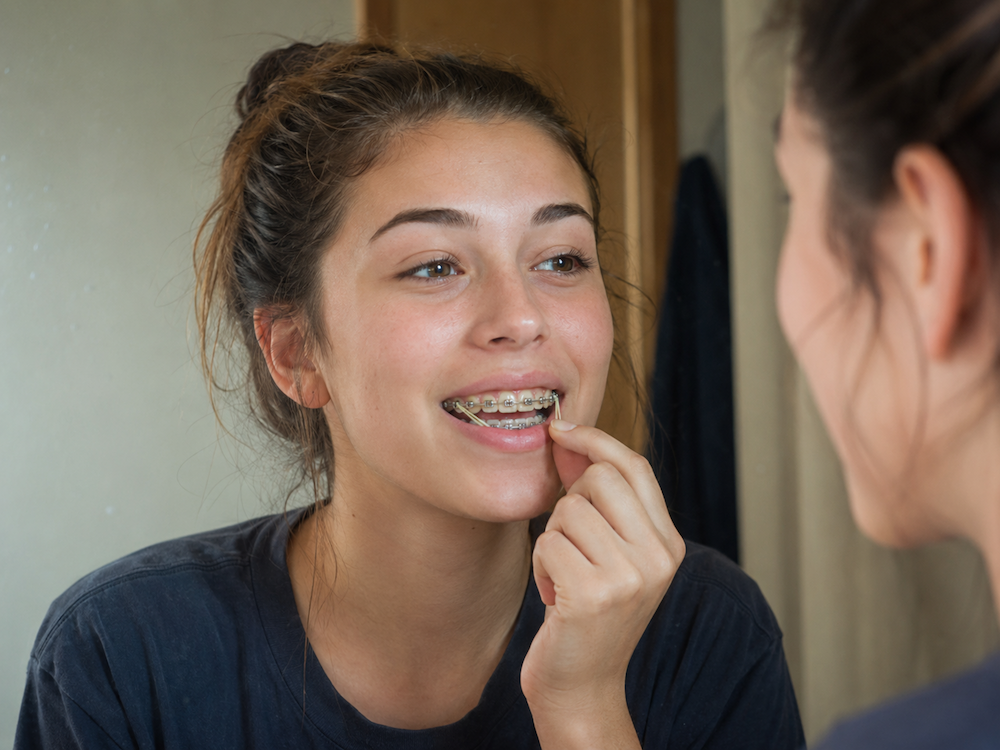
Many patients begin orthodontic treatment with the same habit. After every appointment, they look in the mirror and search for visible changes.
During the first few months, the teeth may appear to move quickly. Crowding improves, rotated teeth become straighter, and the smile starts to look more even.
However, progress may seem slower later. As a result, some patients worry that treatment has stopped working.
In reality, teeth do not move at one constant speed. Instead, orthodontic movement follows a changing biological process.
Several factors affect the speed:
- The type of tooth movement
- The treatment stage
- The patient’s age
- Bone metabolism
- Gum health
- The force used
- Patient cooperation
Therefore, fast visible change does not always mean fast overall progress. Likewise, slow visible change does not mean that nothing is happening.
The early stage often produces the most obvious cosmetic improvement. Meanwhile, the middle and final stages focus more on roots, bite, function, and stability.
How Teeth Actually Move Through Bone
Teeth do not sit directly inside solid bone. Instead, a thin layer called the periodontal ligament surrounds each root.
This ligament connects the tooth root to the jawbone. It also responds to orthodontic force.
When braces or aligners apply pressure, two different reactions begin.
On the pressure side:
- The ligament becomes compressed.
- Bone-removing cells become active.
- A small amount of bone breaks down.
- The tooth gains space to move.
On the tension side:
- The ligament stretches.
- Bone-forming cells become active.
- New bone develops behind the tooth.
- The tooth gains new support.
Therefore, tooth movement involves both removal and rebuilding.
This process takes time. Cells need to respond, bone needs to remodel, and the tissues need to recover.
As a result, teeth cannot move like objects sliding across a flat surface.
Instead, they move through living tissue. That is why orthodontic progress naturally rises and falls rather than staying perfectly even.
Why There Is a Biological Delay
After the orthodontist applies force, the tooth may not move immediately.
First, the periodontal ligament reacts. Then, cells begin changing the surrounding bone.
This creates a short biological delay.
During this period:
- Blood flow changes around the tooth.
- Cells respond to pressure.
- Bone-removing cells become active.
- New pathways for movement begin to form.
Therefore, patients may feel pressure before they see any visible change.
The delay can vary from one person to another. It can also differ between teeth.
For example, a front tooth may respond faster than a molar. Likewise, a lightly rotated tooth may move sooner than a tooth that needs root movement.
So, the absence of visible progress after a few days does not mean the appliance has failed.
Orthodontic forces need time to activate the biological response.
This is also why dentists schedule appointments several weeks apart. The tissues need enough time to respond before the next adjustment.
Different Tooth Movements Have Different Speeds
Not every orthodontic movement works in the same way.
Some movements mainly change the position of the tooth crown. Others require the crown and root to move together.
Common types of movement include:
- Tipping
- Rotation
- Translation
- Intrusion
- Extrusion
- Root movement
- Torque control
Tipping often creates faster visible change. The crown moves more than the root, so the tooth may look straighter quite quickly.
Rotation can also look dramatic, especially in the front teeth. However, some rotations remain difficult because the surrounding fibers may pull the tooth back.
Translation moves the entire tooth through bone. Therefore, it usually takes longer.
Root movement also needs more precise force. The crown may look nearly unchanged while the root slowly moves into a safer position.
Thus, visible speed depends on what the orthodontist is trying to achieve.
A tooth may seem stationary even while important root correction is taking place.
Stage One: Alignment and Leveling
The first major stage usually focuses on alignment and leveling.
This stage often begins during the first month and may continue for six to nine months. However, the exact timing varies.
The main goals include:
- Straightening crowded teeth
- Correcting rotations
- Bringing teeth into the dental arch
- Improving uneven tooth height
- Creating a smoother arch shape
This stage usually produces the fastest visible changes.
Front teeth often respond especially well. Therefore, patients may notice that their smile looks much straighter within a few months.
The orthodontist often uses light and flexible wires at this stage. These wires guide the teeth gently toward better positions.
Because early movement often involves tipping and rotation, the visual effect can appear dramatic.
As a result, patients commonly feel encouraged during this phase.
However, straighter teeth do not mean the full treatment has finished. The roots, spaces, bite, and long-term stability still need correction.
Why the First Stage Looks So Fast
The first stage often seems faster because the starting problems are easy to see.
For example:
- One tooth may sit behind another.
- A front tooth may turn sideways.
- The dental arch may look uneven.
- Several teeth may overlap.
Even a small movement can create a large visual difference.
In addition, the orthodontist often starts with light wires. These wires can engage crowded teeth without using excessive force.
As the teeth begin to line up, the change appears obvious in photographs.
However, this early improvement mainly concerns alignment.
The teeth may still have:
- Poor root positions
- Open spaces
- An incorrect bite
- Uneven contacts
- Excessive overjet
- A deep overbite
Therefore, patients should not assume that the treatment is nearly complete after the front teeth look straight.
The next stages usually take longer because they involve deeper and more complex corrections.
Stage Two: Space Closure
After alignment, many patients enter a space-closing stage.
This commonly applies to patients who had:
- Tooth extractions
- Significant crowding
- Expansion
- Gaps before treatment
- Teeth moved out of the arch
The orthodontist gradually moves teeth into the available space.
This stage may last six months, one year, or longer.
The goals can include:
- Closing extraction spaces
- Moving front teeth backward
- Reducing protrusion
- Improving the facial profile
- Controlling the position of back teeth
- Maintaining the dental midline
Patients may feel that progress has slowed.
However, the teeth may still be moving steadily.
The difference is that space closure often involves larger groups of teeth. It may also require more root control.
Therefore, the process needs more bone remodeling.
The gap may close only a small amount each month. Still, the cumulative change can become significant over time.
Why Gap Closure Feels Slower
Closing a visible gap may seem simple. However, controlled space closure requires careful force management.
The orthodontist must avoid unwanted movements, such as:
- Back teeth moving forward too much
- Front teeth tipping instead of moving bodily
- The dental midline shifting
- Roots moving into poor positions
- The bite becoming uneven
Therefore, speed cannot become the only goal.
The orthodontist needs to close the space while protecting:
- Root position
- Bone support
- Gum health
- Facial balance
- Bite function
For this reason, the dentist may use elastics, power chains, closing loops, temporary anchorage devices, or other appliances.
Each method controls force differently.
So, progress may look slow in the mirror. However, the treatment may be making important changes beneath the gumline.
The side profile may also improve during this stage, even when the teeth look similar from the front.
Stage Three: Bite Correction
Straight teeth do not always create a healthy bite.
Therefore, the orthodontist must also coordinate the upper and lower arches.
This stage may focus on:
- Overbite
- Underbite
- Crossbite
- Open bite
- Overjet
- Back tooth contact
- Dental midline
- Jaw coordination
Patients may need orthodontic elastics during this phase.
The elastics help guide the upper and lower teeth into a better relationship.
However, bite correction often feels less dramatic than early alignment.
The patient may not notice small changes in:
- Molar position
- Canine relationship
- Tooth contact
- Jaw closure
- Midline balance
Still, these changes strongly affect chewing and long-term stability.
Therefore, this phase can take time.
The orthodontist may slow the movement to protect roots and maintain control.
Although the smile may look similar from week to week, the bite may be improving gradually.
Why Bite Changes Are Harder to See
Most people judge progress by looking at the front teeth.
However, bite correction often happens toward the sides and back of the mouth.
For example, the orthodontist may be trying to:
- Move a molar slightly backward
- Improve canine contact
- Correct a crossbite
- Increase contact between back teeth
- Reduce an open bite
- Control how the jaws close
These changes may measure only a few millimeters.
Yet they can make a major difference in function.
Therefore, patients may not notice them in a normal mirror.
The dentist can track progress through:
- Intraoral photographs
- Digital scans
- Dental models
- Bite checks
- X-rays
- Measurement of spaces
This professional assessment often reveals progress that the patient cannot see.
So, a quiet-looking stage may still be highly active.
Stage Four: Root Position and Torque Control
Once the crowns look straight, the roots may still need adjustment.
This stage involves precise control of tooth angulation and torque.
The orthodontist may correct:
- Root parallelism
- Tooth inclination
- Front tooth torque
- Canine position
- Molar angulation
- Bone support around roots
These movements usually happen slowly.
The crown may hardly change. However, the root moves through the bone.
This is important because poor root position can affect:
- Stability
- Gum health
- Bone support
- Space closure
- Crown appearance
- Future dental treatment
Therefore, the orthodontist may use stronger rectangular wires during this stage.
These wires help control the three-dimensional position of each tooth.
Patients may feel that treatment has stopped. In reality, the orthodontist may be correcting the part of the tooth that cannot be seen.
This stage often separates a quick cosmetic result from a stable functional result.
Stage Five: Finishing and Detailing
The final stage focuses on small but important adjustments.
The orthodontist may refine:
- Tooth height
- Contact points
- Tooth angulation
- Midline position
- Bite tightness
- Small rotations
- Space distribution
- Final arch shape
These corrections may seem minor.
However, they help create:
- Better chewing
- Improved stability
- Easier cleaning
- More balanced force
- A more natural smile
This stage often takes several months.
Patients may become impatient because the teeth already look straight.
However, the orthodontist is no longer chasing dramatic movement. Instead, the goal is accuracy.
A tiny change in one tooth may improve the contact of several other teeth.
Therefore, finishing requires patience.
The orthodontist may bend the wire, change elastics, reposition a bracket, or make small aligner refinements.
These details help protect the long-term result.
Which Stage Shows the Biggest Visible Change?
For most patients, the alignment and leveling stage produces the biggest visible change.
This usually happens during the first several months.
The reasons are simple:
- Crowded teeth begin to separate.
- Rotated teeth turn into place.
- Front teeth become more even.
- The arch starts to look smoother.
- The smile becomes more symmetrical.
Therefore, the early stage often feels exciting.
However, other changes may become more noticeable later.
During space closure, patients may notice:
- Less lip protrusion
- A better side profile
- Smaller extraction gaps
- Improved front tooth position
During bite correction, patients may notice:
- Better contact while chewing
- Less overbite
- Less overjet
- Improved jaw closure
So, each stage has a different type of progress.
The first stage usually looks faster. However, later stages often create the final function and facial balance.
Does Age Affect Tooth Movement?
Age can influence the biological response.
In general, teenagers may show more active bone remodeling.
Therefore, some movements may happen faster in younger patients.
Adults can still receive effective treatment. However, their tissues may respond more slowly.
Adult treatment may also involve:
- Older fillings
- Missing teeth
- Gum recession
- Bone loss
- Crowns
- Previous root canal treatment
- Reduced bone metabolism
These factors may affect speed and planning.
However, age alone does not decide the result.
A healthy adult with good cooperation may progress very well.
Meanwhile, a teenager with poor elastic wear or frequent broken brackets may experience delays.
Therefore, health and cooperation often matter more than age by itself.
The orthodontist will adjust force and timing according to each patient.
How Bone Metabolism Affects Progress
Bone metabolism describes how quickly the body removes and rebuilds bone.
This process varies between people.
Factors may include:
- Age
- Genetics
- Hormone levels
- General health
- Nutrition
- Medication
- Smoking
- Bone density
A patient with active bone remodeling may respond more quickly.
However, faster movement is not always better.
The orthodontist still needs to control the direction and amount of force.
Some medications can also affect bone activity.
Therefore, patients should tell the orthodontist about:
- Long-term medications
- Bone disease
- Hormonal treatment
- Vitamin deficiencies
- Smoking habits
- Chronic medical conditions
This information helps the dentist plan safer treatment.
Orthodontic progress depends on the body’s biological response, not only on the appliance.
Why Stronger Force Does Not Mean Faster Movement
Many patients assume that more force will move teeth faster.
However, this is not true.
Modern orthodontics usually favors light and controlled force.
Gentle force supports healthy bone remodeling.
In contrast, excessive force may:
- Compress the periodontal ligament too much
- Reduce blood flow
- Delay cell activity
- Increase pain
- Cause root resorption
- Damage gum tissue
- Slow tooth movement
Therefore, stronger pressure can actually create a delay.
The tooth may enter a period of reduced movement while the tissues recover.
So, pain does not measure treatment effectiveness.
A very sore appointment does not necessarily produce more progress.
The orthodontist aims for the right force, not the strongest force.
This balance supports safer and more predictable movement.
How Patient Cooperation Changes the Timeline
Patient cooperation has a major effect on treatment speed.
The orthodontist can design the plan. However, the patient must help carry it out.
Important responsibilities include:
- Wearing aligners for the required hours
- Wearing elastics correctly
- Attending appointments
- Avoiding hard foods
- Protecting brackets
- Keeping the teeth clean
- Reporting broken appliances
- Following appliance instructions
For example, elastics only work while the patient wears them.
If the patient skips several days, the bite correction may stop.
Likewise, a broken bracket cannot guide the tooth properly.
Therefore, repeated breakages can delay treatment.
Clear aligners also require strong discipline.
If the patient wears them for too few hours, the teeth may not track correctly.
As a result, the dentist may need extra aligners or refinements.
So, cooperation can make the difference between steady progress and repeated delays.
Why Broken Brackets Cause Delays
A bracket connects the tooth to the orthodontic wire.
When it breaks, that tooth may lose active control.
The tooth may:
- Stop moving
- Move in the wrong direction
- Rotate again
- Fall behind nearby teeth
- Create a new imbalance
Therefore, one broken bracket can affect more than one appointment.
The orthodontist may need to repair the bracket and return to an earlier wire.
This can add time to treatment.
Common causes of bracket failure include:
- Hard candy
- Ice
- Nuts
- Sticky food
- Biting pens
- Chewing hard bones
- Using teeth to open packages
Therefore, dietary advice protects more than the bracket itself.
It also protects the treatment schedule.
Patients should contact the clinic when a bracket breaks.
Waiting until the next regular visit may create a longer delay.
How Oral Health Affects Movement
Healthy gums and bone provide the foundation for tooth movement.
If the gums remain inflamed, treatment may become slower and riskier.
Warning signs include:
- Bleeding
- Swelling
- Bad breath
- Gum recession
- Pus
- Loose teeth
- Pain while brushing
Plaque can collect easily around braces.
Therefore, patients need careful cleaning.
They may use:
- A soft toothbrush
- An orthodontic brush
- Interdental brushes
- Floss threaders
- Water flossers
- Fluoride toothpaste
If gum disease develops, the orthodontist may pause active movement.
The patient may need professional cleaning or periodontal treatment first.
This protects the supporting tissues.
A healthy foundation allows the orthodontist to continue with safer force.
Therefore, oral hygiene directly affects both treatment quality and timing.
Why Teeth May Seem to Stop Moving
A temporary slowdown can happen for several reasons.
Possible causes include:
- Biological delay
- Root movement
- Bite correction
- Poor elastic wear
- Broken brackets
- Aligner tracking problems
- Gum inflammation
- Dense bone
- A tooth blocked by nearby roots
- Need for a new wire
Sometimes, the teeth are still moving, but the change is too small to see.
In other cases, the orthodontist may intentionally hold one area stable while moving another.
Therefore, patients should not assume that slow progress means failure.
The dentist can check:
- Tooth position
- Space size
- Root direction
- Bite contact
- Appliance function
If a true problem exists, the orthodontist may adjust the plan.
However, many apparent “stalls” form part of normal treatment.
How to Track Progress More Accurately
Looking in the mirror every day can make changes hard to notice.
The movement is usually gradual.
Therefore, monthly comparison works better.
Patients can track progress through:
- Front-view photographs
- Side-profile photographs
- Smile photographs
- Intraoral photographs
- Retainer or aligner fit
- Gap measurements
- Bite changes
Try to use the same lighting and angle each time.
This makes comparison easier.
However, photographs still show only the crowns.
They cannot show root movement or bone changes.
Therefore, professional records remain more reliable.
The orthodontist may use digital scans, models, and X-rays to assess progress.
So, photographs help motivation, while clinical records guide treatment.
What Progress Should You Notice in the First Six Months?
During the first six months, many patients notice:
- Straighter front teeth
- Less crowding
- Reduced rotation
- A smoother dental arch
- Improved smile appearance
- Better access for cleaning
However, not every patient follows the same timeline.
Severe crowding may take longer.
Likewise, impacted teeth may need more time before visible movement begins.
Patients with clear aligners may also progress differently.
The treatment may first create space before straightening one obvious tooth.
Therefore, one patient may see dramatic change in three months. Another may need longer.
Both timelines can remain normal.
The orthodontist should explain the early goals before treatment begins.
This helps the patient understand what to expect.
What Progress Happens in the Middle Stage?
During the middle stage, patients may notice fewer dramatic changes.
However, important progress often includes:
- Closing spaces
- Moving front teeth backward
- Improving the side profile
- Correcting the dental midline
- Coordinating upper and lower arches
- Improving canine and molar relationships
This stage often requires patience.
The teeth may look straight, but the bite still needs work.
Patients may also need elastics.
Consistent elastic wear can strongly affect progress.
Therefore, the patient becomes an active partner in this stage.
The orthodontist may also change to stronger or more rigid wires.
These wires provide better root and bite control.
So, the treatment may feel slower, yet become more precise.
What Happens Near the End?
Near the end, the orthodontist checks fine details.
These may include:
- Small rotations
- Uneven tooth height
- Open contacts
- Weak bite contacts
- Midline differences
- Tooth angulation
- Root position
The dentist may reposition one or more brackets.
This can surprise patients because they thought treatment was almost complete.
However, bracket repositioning helps refine the final tooth position.
The orthodontist may also order a new set of aligners for finishing.
These refinements do not mean the first treatment failed.
Instead, they help improve accuracy.
The final months may produce the least visible change.
However, they often make the result more stable and functional.
Therefore, patients should avoid pushing the dentist to remove the braces too early.
Advice for Patients Who Feel Impatient
Feeling impatient during treatment is normal.
However, several habits can make the process easier.
Set realistic expectations
Think of braces as a marathon rather than a sprint.
Early alignment feels fast. Later control takes more patience.
Look beyond the front teeth
Check your profile, bite, and space closure.
These areas may show progress that the front view misses.
Ask questions at appointments
Your orthodontist can explain the current stage.
This often reduces anxiety.
Follow instructions carefully
Wear elastics and aligners as directed.
Also, protect brackets and attend appointments.
Keep your mouth healthy
Good cleaning prevents interruptions.
Together, these habits support smoother progress.
When Should Slow Progress Become a Concern?
Slow movement is often normal.
However, patients should contact the orthodontist when they notice:
- A broken wire
- A loose bracket
- An aligner that does not fit
- Severe gum swelling
- Tooth movement in the wrong direction
- A large gap that suddenly reopens
- Severe pain
- A loose tooth
- Missed treatment for several months
The orthodontist can then check the appliance and tissues.
Early action may prevent a larger delay.
However, patients should not compare their progress with friends or online videos.
Every treatment plan is different.
The orthodontist chooses movement according to the patient’s bite, roots, and bone.
Therefore, comparison often creates unnecessary worry.
Summary
Tooth movement during orthodontic treatment does not happen at one constant speed.
Instead, it follows a changing biological curve.
The first stage often creates the fastest visible improvement. Crowded and rotated teeth begin to align, so the smile can change quickly.
However, later stages usually focus on:
- Closing spaces
- Moving roots
- Correcting the bite
- Improving the facial profile
- Refining tooth positions
- Building long-term stability
These changes often happen more slowly. They may also remain difficult to see in the mirror.
Several factors affect the speed, including age, bone metabolism, gum health, force level, and patient cooperation.
Therefore, stronger force does not guarantee faster progress. In fact, excessive force may slow movement or damage tissues.
The best approach is patience, good hygiene, regular appointments, and careful compliance.
Early changes may provide excitement. However, the slower middle and final stages often determine the quality of the result.
Trust the process, stay in communication with your orthodontist, and focus on steady progress rather than daily changes.