


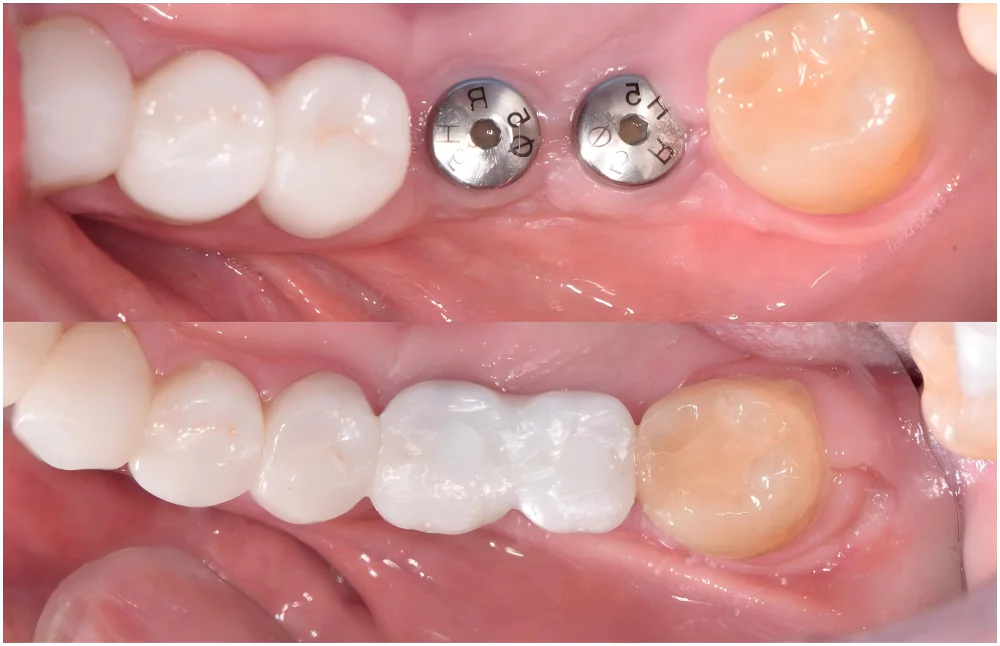
Before You Decide on Dental Implants
When a dentist says that a tooth cannot be saved, you may feel worried. You may also hear a recommendation for dental implants.
At that moment, many practical questions may come to mind:
- Will the surgery hurt?
- How many clinic visits will I need?
- Can the implant last for life?
- What happens if it fails?
- Is the treatment worth the cost?
These concerns are normal. In fact, almost every patient thinks about them before making a decision.
A dental implant is not a quick purchase. Instead, it is a medical treatment that may affect your chewing, appearance, comfort, and oral health for many years.
Therefore, you should understand the treatment before agreeing to it. You should also compare implants with bridges and removable dentures.
This guide explains five real questions that patients often ask. It will help you understand what the process involves. Moreover, it may help you prepare for a detailed conversation with your implant dentist.
What Is a Dental Implant?
A dental implant replaces the root of a missing tooth. It usually looks like a small screw and sits inside the jawbone.
The complete restoration normally has three parts:
- The implant inside the bone
- The abutment above the implant
- The dental crown that looks like a tooth
After placement, the bone gradually grows around the implant surface. Dentists call this process osseointegration.
Once the implant becomes stable, the dentist places the final crown. Therefore, the implant supports chewing in a way that feels closer to a natural tooth.
Dental implants may replace:
- One missing tooth
- Several missing teeth
- A full upper arch
- A full lower arch
- Loose removable dentures
However, an implant does not suit every patient. Bone volume, gum health, smoking habits, diabetes control, and daily cleaning all affect the treatment plan.
Therefore, a complete examination must come first. The dentist may use X-rays, three-dimensional imaging, blood tests, and a bite assessment before recommending surgery.
Question One: Does Implant Surgery Hurt?
This is often the first concern. Many patients feel nervous when they hear that the dentist will place an implant into the jawbone.
However, the procedure usually takes place under local anesthesia. The injection feels similar to the anesthesia used for fillings, root canal treatment, or tooth extraction.
After the area becomes numb, you should not feel sharp pain. However, you may notice:
- Pressure
- Vibration
- Water spray
- Gentle pulling
- Sounds from the dental instruments
Most patients can manage these sensations calmly. In addition, the dentist can pause if you feel uncomfortable.
The size of the procedure also matters. A single implant usually causes less discomfort than several implants or a bone graft.
Moreover, modern planning can improve precision. Three-dimensional scans help the dentist understand the bone shape and nearby anatomical structures.
Therefore, the surgery may feel easier than many patients expect. Still, each person has a different level of anxiety and pain tolerance.
What Happens After the Anesthetic Wears Off?
The main discomfort often begins after the local anesthetic wears off. During the first two or three days, the surgical area may feel sore.
You may experience:
- Mild swelling
- Dull pain
- Tender gums
- Minor bleeding
- Facial tightness
- Sensitivity while chewing
The feeling may resemble the recovery after a wisdom tooth extraction. However, the level of discomfort depends on the surgery.
For example, a simple implant may cause limited swelling. In contrast, a bone graft or sinus lift can lead to a longer recovery.
Most patients can control discomfort with regular pain medicine. In addition, a cold compress may help reduce swelling during the first day.
The dentist may also prescribe other medication when needed.
However, severe pain that becomes worse after several days needs attention. Increasing swelling, fever, pus, or ongoing bleeding also requires a dental review.
Therefore, patients should follow the postoperative instructions closely. Good rest, careful cleaning, and a soft diet can support early healing.
How Can You Make Recovery Easier?
Although the dentist controls the surgery, the patient also affects recovery.
After implant placement, you should:
- Rest during the first day
- Avoid smoking
- Avoid alcohol
- Eat soft foods
- Avoid very hot meals
- Do not touch the wound
- Brush nearby teeth carefully
- Take medication as directed
- Attend all follow-up visits
Furthermore, do not rinse forcefully during the first hours. Strong rinsing may disturb the blood clot.
You should also avoid hard exercise for a short period. Exercise can increase blood pressure and cause more bleeding.
Smoking creates a major concern. It can reduce blood supply and slow healing. Therefore, smokers may face a higher risk of complications.
In addition, patients with diabetes should maintain good blood sugar control. Poor control can affect wound healing and infection resistance.
Overall, careful home care can make the process smoother. Most patients return to normal daily activities within a short time. However, the implant still needs more time to integrate with the bone.
Question Two: What Happens if an Implant Fails?
This concern is realistic. No medical treatment has a perfect success rate.
Dental implant failure generally falls into two groups:
- Early failure
- Late failure
Early failure happens before the implant fully joins with the bone. In simple terms, the implant does not become stable enough.
Late failure happens after the implant has worked for a period. In many cases, infection and bone loss develop around the implant.
Possible signs include:
- Implant movement
- Pain while chewing
- Swollen gums
- Bleeding
- Pus around the implant
- Gum recession
- A change in the bite
However, not every problem means complete failure. For example, a loose crown may need a simple repair. A loose screw may also require adjustment rather than implant removal.
Therefore, the dentist must examine the exact cause. Early treatment may prevent a small issue from becoming a larger problem.
Why Do Some Implants Fail?
You can think of an implant like a tree. The bone acts like the soil, while the implant acts like the root.
A tree may struggle when the soil is weak. Similarly, an implant may struggle when the bone has poor volume or density.
Risk factors may include:
- Insufficient jawbone
- Poor gum health
- Untreated periodontitis
- Heavy smoking
- Poorly controlled diabetes
- Weak oral hygiene
- Excessive bite pressure
- Teeth grinding
- Incorrect implant position
- Lack of follow-up care
The dentist’s planning and experience also matter. The implant must avoid nerves, blood vessels, and other important structures.
In addition, the implant needs the correct angle and depth. Poor positioning may affect the crown, bite, cleaning, and appearance.
At Huangshan International Dental Hospital, implant dentists have extensive clinical experience. Each implant dentist has completed more than 10,000 cases.
Moreover, the team follows international clinical standards. This experience helps doctors assess risks and choose suitable treatment plans for both simple and complex cases.
Can a Failed Implant Be Replaced?
In many cases, yes. However, the exact solution depends on the reason for failure.
If an implant does not integrate with the bone, the dentist may remove it. Then, the area needs time to heal.
After healing, the dentist may:
- Place another implant
- Add bone graft material
- Choose a wider implant
- Select a different implant position
- Recommend another restoration
However, a second attempt is not always immediate. The dentist must first understand why the first implant failed.
For example, poor bone quality may require grafting. Smoking may also need to stop before another surgery.
If an infection caused the problem, the dentist must control it first. In addition, the gum tissue may need treatment.
Therefore, failure does not always mean the end of implant treatment. Still, it can add time, cost, and stress.
That is why the initial assessment matters so much. A responsible dentist will not promise same-day implants for every patient. Instead, the dentist should select the safest timing for each case.
Question Three: How Many Clinic Visits Are Needed?
Dental implant treatment usually requires several steps. It is different from a small filling that may finish in one appointment.
A common treatment sequence includes:
- Initial consultation
- X-rays or CT scan
- Blood tests when needed
- Treatment planning
- Implant surgery
- Healing review
- Impression or digital scan
- Crown design
- Crown placement
- Maintenance visits
In a straightforward case, patients may complete the main steps over several appointments.
However, the total number of visits depends on the treatment method. For example, some patients receive a temporary tooth on the day of surgery.
Other patients need to wait before using the implant. The dentist may recommend this when the bone feels less stable.
Moreover, patients who need bone grafting may require extra appointments. A sinus lift can also extend the process.
Therefore, patients with busy schedules should discuss the full timeline before treatment begins.
Why Does the Process Take Several Months?
The main reason is bone healing. After implant placement, the surrounding bone needs time to attach to the implant surface.
This process cannot always happen quickly. Therefore, waiting protects long-term stability.
During this period, the dentist may provide:
- A temporary removable tooth
- A temporary fixed tooth
- A healing cap
- A temporary denture
- A temporary bridge
These options can support appearance and basic function. However, patients should avoid overloading a healing implant.
The healing time differs between patients. It depends on:
- Implant location
- Bone quality
- Bone grafting
- Number of implants
- General health
- Smoking
- Bite pressure
For example, the lower jaw may heal differently from the upper jaw. In addition, grafted areas often need more time.
Therefore, a longer treatment plan does not always mean poor efficiency. Sometimes, waiting gives the bone a better chance to heal properly.
Can Implant Treatment Be Faster?
In selected cases, yes. Some patients may receive an implant and a temporary crown on the same day.
However, the dentist must confirm several conditions:
- Adequate bone volume
- Good initial implant stability
- Controlled bite pressure
- Healthy gums
- No active infection
- Suitable overall health
Fast treatment should never replace careful assessment.
Huangshan International Dental Hospital uses an integrated clinic and in-house laboratory model. Dentists and dental technicians can work together directly.
As a result, suitable patients may benefit from:
- Faster crown production
- Fewer clinic visits
- Better communication
- More efficient adjustments
- Improved restoration fit
In some suitable cases, implant-supported crowns may be completed quickly. However, the final timeline still depends on bone health and clinical safety.
Therefore, international patients should send records or attend an early consultation before arranging travel. A personalized plan can prevent unexpected delays.
Question Four: Why Do Implant Prices Vary So Much?
Dental implant prices can differ greatly. This often confuses patients.
The total fee may include:
- Implant fixture
- Abutment
- Dental crown
- CT scan
- Surgery
- Anesthesia
- Temporary tooth
- Bone graft
- Sinus lift
- Follow-up care
- Maintenance
Therefore, patients should not compare only one advertised number.
Implant brands also differ. They may use different surface treatments, connection designs, manufacturing methods, and research records.
However, the implant brand is only one part of the treatment.
The dentist’s skill may have a greater influence on the overall result. An experienced dentist must select the correct size, depth, and angle.
Furthermore, the dental crown needs accurate design. A poorly shaped crown may trap food or create excessive bite pressure.
Therefore, the final price reflects both the implant parts and the complete medical service.
Does a More Expensive Implant Always Mean Better Treatment?
Not always. A high fee does not automatically guarantee a perfect result.
At the same time, the cheapest option may hide important exclusions.
Before choosing a clinic, ask:
- Does the price include the crown?
- Does it include the abutment?
- Are CT scans included?
- Is bone grafting extra?
- Are temporary teeth included?
- What happens if complications occur?
- How long does follow-up continue?
- Who performs the surgery?
These questions help you compare treatment plans fairly.
Huangshan International Dental Hospital offers competitive pricing for international patients. Treatment costs may be significantly lower than prices in the United States or Europe.
However, lower pricing does not mean reducing clinical standards. Patients still receive treatment planning, implant surgery, restorative care, and follow-up support.
Therefore, international patients may receive high-quality treatment while managing their budget more effectively.
Still, every patient needs an individual quotation. The final cost depends on bone condition, implant number, restoration type, and additional procedures.
Is a Dental Implant Worth the Cost?
Value depends on your needs. A dental implant may provide strong benefits, but it also requires time and long-term care.
Potential advantages include:
- No need to grind healthy neighboring teeth
- Strong chewing support
- Natural appearance
- Fixed restoration
- Easier adaptation than removable dentures
- Better support for jawbone
- Long-term use with good maintenance
However, implants also have limitations:
- Higher initial cost
- Surgical treatment
- Longer treatment time
- Need for sufficient bone
- Need for daily cleaning
- Risk of infection
- Need for regular dental visits
Therefore, the decision should not focus only on the price.
For a young patient with healthy neighboring teeth, an implant may offer strong long-term value.
However, a patient with several damaged teeth may benefit from another option. A bridge might make more sense when neighboring teeth already need crowns.
The right answer depends on the complete oral condition.
Question Five: Implant, Bridge, or Removable Denture?
No single tooth replacement is best for everyone.
The main choices include:
- Dental implant
- Fixed dental bridge
- Removable partial denture
Each option has clear advantages and disadvantages.
A dental bridge usually uses the teeth on both sides of the gap. The dentist reduces those teeth and connects them with a fixed restoration.
A removable denture rests on the gums and nearby teeth. Patients can take it out for cleaning.
An implant stands independently in the jawbone. Therefore, it does not normally require cutting healthy neighboring teeth.
However, implants need surgery and healing time. They also require enough bone.
Therefore, the best choice depends on your teeth, gums, bone, health, budget, and expectations.
Advantages and Limits of a Dental Bridge
A fixed bridge can replace a missing tooth more quickly than a conventional implant process.
Possible advantages include:
- No implant surgery
- Shorter treatment time
- Fixed restoration
- Good appearance
- Useful when nearby teeth need crowns
However, the dentist must usually reduce the neighboring teeth. This change is permanent.
Other limitations may include:
- Harder cleaning under the bridge
- Food trapping
- Decay around supporting teeth
- Gum problems
- Stress on neighboring teeth
- No direct replacement of the missing root
Still, a bridge may offer a practical choice when the adjacent teeth already have large fillings or damage.
Therefore, patients should not assume that an implant is always better. The condition of the supporting teeth matters.
Advantages and Limits of Removable Dentures
A removable denture usually costs less than an implant or bridge. It can also replace several teeth at once.
Possible advantages include:
- Lower initial cost
- No implant surgery
- Limited tooth preparation
- Faster production
- Easy removal for cleaning
However, many patients need time to adapt.
Common concerns include:
- A bulky feeling
- Reduced chewing force
- Movement while eating
- Pressure on the gums
- Visible metal clasps
- Need for daily removal
- Food collecting underneath
In addition, clasps may place pressure on nearby teeth. Therefore, long-term checks remain important.
A removable denture may still offer a useful option for patients with limited bone, health concerns, or budget limits.
Thus, the cheapest option is not automatically wrong. It may be the most practical solution for a specific patient.
What Should You Ask During the Consultation?
A good consultation should provide clear information. It should not pressure you into a quick decision.
Useful questions include:
- Why can the tooth not be saved?
- Do I need an implant immediately?
- Do I need a bone graft?
- What implant brand will you use?
- Who will perform the surgery?
- How many implant cases has the dentist completed?
- How long will treatment take?
- Will I have a temporary tooth?
- What does the price include?
- What are the alternatives?
- What happens if the implant fails?
- How often will I need maintenance?
You should also ask to see your X-rays or CT images. The dentist can explain the bone height, width, and nearby nerves.
Moreover, you should receive a written treatment plan. It should explain the main steps and expected costs.
A trustworthy dentist will explain both advantages and risks. The dentist should also respect your decision-making process.
How Long Can an Implant Last?
Many patients ask whether an implant can last for life.
An implant may work for many years. However, no dentist can honestly guarantee lifelong use.
Long-term stability depends on:
- Daily cleaning
- Gum health
- Smoking habits
- Diabetes control
- Bite pressure
- Teeth grinding
- Crown condition
- Regular dental checks
The implant itself cannot develop a cavity. However, the surrounding gum and bone can become infected.
Dentists call this condition peri-implant disease. Without treatment, it may cause bone loss and implant movement.
Therefore, implant care does not end after the crown goes on.
Patients should:
- Brush twice daily
- Clean around the implant
- Use floss or interdental brushes
- Attend professional cleaning
- Treat gum inflammation early
- Wear a night guard when needed
With good care, an implant may provide long-term service. Still, the crown may need repair or replacement before the implant itself.
Summary
Choosing whether to receive dental implants requires more than comparing one price or reading one advertisement.
Before deciding, consider five practical questions:
- How much discomfort should you expect?
- What happens if the implant fails?
- How many visits will treatment require?
- Why do prices vary?
- Is an implant better than a bridge or denture for you?
The answers depend on your bone, gums, general health, budget, schedule, and expectations.
For some patients, implants offer strong chewing support and protect healthy neighboring teeth. For others, a bridge or removable denture may provide a more practical solution.
Therefore, do not rush. First, complete a detailed examination. Then, discuss the benefits, limits, cost, treatment time, and alternatives with an experienced dentist.
A good dental team should not pressure you. Instead, the team should help you understand every reasonable option.
After all, tooth replacement may affect your daily life for many years. Careful planning today can support safer treatment, better comfort, and a more predictable long-term result.