



Tetracycline Teeth Staining
Antibiotics in the tetracycline family can cause permanent intrinsic tooth staining. That can leave gray, brown, or blue bands in the teeth.
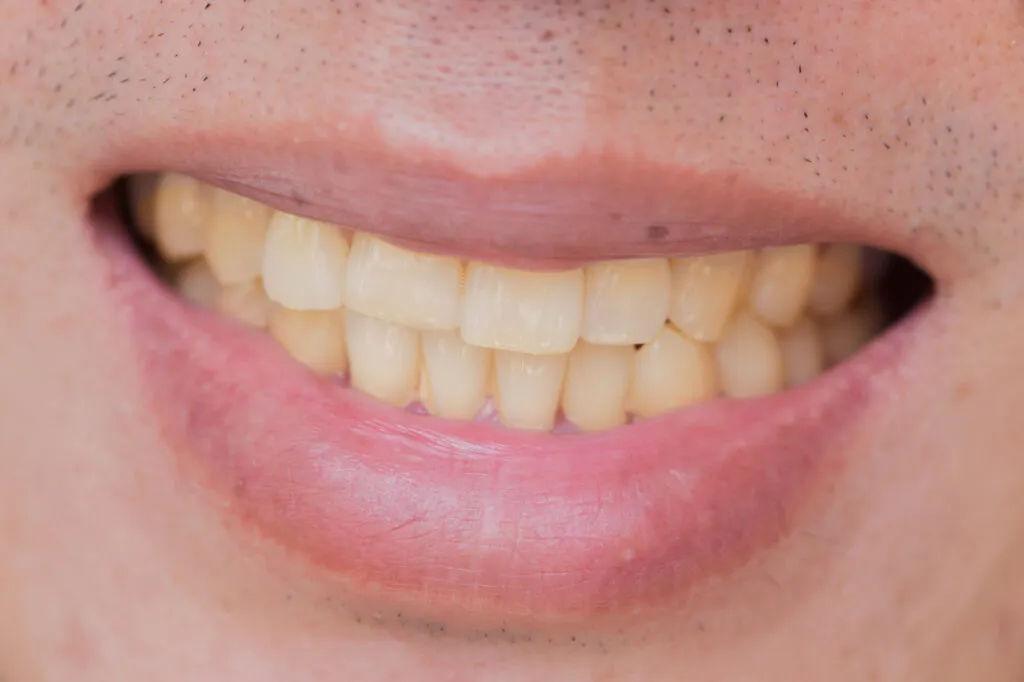
This tooth discoloration can be permanent because it develops inside the teeth rather than on the surface. Children who took high doses of tetracycline, or whose mothers took it during pregnancy, are at greater risk for staining. It can also affect adults.
For that reason, doctors are careful when prescribing tetracycline. They’re less likely to prescribe it to children and adolescents, who face a higher risk of permanent tooth changes.
Get your brightest smile with NewMouth’s top teeth whitening picks for 2026.
Why Does Tetracycline Stain Teeth?
Tetracycline binds to the calcium in developing teeth, becoming part of the dental tissue. Our in-house dentist, Dr. Khushbu Aggarwal, explains, “tetracycline stains teeth because it is incorporated into tissues that are calcified at the time tetracycline is being administered.”
Dr. Aggarwal notes that this binding, known as chelation, is irreversible. Tetracycline antibiotics “can be incorporated into teeth (both baby and permanent), cartilage, and bone.”
A baby’s first set of teeth can even be discolored if the mother took tetracycline while pregnant.
Other Side Effects
Tetracycline can affect more than just the visible parts of teeth. Dr. Aggarwal states, “tetracycline can also stain the underlying tooth roots and bone and even inhibit bone growth in children.”
These antibiotics can have other side effects, including:
- Gastrointestinal disturbances
- Sensitivity to sunlight
- In rare cases, liver toxicity
How to Remove Tetracycline Stains From Teeth
Because tetracycline staining is intrinsic (within the teeth), it can be difficult to get rid of completely. A range of treatments may be effective “depending on the severity of staining and the patient’s age,” according to Dr. Aggarwal.
Whitening Treatments
If you have less severe tetracycline stains, you may see results from teeth whitening treatments. If you want to try at-home whitening kits, we at NewMouth recommend Glo, Hismile, Snow, and Auraglow for the best results.
However, whitening treatments (whether done at home or at the dentist’s office) may need to be used for a long time to treat tetracycline stains.
It may take months rather than weeks to see a significant change, and even then, the stains may not be completely gone.
If you have teeth that have undergone root canals, in-office internal bleaching is also an option. This method allows teeth to be whitened from the inside out rather than having a bleaching agent applied to the surface.
Cost
Whitening treatment is likely the least expensive option for treating less severe tetracycline stains. At-home whitening kits can cost less than $100.
However, you’ll likely need to use them for longer than ordinary stains, which may require you to make multiple purchases.
Professional Tooth Restoration
To fully eliminate the appearance of tetracycline staining, you may need one or more dental restorations. According to Dr. Aggarwal, these may include:
- Veneers, which partially cover the teeth to provide a better appearance
- Full crowns, which cover the entire tooth
- Composite build-ups (dental bonding), high-grade resins chemically bonded to teeth
Cost
These treatments will generally be significantly more expensive than teeth whitening. And because they’re likely to be considered cosmetic, insurance might not cover them.
On the other hand, whitening treatments may not be effective for especially severe stains. Dental restorations may be your only way to eliminate severe tooth discoloration from tetracycline.
Dr. Aggarwal notes that “the recommended treatment is usually highly individualized.” What’s effective for your tetracycline stains may not be what works for someone else. Talk to your dentist about your specific situation.
See NewMouth’s top 10 teeth whitening products of 2026.
What is Tetracycline?
Tetracycline is an antibiotic used to treat a wide variety of diseases and conditions, including:
- Acne and rosacea
- Malaria
- Syphilis
- Cholera
- Chlamydia
Other antibiotics in the tetracycline family, such as doxycycline and minocycline, have similar uses.
These antibiotics have been used since the 1940s and were once more commonly prescribed. Over time, many bacteria have developed resistance to tetracyclines. However, they’re still sometimes used to treat conditions like the ones listed above.
Preventing Tetracycline Stains
The side effect of tooth discoloration caused by tetracycline is now well-known. Doctors are unlikely to prescribe it to women after 14 weeks of pregnancy or children/adolescents.
Dr. Aggarwal advises that adults be careful when taking tetracycline or other antibiotics derived from it: “Tetracycline staining in adults can be caused by long-term ingestion of the antibiotic tetracycline or the acne medication minocycline and so should also be used with caution.”
Ultimately, the use of tetracycline antibiotics has to be carefully considered in light of these risks. According to Dr. Aggarwal, “it is important for the medical doctor to weigh the risks of this medication with the benefits.”> View the best enamel-safe teeth whitening products.
Summary
Tetracycline antibiotics can treat a variety of illnesses. However, they can cause tooth discoloration if taken during pregnancy, childhood, or adolescence. This staining can be permanent.
These antibiotics are no longer prescribed for children or pregnant women. However, you may have tetracycline staining from previous exposure.
Talk to your dentist about possible cosmetic treatments to remove or mask tetracycline stains.