


Many people believe that orthodontic treatment ends as soon as their braces come off. However, removing braces only marks the end of active tooth movement. The retention stage is just as important.
Although the teeth have moved into their new positions, the surrounding tissues have not fully adapted. These tissues include the periodontal ligament, gums, and alveolar bone.
The periodontal ligament contains elastic fibers. After treatment, these fibers may pull the teeth toward their previous positions. Bone around the teeth also needs time to rebuild and stabilize.
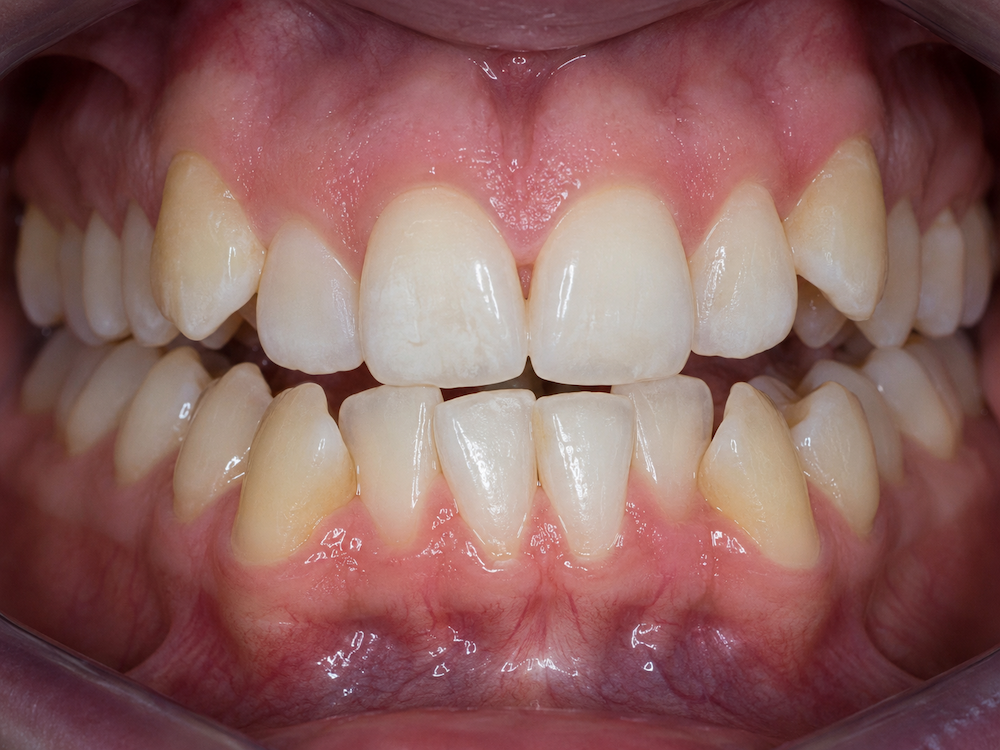
When teeth gradually move away from their corrected positions, orthodontists call the condition orthodontic relapse after braces. Patients often describe it as their teeth “shifting back” or “becoming crooked again.”
Relapse can range from a small tooth rotation to major crowding or bite changes. Fortunately, several treatment options are available. The right choice depends on the degree of movement, the cause, and the patient’s oral health.
Why Do Teeth Shift After Orthodontic Treatment?
Orthodontic relapse rarely has only one cause. In many cases, several factors work together.
Inadequate Retainer Wear
Poor retainer wear is one of the most common reasons for teeth shifting after braces.
After active orthodontic treatment, retainers hold the teeth in their corrected positions. However, removable retainers only work when patients wear them as instructed.
Some patients gradually reduce their wearing time without asking their orthodontist. Others stop wearing the retainer because their teeth still look straight.
As a result, small movements may begin. At first, the changes may be difficult to notice. Later, gaps can reopen, or front teeth can become crowded.
Fixed retainers can also fail. For example, the wire may detach from one tooth. Because the rest of the wire remains in place, the patient may not notice the problem immediately.
Therefore, patients should check both removable and fixed retainers regularly.
Treatment Planning or Technical Factors
Orthodontic treatment requires careful diagnosis and planning.
Before treatment, the orthodontist evaluates tooth position, jaw relationships, facial structure, gum health, and available space.
If the original treatment plan does not fully address the cause of crowding or spacing, the final result may be less stable.
In addition, poor control of anchorage can affect the position of certain teeth. Incomplete bite correction may also increase the risk of future movement.
However, relapse does not always mean that the original treatment was incorrect. Even a well-treated case can change over time because the mouth remains biologically active.
Incomplete Correction of Tooth Position
Some tooth movements have a higher risk of relapse.
For example, severely rotated teeth often tend to turn toward their original positions. Large spaces between teeth may also reopen.
If the roots and crowns do not reach stable positions, the teeth may move more easily after treatment.
Correct contact between neighboring teeth is also important. When the contact points remain weak or uneven, small spaces can return.
Moreover, the final bite should distribute pressure evenly. An unstable bite can place repeated force on individual teeth.
Continued Growth and Natural Aging
Jaw growth does not always stop when orthodontic treatment ends.
This issue is especially relevant for teenagers and young adults. Their facial bones and jaws may continue to develop after braces are removed.
As the jaws change, the bite and tooth positions may also change.
However, adults are not completely free from tooth movement. Dental arches can become narrower with age. Lower front teeth may also become more crowded over time.
Therefore, long-term changes are not always a return to the original orthodontic problem. Some changes are part of natural aging.
Wisdom Teeth
Many people believe that wisdom teeth push the other teeth forward and cause lower front tooth crowding.
However, current evidence does not confirm that wisdom teeth are the main cause of orthodontic relapse.
Lower front teeth can become crowded in people who do not have wisdom teeth. Crowding can also occur after wisdom tooth removal.
For this reason, dentists should not remove healthy wisdom teeth only to prevent teeth from shifting after braces.
Nevertheless, wisdom teeth may still require treatment when they cause pain, infection, decay, cysts, or damage to nearby teeth.
An orthodontist or dentist should evaluate them with a clinical examination and X-rays.
Harmful Oral Habits
Some oral habits can place repeated pressure on the teeth.
Common examples include:
- tongue thrusting;
- thumb or finger sucking;
- lip biting;
- nail biting;
- long-term mouth breathing;
- chewing mainly on one side.
These habits may affect the bite and tooth position. They may also reduce the stability of orthodontic results.
For example, tongue thrusting can push the front teeth forward. It may also contribute to an open bite or spaces between the teeth.
If the habit continues after treatment, the teeth may move again.
Gum Disease and Loss of Tooth Support
Healthy gums and bone provide support for the teeth.
When gum disease damages the periodontal tissues, the teeth may become loose or start to move. New gaps may appear, and the front teeth may flare outward.
This type of movement is not always simple orthodontic relapse.
Patients may also notice:
- bleeding gums;
- gum swelling;
- gum recession;
- persistent bad breath;
- loose teeth;
- pus around the gums.
These symptoms require periodontal treatment. Moving the teeth again without controlling gum disease may make the problem worse.
II. What Should You Do If Your Teeth Have Shifted?
Discovering that your teeth have moved can be upsetting. However, there is no need to panic.
The treatment depends on how much movement has occurred, how long ago orthodontic treatment ended, and whether the bite has changed.
One point is especially important: do not try to correct the teeth by yourself.
For example, do not force an old retainer onto teeth when it no longer fits properly. Uncontrolled pressure may damage the retainer, gums, or teeth.
Type 1: Early and Mild Relapse
Early relapse often occurs within the first year after braces or aligner treatment.
The changes may include:
- a very small gap;
- slight tooth rotation;
- mild crowding;
- a retainer that feels tighter;
- a small change in the dental midline.
In these cases, contact the orthodontist as soon as possible.
The orthodontist will first check whether the current retainer still fits. A slightly tight retainer may sometimes be used under professional guidance.
However, the patient should not bite down forcefully to make it fit.
Depending on the case, the orthodontist may recommend:
- increasing retainer wear;
- replacing a damaged retainer;
- repairing a fixed retainer;
- making a new retainer;
- using a short series of clear aligners;
- placing braces on only a few teeth.
A minor relapse may need only a short period of correction. Early treatment can also prevent the problem from becoming more serious.
Type 2: Moderate, Severe, or Long-Term Relapse
Moderate or severe relapse may develop more than one year after treatment. However, the degree of movement matters more than the exact time.
Signs may include:
- visible crowding of the front teeth;
- large gaps reopening;
- several rotated teeth;
- upper and lower teeth no longer meeting correctly;
- difficulty chewing;
- a clear change in facial or dental appearance.
In these cases, the patient should return to an orthodontist for a full evaluation.
The examination may include:
- clinical photographs;
- digital dental scans;
- dental impressions;
- bite analysis;
- gum and bone assessment;
- panoramic or cephalometric X-rays.
After the examination, the orthodontist can create a new treatment plan.
Some patients may need only limited orthodontic retreatment. Others may need a more complete second course of braces or clear aligners.
The length of treatment depends on the amount and type of movement. A simple case may take several months. A complex bite problem may take much longer.
Before retreatment, the orthodontist should also identify the cause of relapse. Otherwise, the teeth may move again after the second treatment.
Important Reminder: Do Not Force an Old Retainer
A retainer mainly holds teeth in their current positions. It does not work like braces or clear aligners.
In selected mild cases, a retainer may help manage tiny movements. However, this should happen only under an orthodontist’s supervision.
Do not force an old retainer into place when:
- It cannot cover all the teeth;
- It lifts away from certain teeth;
- It causes strong or sharp pain;
- It presses heavily on one tooth;
- It has cracked or changed shape;
- It cuts the gums.
A poorly fitting retainer can create uneven pressure. It may also damage the appliance or irritate the periodontal tissues.
Therefore, arrange a professional assessment instead of trying to “push the teeth back” at home.
III. What Other Treatments Can Help?
Orthodontic retreatment is not the only possible approach.
For mild relapse, the orthodontist may combine several methods.
Adjusting the Retainer Schedule
Some patients wear their removable retainer only at night. When very minor movement appears, the orthodontist may recommend longer daily wear.
For example, the patient may return to near full-time wear for a limited period.
However, this approach only works when the retainer still fits safely.
If it no longer fits, the orthodontist may make a new appliance or use active aligners first.
Replacing or Repairing the Retainer
Clear plastic retainers can wear out over time.
They may:
- crack;
- become loose;
- become distorted by heat;
- develop rough edges;
- lose their original fit.
Fixed retainers may also detach or break.
A damaged retainer should be repaired or replaced quickly. Delays can allow further tooth movement.
Limited Clear Aligner Treatment
Clear aligners can correct many mild or moderate relapse cases.
The orthodontist creates a series of trays that gradually move the teeth.
This option may work well for:
- small gaps;
- mild front tooth crowding;
- minor rotations;
- slight changes in tooth alignment.
However, aligners may not suit every case. Complex bite problems or major root movements may require fixed braces.
Limited Braces
Some patients do not need braces on every tooth.
Instead, the orthodontist may place brackets on only the affected area.
For example, limited braces may correct a few crowded front teeth. This approach can reduce treatment time in suitable cases.
However, the orthodontist must still evaluate the entire bite. Straightening only the visible teeth may create new bite problems.
Bite Adjustment
Sometimes, a high filling or crown creates abnormal tooth contact.
This interference may place extra pressure on one area and make the bite feel unstable.
A dentist may make a very small adjustment to the restoration or tooth contact.
However, bite adjustment cannot correct major crowding, spacing, or tooth rotation.
The dentist should avoid removing unnecessary enamel. Therefore, a detailed bite assessment must come first.
Periodontal Treatment
If gum disease has contributed to tooth movement, the patient needs periodontal treatment before orthodontic retreatment.
Treatment may include:
- professional dental cleaning;
- scaling and root planing;
- improved brushing and flossing;
- treatment of gum infection;
- periodontal surgery in advanced cases.
Once the gums become healthy and stable, the orthodontist can decide whether it is safe to move the teeth.
Managing Wisdom Tooth Problems
Wisdom tooth removal does not automatically correct orthodontic relapse.
However, an impacted or infected wisdom tooth may still require extraction for its own clinical reasons.
The dentist may recommend removal when the wisdom tooth causes:
- repeated gum infection;
- pain or swelling;
- tooth decay;
- damage to the second molar;
- cyst formation;
- difficulty with cleaning.
After extraction, the patient may still need orthodontic treatment to correct existing crowding.
Correcting Harmful Habits
If tongue thrusting, mouth breathing, or another habit contributes to the problem, the patient should address it.
Treatment may include:
- habit awareness training;
- myofunctional therapy;
- speech therapy;
- an orthodontic habit-breaking appliance;
- an airway examination;
- an ear, nose, and throat assessment.
Correcting the habit may not straighten teeth that have already moved. However, it can improve long-term stability after retreatment.
Managing Teeth Grinding
Teeth grinding and clenching may cause tooth wear, muscle pain, and damage to restorations.
A dentist may recommend a night guard in suitable cases.
However, a standard night guard does not always work as an orthodontic retainer.
Patients who need both functions may require a specially designed appliance.
IV. How Can You Prevent Orthodontic Relapse?
Preventing relapse requires long-term care.
The following steps can help protect the results of orthodontic treatment.
Wear Your Retainer as Instructed
Retainer schedules vary from person to person.
Some patients need full-time removable retainer wear during the first stage after treatment. They remove it only for eating, drinking, brushing, and flossing.
Later, they may move to nighttime wear.
Other patients may begin with nighttime wear, depending on their orthodontist’s instructions.
Long-term nighttime wear is often recommended because teeth can continue to move throughout life.
Patients with severe rotations, large spaces, or periodontal problems may need more careful retention.
Therefore, always follow your own orthodontist’s plan.
Do not reduce wearing time simply because the teeth still look straight.
Attend Regular Follow-Up Visits
Do not disappear from the clinic after the braces come off.
Regular follow-up allows the orthodontist to detect small changes early.
During the first year, the orthodontist may recommend reviews every three to six months. Later, the schedule may change according to individual risk.
The dentist should also examine the teeth, gums, bite, and retainers during routine dental visits.
Early intervention is usually easier than treating advanced relapse.
Maintain Healthy Gums
The periodontal tissues act as the foundation of the teeth.
When the gums and bone remain healthy, the teeth have better support.
Brush at least twice a day. Also, clean between the teeth with dental floss or interdental brushes.
Patients with fixed retainers should clean carefully around the wire and bonding material.
Professional dental cleaning can help remove plaque and tartar that home brushing cannot reach.
Contact a dentist if you notice:
- gum bleeding;
- swelling;
- gum recession;
- tooth mobility;
- persistent bad breath;
- pus around a tooth.
Have Wisdom Teeth Professionally Assessed
Wisdom teeth should be assessed according to their actual condition.
The dentist may take an X-ray to evaluate:
- eruption direction;
- available space;
- impaction;
- decay;
- gum infection;
- damage to nearby teeth.
However, routine removal solely to prevent lower front tooth crowding is not supported by strong evidence.
The dentist should explain the benefits and risks before recommending extraction.
Correct Harmful Oral Habits
Long-term oral habits can place extra pressure on the teeth.
Try to stop habits such as:
- nail biting;
- lip biting;
- tongue thrusting;
- thumb sucking;
- chewing pens;
- chewing only on one side.
Persistent mouth breathing may require further examination, especially when nasal blockage or enlarged tonsils are present.
If you grind your teeth at night, ask your dentist whether you need a protective appliance.
Care for Your Removable Retainer Correctly
A removable retainer needs regular cleaning and safe storage.
Follow these steps:
- rinse it after taking it out;
- clean it with a soft toothbrush;
- use cool or lukewarm water;
- use a suitable retainer cleaner when recommended;
- place it in a ventilated case;
- keep it away from pets.
Do not clean the retainer with boiling water. Heat can distort the plastic.
Also, avoid alcohol, bleach, and strong household chemicals unless your orthodontist specifically recommends them.
Never wrap the retainer in a tissue. It can easily be mistaken for rubbish and thrown away.
Check Your Fixed Retainer
Use your tongue to check the bonded wire behind your teeth.
Contact your orthodontist when:
- The wire feels loose;
- One bonding point has detached;
- The wire feels sharp;
- One tooth appears to be moving;
- Floss catches around the wire;
- The wire looks bent.
Do not pull or adjust the wire yourself.
Even when only one section has detached, that tooth may start to move.
Replace Damaged Retainers Promptly
Retainers do not last forever.
Clear retainers may crack, become loose, or change shape. Fixed retainers may break or detach.
A damaged retainer cannot provide reliable retention.
Therefore, contact the orthodontic clinic as soon as possible. Do not wait until the teeth have visibly shifted.
Conclusion
Orthodontic treatment is a long-term process that requires patience and cooperation.
The day your braces come off is worth celebrating. However, it does not mark the end of orthodontic care.
The surrounding bone and periodontal tissues still need time to stabilize. In addition, natural aging, growth, gum disease, oral habits, and retainer problems can affect tooth position.
If orthodontic relapse after braces occurs, do not blame yourself or assume that the entire treatment has failed.
Mild movement may only require a new retainer, limited aligners, or a short course of braces. More serious crowding or bite changes may require comprehensive orthodontic retreatment.
Most importantly, do not force an old retainer that no longer fits. Arrange an orthodontic assessment instead.
With early diagnosis, proper treatment, and consistent retainer wear, many patients can restore their tooth alignment and maintain a healthy, stable smile.