



Key Takeaways
- Like the rest of your mouth, the tongue requires cleaning to stay healthy
- The best way to clean your tongue is by using a tongue scraper
- You can also brush your tongue, rinse, and use antibacterial mouthwash
- Cleaning your tongue can help prevent bad breath and other oral health issues
- Talk to a dentist if your tongue has uneven patches, discoloration, or pain
3 Ways to Clean Your Tongue
There are three main ways to clean your tongue:
1. Use a Tongue Scraper
The best way to clean the tongue is with a tongue scraper. When scraping your tongue, you should see a thin layer of mucus-like liquid that may be white, yellow, or brown. Do not swallow it.
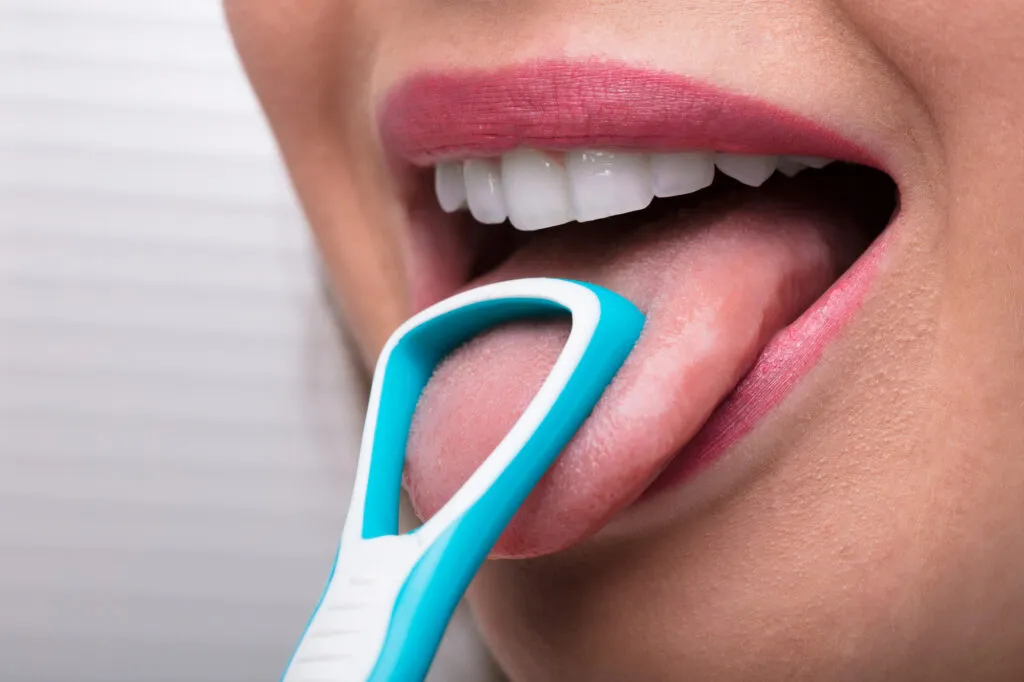
A quality tongue scraper will have a head composed of a flattened or curved rim made of metal, plastic, or copper. Most drug stores carry tongue scrapers that cost $10.00 and under.
To use a tongue scraper:
- Press the head on the back surface of the tongue
- Draw the scraper forward, making sure to keep the rim of the scraper in contact with the tongue’s surface
- Rinse the scraper once you’ve reached the front of the tongue
- Repeat until clean
For enhanced hygiene, leave the tongue scraper sitting head down in antibacterial mouthwash between uses.
2. Brush Your Tongue
Gently running your toothbrush over the tongue can also help remove harmful bacteria and debris. Start by brushing the back of the tongue and slowly moving forward.
Brush the tongue with a clean toothbrush to avoid spreading the following from the teeth onto the tongue:
- Plaque
- Debris
- Bacteria
Make sure to rinse the mouth and toothbrush afterward.
3. Rinse Your Mouth
Using an antibacterial or antiseptic mouthwash or rinse can also clean the tongue. When rinsing, actively swish the liquid back and forth over the tongue’s surface. Never swallow mouthwash.
You can use your cheek muscles to coat the entire tongue. Most mouthwashes and rinses are more effective if you use them for at least 60 seconds.
Why Should You Clean Your Tongue
Bacteria can build up in your mouth from eating and drinking. Although brushing and flossing can keep your mouth clean, it doesn’t remove the bacteria on your tongue.
The bacteria on your tongue can also produce volatile sulfur compounds (VSCs). This can lead to:
- Bad breath (halitosis)
- Dry mouth
- Periodontitis (gum disease)
Benefits of Cleaning Your Tongue
Putting in the extra effort to clean the tongue can offer several perks. Common benefits of cleaning the tongue include:
- Fresher breath
- Better overall oral hygiene
- Reduced risk of oral health issues like tooth decay and gum disease
- Reduced risk of systemic diseases like heart disease
- Improved sense of taste by keeping taste-detecting tiny bumps called papillae clean
How Often Should You Clean Your Tongue?
Like brushing your teeth, it’s best to clean the tongue twice daily as part of your oral hygiene routine. But if the tongue becomes irritated, try cleaning it less aggressively or once daily. If you’re using a toothbrush to clean the tongue, use a soft-bristled or children’s toothbrush to avoid irritation.
Signs You Need to See a Dentist or Doctor
If your tongue looks or feels different than normal, talk to a dentist or doctor. Also, talk to a healthcare professional if you notice:
- Bleeding from the tongue
- White tongue or white patches on the tongue
- Black or red discoloration
- Tongue sores that last longer than 2 weeks
- Unexplained pain in or around the tongue
- A hairy or mottled texture on the tongue
A dentist can clean your tongue during regular teeth cleanings. They may also prescribe an extra-strength mouth rinse to use at home.
Mouthwash
Find the Best Mouthwash
Compare dentist-recommended mouthwashes for fresh breath, gum health, and cavity protection.
Compare Mouthwashes