


Understanding Bone Grafting for Dental Implants
Many patients believe replacing a missing tooth is simple. They often assume a dental implant can be placed immediately after a consultation. However, the reality is sometimes more complicated. A successful implant requires more than just a replacement tooth. It also needs a healthy and stable foundation.
This is where bone grafting for dental implants becomes important.
Think of a dental implant as a building. The implant itself is the structure, while the jawbone serves as the foundation. Even the strongest building cannot stand on weak ground. Likewise, a dental implant cannot remain stable without enough healthy bone.
Some patients have sufficient bone and can proceed directly to implant placement. Others experience bone loss and need additional treatment first. Therefore, understanding the role of jawbone health is essential for anyone considering dental implants.
Why the Jawbone Is So Important
The jawbone, also called the alveolar bone, surrounds and supports the teeth.
Its primary functions include:
- Supporting natural teeth
- Maintaining facial structure
- Distributing chewing forces
- Providing stability for dental implants
When a tooth is lost, the surrounding bone no longer receives stimulation from chewing. As a result, the body begins to absorb the unused bone.
Consequently, the jawbone gradually becomes thinner and shorter.
If significant bone loss occurs, placing an implant safely becomes difficult. Therefore, dentists often recommend bone grafting before implant treatment.
Without adequate bone support, implants may:
- Lack stability
- Fail to integrate properly
- Experience long-term complications
- Produce less favorable aesthetic results
For this reason, evaluating bone volume is one of the most important steps in implant planning.
Common Causes of Jawbone Loss
Many patients are surprised to learn that bone loss often begins long before they notice symptoms.
Several factors can contribute to dental implant bone loss.
Periodontal Disease
Periodontal disease is one of the leading causes of jawbone destruction.
This chronic bacterial infection affects:
- Gums
- Periodontal ligaments
- Supporting bone
Initially, plaque accumulation causes gingivitis.
However, if treatment is delayed, inflammation spreads deeper into the tissues.
Over time:
- Bone begins to resorb
- Teeth become loose
- Tooth loss may occur
Unfortunately, bone loss caused by advanced periodontal disease is generally irreversible without intervention.
Missing Teeth
Tooth loss itself accelerates bone resorption.
When teeth function normally, chewing stimulates the surrounding bone.
This stimulation helps maintain bone density.
After tooth loss:
- Bone stimulation decreases
- Bone formation slows
- Bone resorption increases
As a result, the ridge becomes narrower and lower.
Furthermore, neighboring teeth may drift, and opposing teeth may over-erupt.
Aging
Natural aging affects bone throughout the body.
The jawbone is no exception.
As people grow older:
- Bone density gradually decreases
- Gum recession becomes more common
- Bone remodeling slows
Although aging alone does not guarantee severe bone loss, it often increases the risk when combined with other factors.
Systemic Diseases and Medications
Certain medical conditions can influence bone health.
Examples include:
- Diabetes
- Osteoporosis
- Autoimmune disorders
In addition, some medications may affect bone metabolism or oral tissues.
Examples include:
- Certain anti-epileptic medications
- Immunosuppressants
- Some antihypertensive drugs
Therefore, dentists always review medical history before implant treatment.
Trauma and Harmful Habits
Trauma can damage both teeth and supporting bone.
Common causes include:
- Sports injuries
- Falls
- Vehicle accidents
In addition, harmful habits may contribute to bone loss.
Examples include:
- Teeth grinding
- Clenching
- Chewing on hard objects
- Unilateral chewing
These habits create abnormal forces that gradually damage supporting structures.
What Is Bone Grafting for Dental Implants?
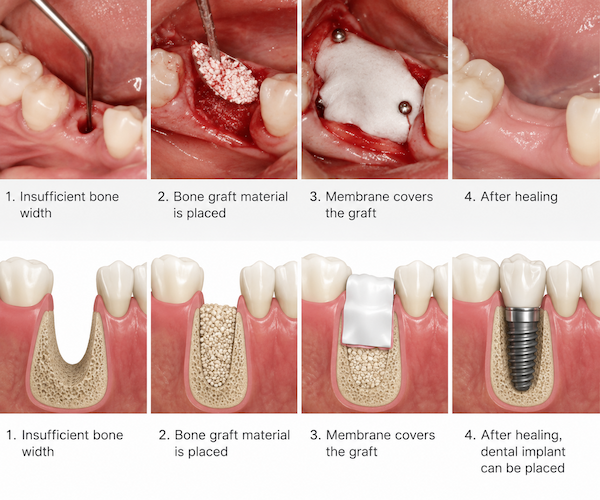
Bone grafting is a procedure that increases bone volume in areas where natural bone is insufficient.
The goal is simple:
Create enough healthy bone to support a dental implant safely.
Dentists use different types of grafting materials, including:
- Synthetic bone substitutes
- Donor bone materials
- Animal-derived bone grafts
- Autogenous bone from the patient’s own body
Over time, the body integrates the graft material and develops new bone.
Eventually, the area becomes strong enough to support implant placement.
Simultaneous Bone Grafting: The One-Step Approach
Sometimes bone deficiencies are relatively minor.
In these situations, dentists can place the implant and perform grafting during the same procedure.
This technique is called simultaneous bone grafting.
When Is It Used?
It works best when:
- Bone loss is limited
- Implant stability remains achievable
- Small gaps exist around the implant
Advantages
Benefits include:
- Fewer surgical procedures
- Shorter overall treatment time
- Reduced recovery periods
- Improved patient convenience
Many patients appreciate this approach because it combines two treatments into one visit.
Therefore, it often represents the most efficient solution when conditions allow.
Delayed Bone Grafting: Rebuilding the Foundation First
Some patients experience severe bone loss.
In these cases, immediate implant placement may not be safe.
Instead, dentists recommend delayed bone grafting.
How It Works
The process generally follows these steps:
- Bone graft surgery
- Placement of graft material
- Membrane protection
- Healing period of approximately 4-6 months
- Implant placement after bone maturation
Why Choose This Method?
This approach offers important advantages.
It allows the dentist to:
- Rebuild lost bone volume
- Improve implant stability
- Reduce treatment risks
- Increase long-term success rates
Although treatment takes longer, the outcome is often more predictable.
Therefore, many specialists consider it the safest option for severe bone deficiencies.
Sinus Lift Surgery: Creating More Bone in the Upper Jaw
The upper back jaw presents unique challenges.
Above the upper molars lies an air-filled cavity known as the maxillary sinus.
After tooth loss, the sinus often expands downward.
As a result, bone height decreases.
This makes implant placement difficult.
What Is a Sinus Lift?
A sinus lift increases available bone height.
During the procedure:
- The sinus membrane is carefully elevated.
- Bone graft material is placed beneath the membrane.
- New bone develops over several months.
Who Needs a Sinus Lift?
Patients may require this procedure if:
- The upper jawbone is too thin
- Teeth have been missing for years
- Natural anatomy limits implant placement
Once healing is complete, implants can usually be placed safely.
Why Patients Choose Huangshan International Dental Hospital
Bone grafting and implant therapy require precise planning and extensive experience.
At Huangshan International Dental Hospital, patients benefit from internationally recognized expertise.
International-Level Dental Expertise
The implant team includes specialists trained at leading institutions, including Nanjing Stomatological Hospital.
Advantages include:
- Advanced implant knowledge
- Extensive surgical experience
- International clinical protocols
- High treatment success rates
Each implant dentist has completed more than 10,000 successful cases, providing patients with confidence throughout the treatment process.
Advanced AI Dental Technology
Accurate diagnosis is critical for bone grafting procedures.
Huangshan International Dental Hospital utilizes AI-assisted diagnostic technology to improve treatment planning.
Benefits include:
- More precise bone evaluation
- Improved surgical planning
- Enhanced treatment predictability
- Greater efficiency
Consequently, patients receive customized treatment plans based on their individual anatomy.
Recovery Tips After Bone Grafting Surgery
Proper aftercare plays a major role in treatment success.
Maintain Excellent Oral Hygiene
During recovery:
- Follow all cleaning instructions
- Use the prescribed mouthwash
- Avoid disturbing the surgical area
Good hygiene helps prevent infection and supports healing.
Choose Soft Foods
For the first one to two weeks:
- Eat soft foods
- Avoid hard foods
- Avoid spicy foods
- Avoid extremely hot foods
Gentle nutrition protects the surgical site.
Avoid Smoking
Smoking significantly reduces the blood supply to healing tissues.
As a result, it increases the risk of:
- Infection
- Delayed healing
- Bone graft failure
- Implant complications
Therefore, dentists strongly recommend quitting smoking before and after surgery.
Attend Follow-Up Appointments
Regular reviews allow the dentist to:
- Monitor healing
- Evaluate bone development
- Adjust treatment plans
- Prepare for implant placement
Consistent follow-up improves treatment outcomes.
Frequently Asked Questions About Bone Grafting for Dental Implants
Is bone grafting always necessary before dental implants?
No. Many patients have enough healthy bone for immediate implant placement. Bone grafting is only required when bone volume is insufficient.
How long does bone graft healing take?
Most grafts require approximately 3 to 6 months to fully integrate before implant placement.
Is bone grafting painful?
Most patients report mild discomfort that is manageable with prescribed medications and proper aftercare.
Can implants fail without enough bone?
Yes. Inadequate bone support significantly increases the risk of implant instability and failure.
What happens if I delay treatment after tooth loss?
Bone loss typically continues over time. Therefore, delaying treatment often increases the likelihood of needing bone grafting later.
Is a sinus lift safe?
Yes. When performed by experienced professionals, sinus lift surgery is considered a safe and predictable procedure.
Conclusion
Bone grafting for dental implants is often the key to successful implant treatment. While many patients focus on the visible tooth replacement, the real foundation lies beneath the gums. A healthy jawbone supports implant stability, long-term function, and natural aesthetics.
Whether bone loss results from periodontal disease, tooth loss, aging, trauma, or medical conditions, modern grafting techniques can rebuild the foundation needed for successful treatment. By addressing bone deficiencies first, dentists create the best environment for implant success.
If you are considering dental implants, a comprehensive evaluation of your jawbone is the first step toward a healthier, stronger, and longer-lasting smile. Understanding the importance of bone grafting for dental implants can help you make informed decisions and achieve the best possible outcome.