



Waking up with a radiating pain around your jaw or even your ear can be distressing. You may feel swelling in your teeth and discomfort all throughout the day.
While this happens, it’s natural to think about going to the emergency room, especially if you think it’s a tooth abscess. Let’s discuss what a tooth abscess is, why it can be dangerous, and how to know when you need emergency medical attention.
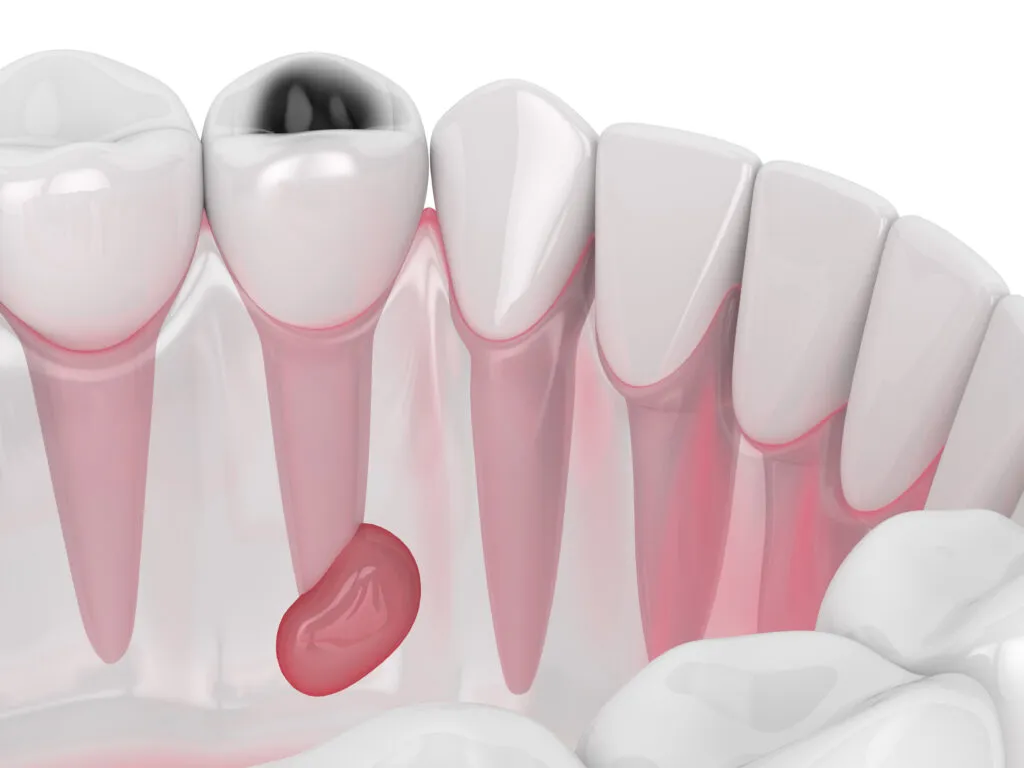
When to Go to the ER for a Tooth Abscess
If you think you have a tooth abscess, see a doctor immediately. A dental abscess is considered a medical emergency and requires prompt treatment.
This is especially true if you experience any of the following:
- Severe throbbing pain around the neck, jaw, or ear
- Swelling in the gums or face
- Sensitivity to hot or cold drinks and food
- Sensitivity to pressure
- A high fever with chills and vomiting
- Persistent bad breath and foul taste
- Problems with breathing or swallowing
- Confusion, disorientation, and visual changes
- Swollen lymph nodes
- Pus discharge
You’ll need to visit the emergency room (ER), where doctors can prescribe IV or oral antibiotics and pain medications. These can relieve your symptoms until you can book an appointment with your dentist.
What Causes Tooth Abscesses?
Dental abscesses can arise from inside the tooth, called endodontic infections. Cavities, tooth decay, cracks, or physical trauma cause endodontic infections.
They can spread to the end of the tooth’s root, infecting the bone surrounding the root. Meanwhile, abscesses can also come from infections in the gums and bone around a tooth, called periodontal infections.
Endodontic infections usually require root canal treatment, and periodontal infections may require deep cleanings or gum surgery. If you don’t want to save the tooth, the treatment is extraction for either type of infection.
Your dentist can readily distinguish between endodontic and periodontal infections because they look quite different on a dental x-ray, although sometimes combined infections can occur.
How Are Tooth Abscesses Treated?
Treating an abscess means removing the infection causing the abscess. To do so, your dentist may use the following treatment options:
- Drainage — The dentist will make a small incision into the abscess to drain the pus before cleaning and sealing the area.
- Root canal — This procedure involves drilling into your tooth to remove the diseased tissue and drain the abscess. A root canal can potentially save your tooth.
- Extraction — If the affected tooth can’t be saved, your dentist may remove it to eliminate the infection.
- Antibiotics — If the infection has spread to nearby teeth, jaw, and other areas, your dentist will prescribe antibiotics to stop the infection.
What Happens if You Don’t Get Treatment?
Delaying treatment for a dental abscess can severely damage your teeth, bones, and supporting tissues. This can lead to dangerous side effects, such as:
- Dental cysts or fistulas
- Jawbone infection (osteomyelitis)
- Sinusitis
- Breathing difficulties
An abscess won’t heal independently, and antibiotics won’t fix the infection. That’s why it’s vital to get immediate dental treatment.
Assess Your Dental Emergency IMPORTANT DISCLAIMER: This assessment tool is for informational purposes only and is not a substitute for professional dental advice. If you are experiencing a dental emergency, please seek immediate care from a qualified dentist or visit the nearest emergency room.
Emergency Dental Assessment
Answer a few questions to determine if you need immediate dental care.
How severe is your pain? i 😊No Pain 🙂Mild Discomfort 😣Moderate Pain 😫Severe Pain Do you have any swelling? i 👌No Swelling 😌Mild (Gums Only) 😮Noticeable 😨Severe Have you experienced any dental trauma? i 🦷Knocked Out Tooth ↔️Loose Tooth 🔨Chipped/Cracked ✅No Trauma Are you experiencing any bleeding? i 🚫No Bleeding 🩹Mild When Brushing 🩸Persistent Bleeding Other Symptoms Fever Pus or Discharge Bad Taste/Smell
Assessment Result
Not Assessed Complete the assessment above
This assessment is a starting point — always consult your dentist for professional advice tailored to your situation.
How We Assess Dental Emergencies
Critical Symptoms
- Severe pain indicates urgent attention
- Facial swelling may signal infection
- Trauma requires immediate evaluation
Risk Assessment
- Based on clinical triage protocols
- Considers symptom severity
- Evaluates infection risk factors
Treatment Urgency
- Emergency: Immediate care needed
- Urgent: Within 24 hours
- Semi-urgent: Schedule soon
💡
This tool is for informational purposes only and should not replace professional dental advice. If you’re experiencing severe symptoms, seek immediate dental care.
* Based on standard dental emergency triage protocols. Always consult a dental professional for proper diagnosis.
Is a Dental Abscess Life-Threatening?
Without proper treatment, a dental abscess can be dangerous and potentially cause life-threatening conditions, such as:
- Ludwig’s Angina — A life-threatening condition where swelling in the neck area can obstruct airways.
- Sepsis — A dangerous and life-threatening infection that occurs when bacteria enter the bloodstream.
- Endocarditis — An infection of the heart’s inner lining, especially risky for those with certain heart conditions.
- Chronic pain and disability — Neglecting an abscess can result in ongoing nerve damage, chronic facial pain, and even facial changes from bone loss.
How to Relieve Abscess Symptoms at Home
Although you can’t treat an abscess at home, there are ways to relieve its symptoms while you wait for professional dental care. These include:
- Warm saltwater rinse
- Cold compress
- Over-the-counter painkillers
When you have an abscess, you should also avoid eating hot, cold, or sugary foods. Try not to press on the area or pop any bumps because this can worsen the infection.
Don’t delay seeking help if you suspect you have a tooth abscess. Your prompt action can safeguard your oral and overall health, so schedule an appointment with your dentist as soon as possible for proper diagnosis and treatment to prevent further issues.