


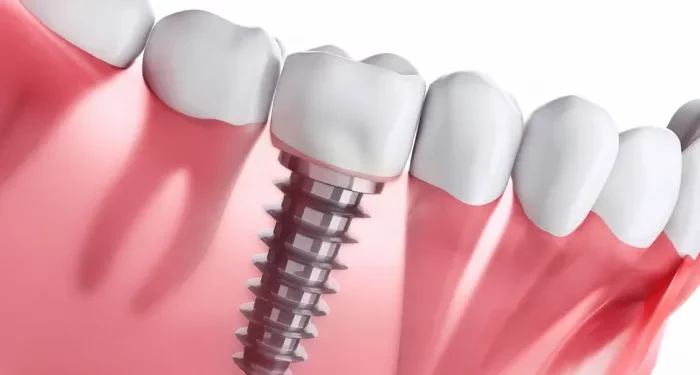
A recent study has analyzed how different materials and retention methods affect stress distribution in dental implant-supported restorations, offering fresh insights for dental professionals and patients opting for implants. Researchers used three-dimensional finite element analysis (FEA) to simulate real-world conditions, comparing cement-retained and screw-retained prostheses made from porcelain-fused-to-metal and zirconia crowns when implanted in the lower jaw.
Dental implants are commonly chosen replacements for missing teeth because they provide strong functional and esthetic results. However, long-term success depends on how biting forces are transferred from the artificial tooth through the implant to the surrounding bone. Poor stress distribution can result in problems such as bone loss or mechanical complications like screw loosening and even implant failure.
The study evaluated four models: cement-retained porcelain-fused-to-metal crowns, screw-retained porcelain-fused-to-metal crowns, cement-retained zirconia crowns, and screw-retained zirconia crowns. Each model was subjected to vertical (axial) and angled (oblique) biting forces to mimic chewing. The researchers found that all types of implant restorations handled vertical forces better, spreading stress more evenly across the implant, particularly at the bone near the implant neck and at the connection with the abutment. When an oblique force was applied, however, higher stress was seen throughout the implant system, increasing the risk for complications.
Cement-retained restorations demonstrated reduced stress at the connection and screw components compared to the screw-retained option, suggesting a potential advantage in minimizing mechanical problems. Porcelain-fused-to-metal crowns showed lower stress levels than zirconia crowns, especially when angled forces were applied. This difference is likely due to the higher flexibility of porcelain-fused-to-metal, which absorbs some of the biting force instead of passing it along to the implant parts.
Despite these findings, all variations exhibited their highest stress in the crestal bone surrounding the top of the implant, regardless of the material used or how the crown was attached. The study’s authors recommend careful control of sideways biting forces in implant treatment planning. Suggestions include using narrower chewing surfaces and limiting steepness in the crown action to help avoid excessive stress at the critical implant-bone interface.
While this research highlights important differences between materials and retention systems, the authors acknowledge limitations. The analysis was theoretical, assuming perfect bone integration and simplified material properties, and did not fully replicate the variations seen in real patients. Nevertheless, the study can help dentists make better decisions on prosthesis design, crown material, and how best to direct biting forces, all crucial for successful long-term dental implant outcomes.
Tags: dental implantdental implantsteethtooth