


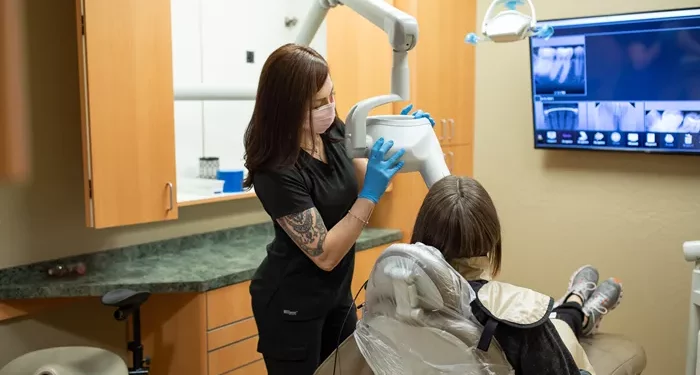
More than 70% of Latino third-graders in California have experienced tooth decay, compared with about 40% of their White peers, according to recent studies. Dentists and public health experts say the disparity reflects deep, systemic problems in access to dental care rather than a lack of parental responsibility.
Dr. Paula Izvernari, a dentist in Montclair, California, said she regularly sees Latino families whose children arrive in severe pain after weeks or months without treatment. Parents often report calling multiple dental offices, only to be told that Medi-Cal dental insurance is not accepted or that appointments are unavailable for months.
“These are working families doing everything they can,” Izvernari said. “The system keeps closing doors on their children.”
In Sacramento County, home to nearly 1.6 million residents, about 24% of the population is Hispanic. Many Latino families live in working-class neighborhoods where parents juggle long hours or multiple jobs. For them, public insurance is often the only viable option. Yet dental care under Medi-Cal remains difficult to access, even though oral health plays a key role in children’s learning, development and self-esteem.
Statewide data show Latino children are nearly twice as likely as White children to have untreated cavities. Tooth decay, if left untreated, can lead to infections, abscesses and costly emergency visits. These outcomes are largely preventable through routine care.
Despite Medi-Cal’s annual budget exceeding $90 billion, preventive dental services such as school screenings, fluoride treatments, sealants and regular checkups remain limited. A California Department of Health Services report found that in 2016–2017, only 12.9% of children ages 6 to 9 and 5.8% of those ages 10 to 14 in Sacramento County had dental sealants.
Low reimbursement rates are a major obstacle. Medi-Cal payments to dental providers rank among the lowest in the country, making it financially challenging for many small and mid-sized practices to accept large numbers of publicly insured patients. As a result, in 2022 fewer than half of children enrolled in Medi-Cal received a preventive dental visit.
Advocates say closing the gap will require practical changes, not just policy statements. Increasing reimbursement rates could allow more dentists to participate in Medi-Cal. Expanding mobile clinics and school-based dental programs would reduce transportation and scheduling barriers. Improved bilingual outreach through schools, churches and community centers could also help families understand and use available services.
California often presents itself as a leader in health equity. Dentists and community advocates argue that promise remains unfulfilled as long as children continue to suffer pain simply because their families cannot find a provider who accepts their dental insurance.
Until access matches need, they say, true health care equity will remain out of reach.