


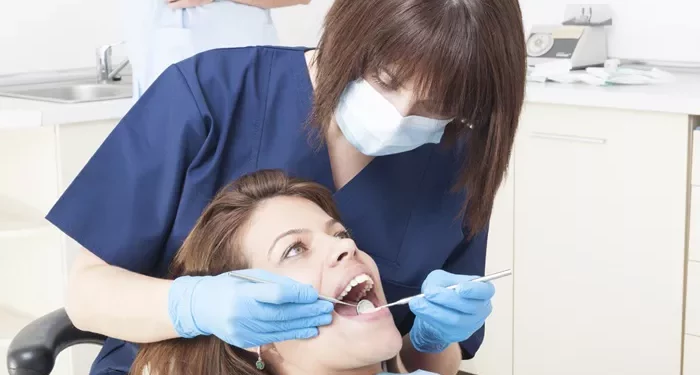
Don Batty, an 80-year-old retiree from Queensland, tried to maintain his oral health, but as he aged, his teeth began to deteriorate. He now barely dares to look in the mirror and avoids smiling for fear of scaring others.
The Toowoomba resident has lost several molars, making it difficult for him to eat, and his dental problems have seriously affected his quality of life and self-confidence. However, due to the high cost of private dental care, he has been unable to receive treatment for nearly two years. “I simply can’t afford to spend thousands of dollars on private dentists,” he said.
Mr Batty is just one of 140,000 people waiting for non-emergency public dental treatment in Queensland. Data shows that the number of people waiting in the state has increased by more than 10,000 in the past year.
He said he has been waiting for 21 months and still has not received treatment. He admitted: “The dental service itself is very good, but it can’t cope with so much demand.”
Data obtained by the ABC shows that waiting times for non-emergency public dental treatment in Australian states and territories range from a few months to several years.
Queensland hopes to provide treatment to patients within two years, New South Wales recommends a waiting time of 18 months, and Victoria has an average waiting time of 12.4 months.
The longest waiting times are in Tasmania and the Northern Territory. Data shows that half of patients in Tasmania have waited for more than 2.5 years, and the average waiting time for the first appointment in the Northern Territory is also 2.5 years, and nearly 10% of patients have waited for nearly five years.
Relatively speaking, the waiting time in Western Australia is shorter, with an average of 5.4 months; South Australia is 7 months. The Australian Capital Territory (ACT) has not released average waiting data.
State governments emphasize that urgent dental treatment or the needs of special groups will be given priority. But overall, the huge demand has overwhelmed the system.
Chris Zappala, president of the Australian Dental Association, pointed out that dental problems have put additional pressure on the entire medical system.
There are about 90,000 preventable hospitalizations due to dental problems each year. He stressed that dental health is closely related to overall health, especially the connection with diabetes.
Peter Breadon, director of the health program at the Grattan Institute, said that public dental funding is seriously insufficient, and currently about 60% of dental expenses in Australia are paid out of pocket by patients. This ratio is nine times the proportion of out-of-pocket expenses when seeing a doctor, reflecting the structural problems of the public dental system.
Facing the convening of the new federal parliament, the Green Party said it would promote the inclusion of dental services in the national medical insurance (Medicare) system. Green Party health spokesman Jordon Steele-John promised to fully promote this issue and did not rule out the possibility of bargaining with the government on this issue in the legislative process.
He said: “This is a moment to set a new direction. We hope to work with all parties to bring changes to the community.” After losing seats in the House of Representatives in the federal election, the Green Party promised to take a more constructive stance in the new parliament.
It is worth noting that Health Minister Mark Butler said in March this year that the Labor Party intends to include dental services in medical insurance, which is one of its policy goals. However, he admitted that the government’s current priority is to strengthen general practice, so there will be no substantial changes in the short term.
He added: “In the long term, we do recognize that people have a strong desire to have dental costs covered by Medicare.”
Financial pressures become an obstacle to reform. The federal government has repeatedly pointed out that the current cost of including dental services in Medicare is too high, but experts suggest that it can be implemented gradually. The Australian Dental Association proposes that the first step should be to establish a Medicare-funded dental program for the elderly with a fiscally tested standard, with an annual budget of about A$1.1 billion to A$1.4 billion.
The Grattan Institute estimates that if all groups are gradually included in the next decade, it will increase spending by A$8 billion per year. Braden suggested starting with the most vulnerable groups and then gradually expanding to families, children and the elderly.
Currently, some children can get free or low-cost treatment under Medicare through the “Child Dental Benefit Scheme”, and about 3.5 million children have benefited from the program since 2014.
But for elderly people like Don Batty, the real problem is still time. They need not only hope, but also affordable and timely treatment.