


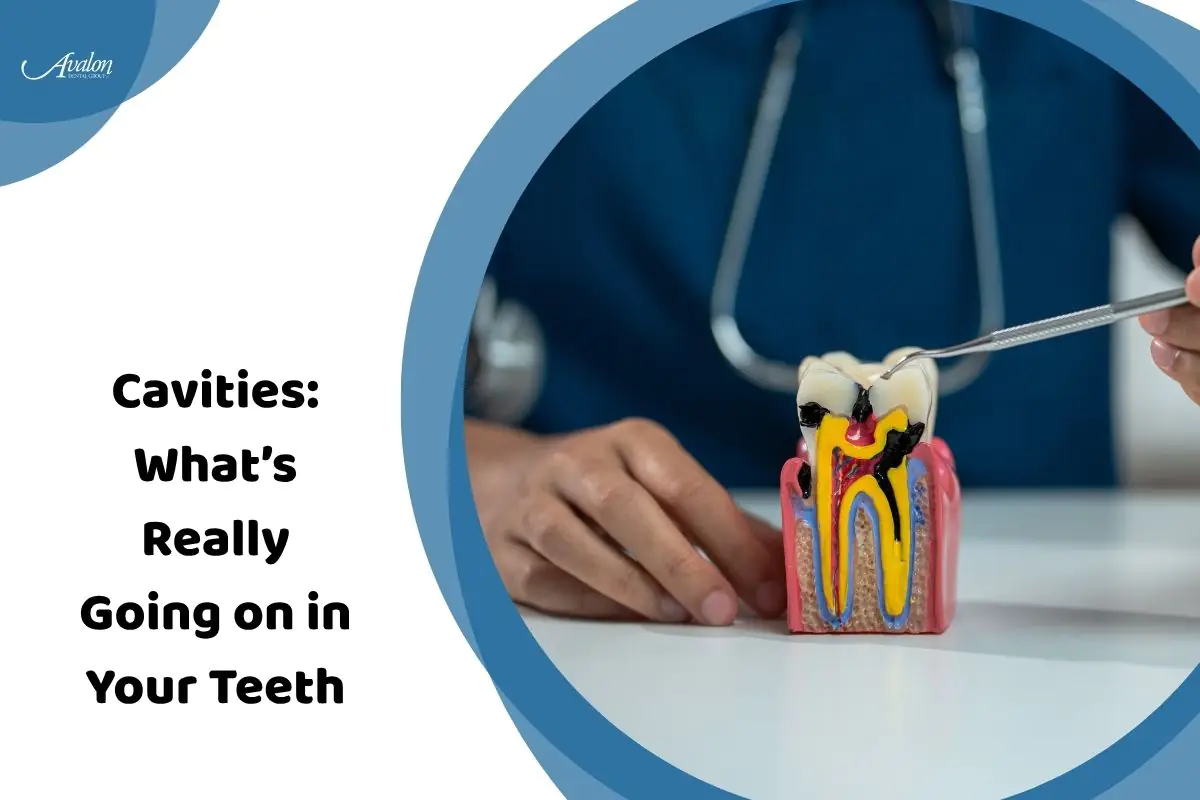
Cavities don’t appear out of nowhere. They form gradually, often silently, until one day they’re causing discomfort, sensitivity, or even a toothache. Most people think of a cavity as a black spot or a hole in the tooth, but what’s often overlooked is that cavities are a process, not just a condition.
Despite how common they are, cavities remain widely misunderstood. Many adults and kids alike have only a vague idea of what causes them, and often associate cavities strictly with candy or poor brushing habits. But the full story is more complex and more important to understand if you want to protect your long-term oral health.
Cavities Are a Process, Not a Moment
A cavity, also known as tooth decay or dental caries, starts when bacteria in the mouth feed on sugars and starches from food. These bacteria produce acid as a byproduct, and that acid begins to erode the hard outer layer of the tooth, called enamel.
Over time, this process creates a weak spot. If left undisturbed, without removal of plaque or changes in diet, the enamel continues to break down. Eventually, a hole forms. That hole is the cavity. But what’s important to understand is that it didn’t start as a hole, it started as an invisible chemical process happening over days, weeks, or even months.
Why Cavities Are So Common
The modern diet is the biggest factor. Refined sugars and processed starches became widespread with the Industrial Revolution, and so did cavities. Foods rich in added sugars and simple carbs, like sugary drinks, candy, chips, bread, and even some “healthy” snack bars, provide an abundant food source for harmful bacteria in the mouth. These bacteria rapidly multiply and produce acidic waste that damages tooth enamel.
On top of that, refined sugars are sticky. They cling to the surfaces of teeth, creating the perfect environment for bacteria to thrive, shielded from the natural cleaning action of saliva. This stickiness allows harmful bacteria to stay on the teeth longer, increasing the time acids have to break down enamel.
The Science Behind Tooth Decay
Here’s a simple breakdown of how a cavity forms:
- Sugary or starchy food sticks to the teeth.
- Oral bacteria feed on this food and produce acid.
- Acid begins to dissolve tooth enamel.
- If not removed or neutralized, this process continues.
- Over time, enamel breaks down enough to form a visible hole—a cavity.
Saliva usually helps protect teeth by neutralizing acid and washing away bacteria. But when diet and hygiene habits change the balance, the bacteria win.
Common Signs of a Cavity
Cavities can be silent in the early stages, but some signs include:
- Sensitivity to hot, cold, or sweet foods
- Toothaches or discomfort when chewing
- Visible holes or pits in the teeth
- Brown or black staining on the surface
Routine dental checkups are the best way to catch decay before it causes pain or requires more complex treatment.
Prevention Is Still the Best Treatment
The good news is that cavities are largely preventable. A combination of diet awareness, home care, and professional dental visits can make a significant difference.
Tips for cavity prevention:
- Brush twice daily with fluoride toothpaste
- Floss every day to clean between teeth
- Limit snacks high in sugar or refined carbs
- Drink water throughout the day to stay hydrated and rinse the mouth
- Schedule regular cleanings and exams with your dentist
Sealants and fluoride treatments can also offer added protection, especially for kids and teens.
Is It Time for a Dental Checkup?
Routine dental exams help detect cavities early, before they become painful or expensive to treat. If it’s been more than six months since your last visit, or if you’re experiencing any symptoms of tooth decay, now’s a great time to schedule a checkup.
We’re proud to care for families in Katy and nearby communities with personalized, evidence-based dental care. Schedule your next visit today and take the next step toward a healthier smile.