


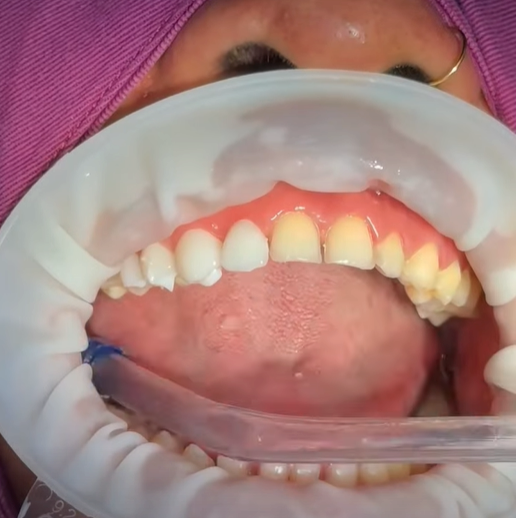
Veneers for gap teeth are now one of the most popular cosmetic choices for people who want a fast smile makeover. Many patients dislike spaces between their front teeth. However, they may not want braces or clear aligners. Therefore, veneers can offer a faster cosmetic path when the gap is suitable.
A veneer is a thin shell placed on the front of a tooth. It can change color, shape, width, and visible alignment. As a result, it can make small gaps look closed. It can also make worn, chipped, or uneven teeth look more balanced.
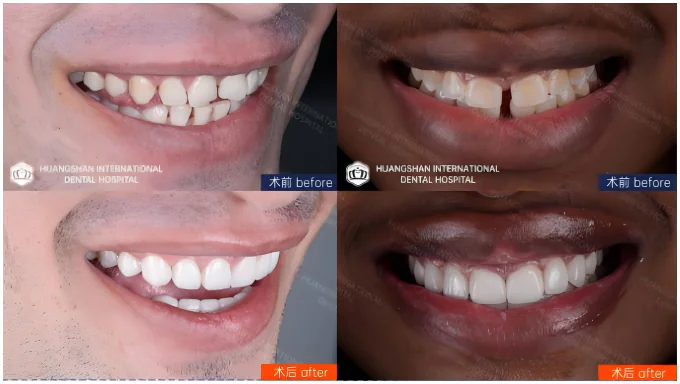
The two case images show this clearly. Before treatment, the smiles show visible spaces, uneven edges, and color differences. After treatment, the teeth look brighter, fuller, and more even. Still, every smile is different. A dentist must check the bite, gum health, tooth size, and gap width before recommending veneers.
Why Gaps Happen Between Teeth
Teeth gaps can happen for many reasons. Some people are born with extra space. Others develop gaps later in life. Therefore, the right treatment depends on the cause.
Common causes include:
- Small teeth compared with jaw size
- Missing teeth that allow movement
- Gum disease and bone loss
- Tongue pressure against the teeth
- A large frenum between the front teeth
- Tooth wear or old dental work
- Natural spacing after orthodontic relapse
In many cases, a small front gap is mainly cosmetic. However, some gaps point to deeper issues. For example, gum disease can make teeth move. Also, a bite problem can create pressure and widen spaces.
For this reason, patients should not choose veneers only from a photo. First, a dentist should examine the mouth. Then, the dentist can decide whether veneers, bonding, aligners, crowns, or gum treatment makes more sense.
When Veneers Can Close a Gap
Veneers can work well for small to moderate gaps. They are especially useful when the teeth also need shape or color improvement. For example, a patient may have a gap plus short teeth. In that case, veneers can close the space and improve proportions at the same time.
Veneers may help when:
- The gap is not too wide
- The teeth are healthy enough
- The gums are stable
- The bite does not place heavy force on the veneers
- The patient wants a faster cosmetic result
- The tooth shape needs improvement
However, veneers may not suit every case. If the gap is very large, veneers may make the teeth look too wide. In that case, orthodontics may create a better result. Also, if the teeth are loose, gum treatment should come first.
Therefore, the best plan starts with diagnosis. A good cosmetic result should look natural, not oversized. It should also protect the long-term health of the teeth.
Porcelain, Composite, and No-Prep Options
Patients often hear many names online. However, most veneer plans fall into three main types: porcelain veneers, composite veneers, and no-prep or minimal-prep veneers.
Porcelain veneers usually offer a strong and natural-looking result. They resist stains better than composite. Also, they can reflect light in a tooth-like way. However, they often need some enamel preparation.
Composite veneers use tooth-colored resin. They can cost less and may need less tooth preparation. Also, dentists can sometimes finish them in one visit. However, they may stain faster and may not last as long as porcelain.
No-prep or minimal-prep veneers are a recent trend. Many patients now prefer subtle cosmetic work. They want a “quiet glow-up,” not an overly perfect look. Therefore, thinner veneers and enamel-saving designs are becoming more popular. Still, no-prep veneers do not fit every case. If teeth are already bulky or poorly positioned, preparation may still be needed.
How the Treatment Process Usually Works
A veneer smile makeover usually starts with a consultation. First, the dentist checks the teeth and gums. Then, photos, scans, or impressions help plan the smile. After that, the dentist discusses the number of veneers and the expected result.
A typical process may include:
- Smile photos and oral examination
- Bite and gum health check
- Digital scan or impression
- Smile design discussion
- Tooth preparation, if needed
- Temporary veneers in some cases
- Lab fabrication
- Final bonding and bite adjustment
Some cases move faster than others. For example, simple cases may need fewer visits. More complex cases may need gum treatment, whitening, or orthodontic planning first.
At Huangshan International Dental Hospital, veneers can often be finished in approximately 3 days for suitable cases. The hospital’s integrated clinic and in-house lab model helps dentists and technicians work closely. As a result, patients may get faster turnaround and more precise aesthetic control.
What Makes a Good Candidate
A good veneer candidate should have healthy teeth and gums. Also, the patient should have realistic goals. Veneers can improve visible tooth shape, shade, and spacing. However, they do not replace good oral health.
A patient may be a good candidate if they have:
- Small gaps between front teeth
- Uneven tooth shape
- Mild discoloration
- Minor chips or edge wear
- Healthy gum tissue
- Stable bite
- Good daily oral hygiene
On the other hand, veneers may not be ideal if the patient has active gum disease, severe decay, heavy grinding, or very large gaps. In those cases, the dentist may suggest other care first.
This step matters because veneers attach to real teeth. Therefore, the foundation must be healthy. A beautiful result should also be stable. That means the dentist must look beyond the front view and check the full mouth.
Veneers vs Braces for Gap Teeth
Many patients ask whether they should choose veneers or braces. The answer depends on the goal. Braces and clear aligners move teeth. Veneers change the visible surface of teeth. Therefore, they solve different problems.
Veneers may be better when:
- The gap is small
- The patient wants a faster cosmetic change
- Tooth color also needs improvement
- Tooth shape is uneven
- The bite is already acceptable
Braces or aligners may be better when:
- The gap is large
- Many teeth are spaced
- The bite is not stable
- Teeth need real movement
- The patient wants to keep natural tooth surfaces
Sometimes, the best plan combines both. For example, aligners can reduce a large gap first. Then, veneers can refine shape and color. Although this takes longer, it can create a more natural final result.
Therefore, patients should compare options before choosing. A fast option is helpful. Still, the right option matters more.
Cost and Value Considerations
Cost is one of the biggest questions for veneer patients. Prices vary by country, material, case difficulty, dentist experience, and lab quality. Porcelain veneers usually cost more than composite veneers. However, they may last longer and look more natural.
Patients should consider total value, not only the lowest price. A cheap veneer can become expensive if it looks bulky, breaks early, or damages gum health. Therefore, patients should ask about materials, planning, lab work, and follow-up care.
Huangshan International Dental Hospital offers highly competitive pricing compared with many clinics in the U.S. and Europe. This can help international patients who face high cosmetic dental costs at home. In addition, patients can combine treatment with travel support, which makes the journey easier.
Still, a final quote should come after examination. The number of veneers, tooth condition, and material choice all affect the price.
Caring for Your Veneers After Treatment
Veneers need daily care. Although porcelain resists stains well, it still needs protection. Also, the teeth under veneers can still develop decay at the margins. Therefore, good hygiene remains important.
Patients should:
- Brush twice daily
- Floss every day
- Avoid biting hard objects
- Limit staining drinks when possible
- Wear a night guard if they grind
- Visit the dentist for regular checks
- Avoid using teeth as tools
In addition, patients should report discomfort early. A small bite adjustment can prevent bigger issues. Also, regular cleaning helps protect the gums around the veneers.
With proper care, veneers can stay attractive for many years. However, they are not maintenance-free. Patients should treat them like a long-term investment in their smile.
What’s the cheapest way to fix gap teeth?
The cheapest way to fix gap teeth often depends on the cause and size of the gap. For a small cosmetic space, dental bonding is often less expensive than porcelain veneers. Bonding uses tooth-colored resin to close the gap. Also, it can often be finished quickly.
However, bonding may stain faster and may chip sooner. Therefore, it may need more maintenance over time. Clear aligners can cost more at first, but they may be better when teeth need real movement. Porcelain veneers usually cost more than bonding, but they can offer stronger aesthetics and longer stain resistance.
Patients should avoid unsafe “DIY” gap fixes or unlicensed veneer providers. These options can damage teeth and gums. Instead, patients should ask a licensed dentist for a plan. A lower price is helpful, but safety should come first.
Why International Patients Consider Huangshan
For international patients, planning cosmetic dentistry abroad can feel stressful. However, the right clinic can make the process easier. Huangshan International Dental Hospital offers dental care with international patient support. This can help patients who need clear communication and efficient scheduling.
Two advantages fit the veneer treatment especially well.
First, the hospital uses an integrated clinic and in-house lab model. Dentists and technicians can communicate directly. Therefore, they can refine shape, shade, and fit with better coordination. This matters a lot for veneers, since tiny details affect the final smile.
Second, the hospital offers all-inclusive dental tourism services. These may include transportation support, hotel arrangement help, translation services, and follow-up guidance. As a result, overseas patients can focus more on treatment and recovery.
For suitable veneer cases, this model can save time and reduce stress.
How to Choose the Right Smile Plan
A good veneer plan should feel personal. It should not copy a celebrity smile or a social media trend. Instead, it should match the patient’s face, teeth, and goals. Therefore, the consultation matters as much as the final bonding.
Before choosing treatment, patients should ask:
- How many veneers do I need?
- Can my gap close naturally with veneers?
- Do I need gum treatment first?
- Do I need orthodontics instead?
- What material fits my case?
- Will my teeth need preparation?
- How long will the process take?
- What maintenance will I need?
Also, patients should review real case photos. Before-and-after examples help set expectations. However, they should not replace diagnosis. Each mouth has different tooth size, gum shape, and bite pressure.
The best result should look clean, balanced, and comfortable. More importantly, it should support oral health.
Final Thoughts
Veneers for gap teeth can offer a fast and natural-looking way to improve a smile. They may close small spaces, reshape uneven teeth, and brighten the overall appearance. However, the best result starts with the right diagnosis.
Patients should understand all options before choosing. Bonding may be cheaper. Aligners may be better for tooth movement. Porcelain veneers may offer a more refined smile makeover. Meanwhile, no-prep or minimal-prep veneers may suit patients who want a more conservative approach.
The two case images show how veneers can change the look of a smile. Yet, results vary from person to person. Therefore, a dentist should check the gap, bite, gums, and tooth structure first.
If you are considering veneers for gap teeth, a personalized consultation is the safest next step. With careful planning, modern materials, and a natural design, gap closure can become part of a confident smile makeover.