


Is Your Tooth Chipped, Stained, or Damaged?
Has a small corner broken off your front tooth? Are your teeth yellow, dark, or uneven? Perhaps an old filling keeps falling out.
When these problems appear, patients often compare veneers vs inlays vs crowns. However, these restorations serve different purposes.
Think of them as three dental repair specialists:
- Porcelain veneers mainly improve front-tooth appearance.
- Inlays and onlays repair moderate damage in back teeth.
- Full crowns protect teeth with extensive structural damage.
The best option depends on the location and condition of the tooth. It also depends on how much healthy structure remains.
Therefore, a dentist should examine the tooth before recommending treatment. The examination may include dental X-rays, photographs, a bite assessment, or a digital scan.
Most importantly, dentists should preserve healthy tooth structure whenever possible. A larger restoration is not automatically better. Instead, the treatment should match the actual level of damage.
Porcelain Veneers
Core purpose: A minimally invasive cosmetic treatment that mainly improves the shape and color of front teeth.
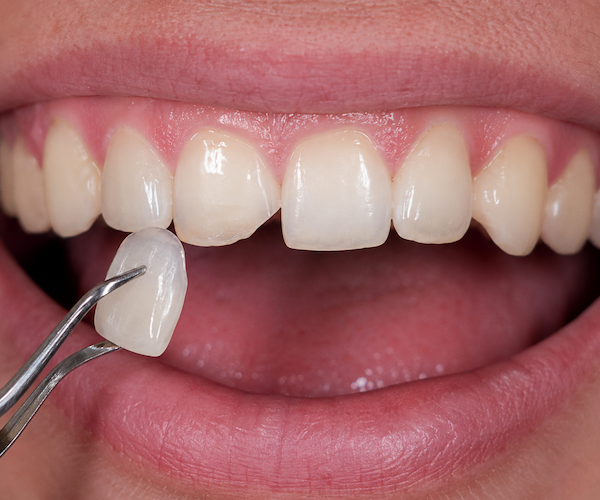
A porcelain veneer is a thin ceramic shell. The dentist bonds it to the front surface of a tooth with a dental adhesive.
Depending on the case, the dentist may remove a small amount of enamel. This creates space for the ceramic and prevents the tooth from looking bulky. However, preparation varies between patients.
Porcelain can reproduce several features of natural enamel:
- Translucency
- Surface texture
- Natural gloss
- Color variation
- Light reflection
Therefore, a well-designed veneer can blend naturally with nearby teeth.
Porcelain also resists many common surface stains better than composite resin. However, the natural tooth and veneer margins still need regular cleaning.
Veneers mainly improve appearance. They do not provide enough protection for every weak or badly damaged tooth. Moreover, they cannot treat active decay, gum disease, or a dental infection.
Therefore, the dentist must confirm that the tooth has enough healthy enamel for reliable bonding.
When Are Porcelain Veneers Suitable?
Porcelain veneers may suit patients with relatively healthy front teeth who want to improve visible cosmetic concerns.
Common uses include:
- Small chips on front teeth
- Minor gaps between teeth
- Mildly uneven tooth shapes
- Slight differences in tooth length
- Mild or moderate discoloration
- Certain cases of fluorosis
- Worn front edges
- Minor visible misalignment
However, veneers do not move teeth. They only change the visible shape of the teeth. Therefore, orthodontic treatment may work better for larger gaps, crowding, or bite problems.
Veneers may not suit patients with:
- Active tooth decay
- Gum disease
- Very little remaining enamel
- Large fractures
- Severe teeth grinding
- Major bite problems
- Poor oral hygiene
- Seriously weakened teeth
In addition, thin veneers may not fully hide severe internal discoloration. A different ceramic design or crown may provide better coverage in those cases.
A dentist should compare cosmetic goals with long-term tooth health before recommending veneers.
Caring for Porcelain Veneers
Porcelain is durable, but it is not indestructible. Therefore, patients should avoid placing excessive pressure on veneers.
Avoid using restored front teeth to:
- Bite hard candy
- Crack nutshells
- Chew ice
- Tear packaging
- Bite pens
- Open bottles
- Chew bones
Long-term grinding may also cause cracks, chips, or debonding. Therefore, patients who grind their teeth may need a night guard.
Daily care should include:
- Brushing twice daily
- Cleaning between teeth every day
- Using non-abrasive toothpaste
- Attending regular dental examinations
- Scheduling professional cleaning as advised
Porcelain itself cannot decay. However, decay can still form in the natural tooth near a veneer’s edge.
Good hygiene and careful eating habits can help extend the useful life of the restoration. Still, no dentist should promise that a veneer will last forever.
Dental Inlays and Onlays
Core purpose: A precise functional restoration for moderate damage in back teeth.
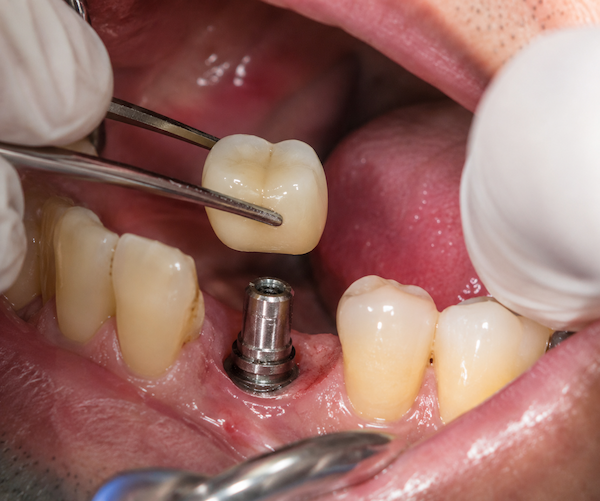
A dental inlay fits inside the damaged area of a premolar or molar. It does not cover the tooth’s chewing cusps.
An onlay works similarly. However, it also covers one or more weakened cusps. Therefore, dentists sometimes call it a partial crown.
Unlike a direct filling, an inlay or onlay is made outside the mouth. The dentist first removes the decay and unstable material. Next, a digital scan or impression records the prepared tooth.
A dentist or dental technician then creates the restoration using materials such as:
- Ceramic
- Composite resin
- Gold
- Other suitable dental materials
Finally, the dentist bonds the restoration to the tooth and checks the bite.
In suitable cases, an inlay or onlay preserves more healthy structure than a full crown. However, it is not always better than a modern filling. The choice depends on the defect, tooth strength, bite forces, and decay risk.
When Are Inlays or Onlays Suitable?
Dentists mainly use inlays and onlays in back teeth because these teeth handle strong chewing forces.
An inlay may be suitable when:
- A back tooth has moderate decay.
- An old filling has failed.
- Enough healthy tooth structure remains.
- The chewing cusps remain strong.
- A custom restoration can improve the contact or bite.
An onlay may be suitable when:
- One or more cusps have weakened.
- A cusp has fractured.
- The defect extends beyond the center of the tooth.
- The tooth needs more protection than an inlay provides.
- A full crown would remove unnecessary healthy tissue.
However, inlays may not work when the remaining tooth walls are too thin. They may also fail when there is not enough structure for stable bonding.
In that situation, an onlay or crown may provide better protection.
Therefore, the dentist must examine the size and position of the damage. The health of the root and gums also matters.
Inlays and onlays focus mainly on function. Dentists do not usually use them for cosmetic repair of front teeth.
How Inlays Differ From Regular Fillings
A regular filling is placed and shaped directly inside the mouth. In contrast, an inlay is designed and manufactured before the dentist bonds it to the tooth.
Direct fillings often work well for small and moderate cavities. They are also efficient and conservative.
However, an inlay may offer useful benefits in selected cases:
- Controlled shape
- Accurate contact points
- Stable chewing anatomy
- Good wear resistance
- Precise laboratory fabrication
- Conservation of suitable healthy tooth structure
Still, an inlay is not always the “best” option between a filling and a crown. Each method has its own indications.
For example, a small cavity may only need a filling. Meanwhile, a badly weakened tooth may need an onlay or crown.
The dentist should also consider the patient’s budget, bite, oral hygiene, and material preferences. Therefore, patients should ask why a particular restoration is being recommended.
A good treatment plan explains all reasonable alternatives rather than promoting only the most expensive choice.
Full Dental Crowns
Core purpose: Broad protection for a tooth with extensive damage or weak remaining structure.
A full crown covers most or all of the visible tooth. It can restore the tooth’s shape, bite, strength, and appearance.
To create space for the crown, the dentist reshapes the tooth around its sides and chewing surface. Therefore, a crown usually requires more preparation than a veneer, inlay, or onlay.
Dentists may use materials such as:
- Zirconia
- Lithium disilicate
- Porcelain fused to metal
- Metal alloys
- Other dental ceramics
Each material has different aesthetic and functional properties. Therefore, the right material depends on the tooth’s position and bite pressure.
A crown is an irreversible restoration because removed enamel cannot grow back. Consequently, dentists should not recommend crowns for healthy teeth without a clear clinical or cosmetic reason.
The goal is to protect a damaged tooth, not to remove more healthy structure than necessary.
When Is a Full Crown Suitable?
A dentist may recommend a full crown when a tooth needs more protection than a filling, inlay, onlay, or veneer can provide.
Possible situations include:
- Extensive tooth decay
- Loss of a large amount of tooth structure
- A large or failing filling
- A serious tooth fracture
- Weak or thin remaining walls
- Significant tooth wear
- A crack that places the tooth at risk
- Severe discoloration that a veneer cannot hide
- Major changes to tooth shape or bite
Crowns are also common after root canal treatment in back teeth. These teeth often had large cavities or fractures before the root canal. Therefore, they may need protection from chewing forces.
However, not every root canal tooth automatically needs a full crown. Some teeth retain enough healthy structure for a bonded filling or onlay.
The dentist should assess the tooth location, remaining walls, bite, and fracture risk. Then, the dentist can select the most conservative, reliable option.
Veneers, Inlays, and Crowns at a Glance
Porcelain veneer
- Mainly treats front teeth.
- Covers the visible front surface.
- Focuses on cosmetic improvement.
- Requires enough healthy enamel.
- Does not protect against extensive structural damage.
Dental inlay
- Mainly treats back teeth.
- Fits inside the chewing surface.
- Repairs moderate decay or damage.
- Does not cover tooth cusps.
- Preserves healthy structure in suitable cases.
Dental onlay
- Mainly treats back teeth.
- Covers one or more weakened cusps.
- Provides more protection than an inlay.
- May avoid the need for a full crown.
Full crown
- Can restore front or back teeth.
- Covers most of the visible tooth.
- Protects against extensive damage.
- Requires more tooth preparation.
- Restores shape, bite, and appearance.
Therefore, patients should not choose a restoration only by price or appearance. The dentist must first determine how much healthy tooth remains.
How Should a Small Chipped Front Tooth Be Repaired?
A small chip does not always need a porcelain veneer or crown.
The dentist may first consider:
- Smoothing a rough edge
- Composite bonding
- Reattaching the broken fragment
- A porcelain veneer
- A full crown for extensive damage
Composite bonding often repairs minor chips with little or no enamel removal. It can also cost less than porcelain. However, composite may stain or chip sooner.
A veneer may suit a larger visible defect, especially when the patient also wants to improve the tooth’s color or shape.
In contrast, a crown may suit a tooth with a deep fracture, large filling, or limited remaining structure.
Even a painless chip needs an examination. A fracture may extend deeper than the visible edge.
Seek prompt dental care if the tooth feels loose or painful. You should also act quickly if it becomes highly sensitive or cuts the surrounding tissue.
How Should Yellow or Dark Teeth Be Treated?
Tooth discoloration has many possible causes. Therefore, cosmetic coverage should not be the first step in every case.
Possible causes include:
- Tea and coffee stains
- Tobacco use
- Plaque or tartar
- Tooth decay
- Dental trauma
- Old fillings
- Enamel defects
- Fluorosis
- Medication-related discoloration
- Loss of tooth vitality
- Natural aging
Surface stains may improve through professional cleaning or teeth whitening. Therefore, these patients may not need veneers.
However, internal discoloration may require bonding, veneers, internal bleaching, or crowns. The correct treatment depends on the color depth and tooth condition.
A severely dark tooth may also have nerve damage. Consequently, the dentist may need to perform vitality tests and take an X-ray.
Dentists should treat decay, infection, and gum disease before cosmetic work. Afterward, they can choose a restoration with the right color, translucency, and coverage.
Prevent Chips and Tooth Fractures
Many small chips develop after repeated stress rather than one major accident.
To reduce the risk:
- Avoid chewing ice.
- Do not crack shells with your teeth.
- Never use teeth to open packaging.
- Cut hard food into smaller pieces.
- Wear a mouthguard during contact sports.
- Ask about a night guard if you grind.
- Treat an uneven bite when necessary.
Front teeth cut food, while back teeth handle most chewing pressure. Therefore, avoid placing strong forces directly on the front teeth.
Also, contact a dentist if a tooth repeatedly chips. Frequent damage may indicate grinding, weakened enamel, or an unstable bite.
Early treatment can prevent a small defect from becoming a larger fracture.
Prevent Staining and Tooth Decay
Good daily care can reduce staining, decay, and the need for extensive restorations.
Patients should:
- Brush twice daily for two minutes.
- Use fluoride toothpaste.
- Clean between teeth every day.
- Rinse after coffee, tea, or dark foods.
- Limit frequent sugary snacks.
- Reduce sticky sweets and soft drinks.
- Avoid smoking and betel nut use.
- Attend routine dental examinations.
- Schedule professional cleaning as advised.
After acidic drinks, rinse with water and wait before brushing. Otherwise, immediate brushing may damage softened enamel.
Dental examinations can detect small cavities and cracks before they cause pain. Therefore, early treatment may allow a simple filling instead of an inlay or crown.
Most adults should attend examinations based on their individual risk. The dentist may suggest more frequent visits for patients with gum disease or high decay risk.
FAQ
Is a veneer better than a crown?
Not always. Veneers suit mainly healthy teeth with cosmetic concerns. Crowns provide more protection for extensively damaged teeth.
Is an inlay better than a filling?
It depends. Fillings work well for many cavities. However, an inlay may suit selected moderate defects that need a custom restoration.
Can a chipped tooth heal naturally?
No. Enamel cannot regrow. However, a very small chip may only need smoothing or bonding.
Does every root canal tooth need a crown?
No. Back teeth commonly need cusp protection, but the final choice depends on the remaining tooth structure and bite.
Which option removes the least tooth structure?
Usually, a small filling or bonding removes the least. Among these three options, a suitable veneer or inlay may preserve more structure than a crown.
How long do these restorations last?
There is no fixed lifespan. Hygiene, bite pressure, material, tooth condition, and regular dental care all affect longevity.
Making the Right Choice
When comparing veneers vs inlays vs crowns, start with the tooth’s condition.
Choose according to the following basic principle:
- Cosmetic front-tooth concerns may suit veneers.
- Moderate back-tooth damage may suit an inlay.
- Weak back-tooth cusps may suit an onlay.
- Extensive structural damage may require a crown.
However, small defects may only need bonding or a filling. Likewise, orthodontics may work better than veneers for significant gaps or crowding.
Therefore, arrange a dental examination before selecting a restoration. Ask how much healthy structure remains and why the dentist recommends a specific treatment.
At Huangshan International Dental Hospital, digital planning, multidisciplinary assessment, and an in-house laboratory support personalized restorative treatment.