


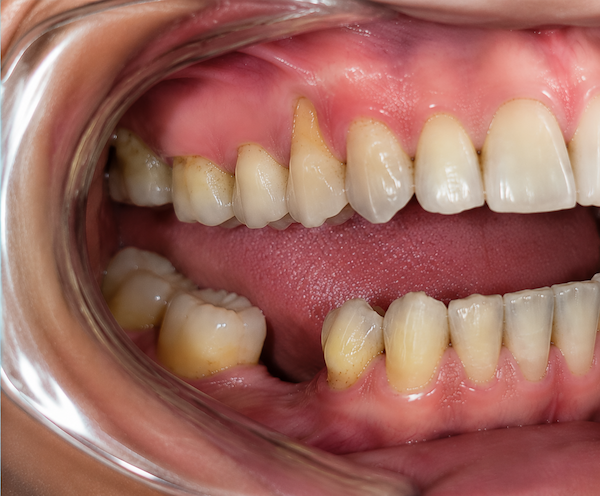
Why Overeruption of Opposing Teeth Happens After Tooth Loss
Overeruption of opposing teeth can happen when a missing tooth remains untreated for too long. Many people remove a tooth and delay replacement. At first, nothing may hurt. However, the mouth starts changing quietly.
In a complete bite, upper and lower teeth meet each other. They support each other during chewing. Also, they help maintain a stable vertical bite height.
Once a tooth stays missing for a long time, its opposing tooth loses support. Therefore, that tooth may slowly move toward the empty space. It may look longer, but it has not truly grown. Instead, it has shifted out of its normal position.
This change can lead to:
- Wider tooth gaps
- Food trapping
- Gum inflammation
- Mouth ulcers
- Bite problems
- Loss of repair space
So, missing teeth should not be ignored. Early treatment can prevent many later problems.
A Complete Bite Keeps Teeth Stable
Healthy teeth depend on a stable bite. In a normal mouth, teeth do not move freely. Upper and lower teeth match each other. They bite together and form a balanced vertical relationship.
Because of this balance, every tooth stays in its proper place. The opposing tooth blocks unwanted movement. Neighboring teeth also help maintain tooth position.
However, once one tooth is removed, the balance changes. The tooth opposite the missing space loses its vertical stop. As a result, it may slowly move downward or upward.
This process does not happen in one day. Instead, it develops over time. The longer the gap remains, the more serious the movement can become.
In simple terms, teeth tend to move toward empty space. Therefore, a missing tooth can affect more than the missing area itself.
The Tooth Is Not Really Growing Longer
Many patients think the opposing tooth has “grown longer.” However, this is not exactly true. The tooth usually moves out of its socket position. Dentists often describe this as overeruption or tooth extrusion.
The visible result looks like a longer tooth. Yet, the real problem is tooth displacement. The tooth has lost its biting resistance. Therefore, it slowly extends toward the missing tooth gap.
This matters because position affects function. Once a tooth rises above or drops below the normal bite plane, it can disturb chewing. It may also press on gum tissue or block future repair.
Therefore, patients should not wait until pain appears. A tooth can move before obvious symptoms begin. Regular dental checks help detect early changes.
Hidden Problem 1: Larger Gaps and Food Trapping
When the opposing tooth becomes longer, the tooth row may lose its original order. The overerupted tooth can rise above the normal bite line. Therefore, the contact between teeth may become uneven.
This can cause:
- Wider gaps between teeth
- Repeated food trapping
- Soft plaque buildup
- Gum swelling
- Bleeding during brushing
- Bad breath
- Gum recession
Food debris can easily stay in these new gaps. Brushing and rinsing may not clean everything. As a result, plaque keeps irritating the gum.
Over time, the gum may become red and swollen. It may bleed when brushing. Later, gum recession may appear. Then, the tooth root may become exposed.
Once roots become exposed, teeth may feel sensitive to cold, hot, sweet, or sour foods. In serious cases, the tooth may even loosen.
Hidden Problem 2: Gum Pressure and Repeated Ulcers
If the opposing tooth moves too far, it may touch the gum in the missing tooth area. This creates constant pressure. Also, chewing may increase the irritation.
Long-term pressure may cause:
- Gum soreness
- Local swelling
- Sharp pain
- Mucosal injury
- Repeated ulcers
- Difficulty chewing
- Pain during meals
The gum tissue needs healthy blood flow. However, constant pressure can disturb it. Therefore, the area may become painful and slow to heal.
Also, repeated friction can break the mucosa. The patient may then develop stubborn mouth ulcers. These ulcers may heal and return again.
This can make eating uncomfortable. It can also make dental repair harder. Therefore, gum pain near a missing tooth should receive attention early.
Hidden Problem 3: Damaged Bite Balance
A longer opposing tooth can damage the bite. It may sit higher than the normal chewing plane. Therefore, it can create bite interference.
Bite interference can lead to:
- Uneven chewing pressure
- Tooth wear
- Pain when biting
- Neighboring tooth movement
- Lower chewing efficiency
- Jaw joint discomfort
- More difficult repair
The overerupted tooth may take too much force. As a result, that tooth can become stressed. Nearby teeth may also tilt or shift.
Over time, the dental arch curve may change. The bite may no longer close smoothly. Some patients may even feel jaw tension or joint discomfort.
Therefore, tooth loss can become more than one missing tooth. It can affect the whole chewing system.
Hidden Problem 4: Loss of Space for Future Repair
A missing tooth needs enough space for repair. For example, dental implants, fixed bridges, and crowns all need correct vertical space. However, an overerupted opposing tooth can occupy that space.
When repair space becomes too small, treatment becomes harder. The dentist may not be able to place a normal crown directly. Therefore, the patient may need extra treatment first.
Possible extra steps include:
- Orthodontic intrusion
- Tooth reshaping
- Crown reduction
- Bite adjustment
- More complex repair planning
This increases treatment time. It can also increase discomfort and cost. In some cases, treatment risk becomes higher.
Therefore, replacing a missing tooth early is often easier. It helps preserve space. It also helps keep the bite stable.
Local Orthodontic Treatment for Overerupted Teeth
When only one or a few teeth have overerupted, local orthodontic treatment may help. The goal is simple. The dentist moves the tooth back toward the normal bite line and creates space for repair.
For patients with good oral conditions and enough bone, bilateral implant anchorage may work well. Small anchorage screws provide a stable force. They help press the overerupted tooth back into position.
This method can offer:
- More accurate tooth movement
- Less effect on other healthy teeth
- Stable correction
- Shorter recovery process
- Better space for later repair
However, the dentist must check bone condition first. Not every patient can use the same method. Therefore, diagnosis comes before treatment planning.
Combined Anchorage and Oral Appliance Treatment
Some cases are more complex. For example, a patient may not have enough bone for anchorage on one side. Another patient may have severe tooth movement. In these situations, combined treatment may work better.
This plan may use:
- Implant anchorage
- Custom oral appliances
- Controlled force direction
- Local bite correction
- Space rebuilding
The goal is to control the pressure and direction carefully. Therefore, the tooth can move more predictably. This also helps create enough room for a future dental implant or fixed restoration.
At Huangshan International Dental Hospital, the multidisciplinary dental team can support such cases. The hospital includes specialists in orthodontics, implantology, periodontics, and restorative dentistry. Therefore, patients with both missing teeth and bite problems can receive a more complete plan.
Full-Mouth Orthodontics for Complex Bite Problems
Some patients have more than one issue. They may have missing teeth, tooth crowding, tilted teeth, and bite imbalance at the same time. In these cases, local treatment may not be enough.
Full-mouth orthodontic options may include:
- Traditional fixed braces
- Clear aligners
- Bite correction
- Space management
- Later implant or crown repair
This type of treatment can improve the whole bite. It may also make later missing tooth repair more stable.
However, full-mouth treatment needs careful planning. The dentist must decide which teeth need movement. Also, the dentist must protect gum health during treatment.
For patients who plan dental repair abroad, clear planning matters even more. Huangshan International Dental Hospital offers free consultation and personalized treatment plans. This helps patients understand the treatment path before making decisions.
Why Prevention Matters More Than Repair
Oral health depends on prevention. A missing tooth may look like a single problem. However, it can become the start of many dental changes.
At first, the patient may feel no pain. However, damage may still happen. The opposing tooth may overerupt. Neighboring teeth may shift. Gum tissue may become inflamed. The bite may lose balance.
Once these changes become severe, they may not fully reverse. Treatment may also become longer and more complicated.
Therefore, patients should not delay after tooth loss. A dental check can confirm whether repair is needed now or later. It can also prevent overeruption of opposing teeth from getting worse.
Early repair helps:
- Restore chewing function
- Protect gum health
- Maintain bite space
- Prevent tooth movement
- Reduce future treatment difficulty
FAQ: Why Do Teeth Shift After Tooth Loss?
Teeth shift after tooth loss because the mouth loses support. Each tooth depends on nearby teeth and opposing teeth. Once a tooth is missing, the balance changes.
The nearby teeth may lean into the gap. Also, the opposing tooth may move toward the empty space. Therefore, the tooth row may become uneven.
This can happen slowly. However, the effects can become serious over time. That is why missing teeth should not be left untreated for too long.
FAQ: What Happens If You Do Not Replace a Missing Tooth?
If you do not replace a missing tooth, several changes may occur. The opposing tooth may become longer. Neighboring teeth may tilt. Food may be trapped more easily. Gum inflammation may also develop.
In addition, the bite may become unstable. Future dental implant or bridge treatment may become harder because the repair space becomes smaller.
Therefore, a missing tooth should receive timely evaluation. Even if you do not feel pain, dental movement may already begin.
FAQ: Can an Overerupted Tooth Be Fixed?
Yes, an overerupted tooth can often be corrected. The treatment depends on how much the tooth has moved.
Common methods include:
- Local orthodontic treatment
- Implant anchorage
- Custom oral appliances
- Bite adjustment
- Full-mouth orthodontics
- Later implant or crown repair
Mild cases may need simpler treatment. However, severe cases may need combined care. Therefore, early examination is important.
FAQ: How Soon Should I Replace a Missing Tooth?
You should visit a dentist as soon as possible after tooth loss. The dentist can check the wound, bone, bite, and future repair space.
Some patients may not need immediate final repair. However, they still need a plan. If the gap stays open too long, the opposing tooth may move into it.
Therefore, early consultation helps protect treatment choices. It also helps prevent more difficult repairs later.
Summarize
Overeruption of opposing teeth happens when a missing tooth removes natural bite support. The opposing tooth loses its vertical resistance and may slowly move into the empty space. Although it may look like the tooth has grown, it has actually shifted out of position.
This problem can cause food trapping, gum inflammation, ulcers, bite damage, and loss of repair space. If the condition becomes serious, patients may need orthodontic intrusion, implant anchorage, bite adjustment, or full-mouth correction before replacing the missing tooth.
Therefore, tooth loss should never be delayed for too long. Timely dental checks and early repair can restore bite balance, protect gum health, and reduce future treatment difficulty.