


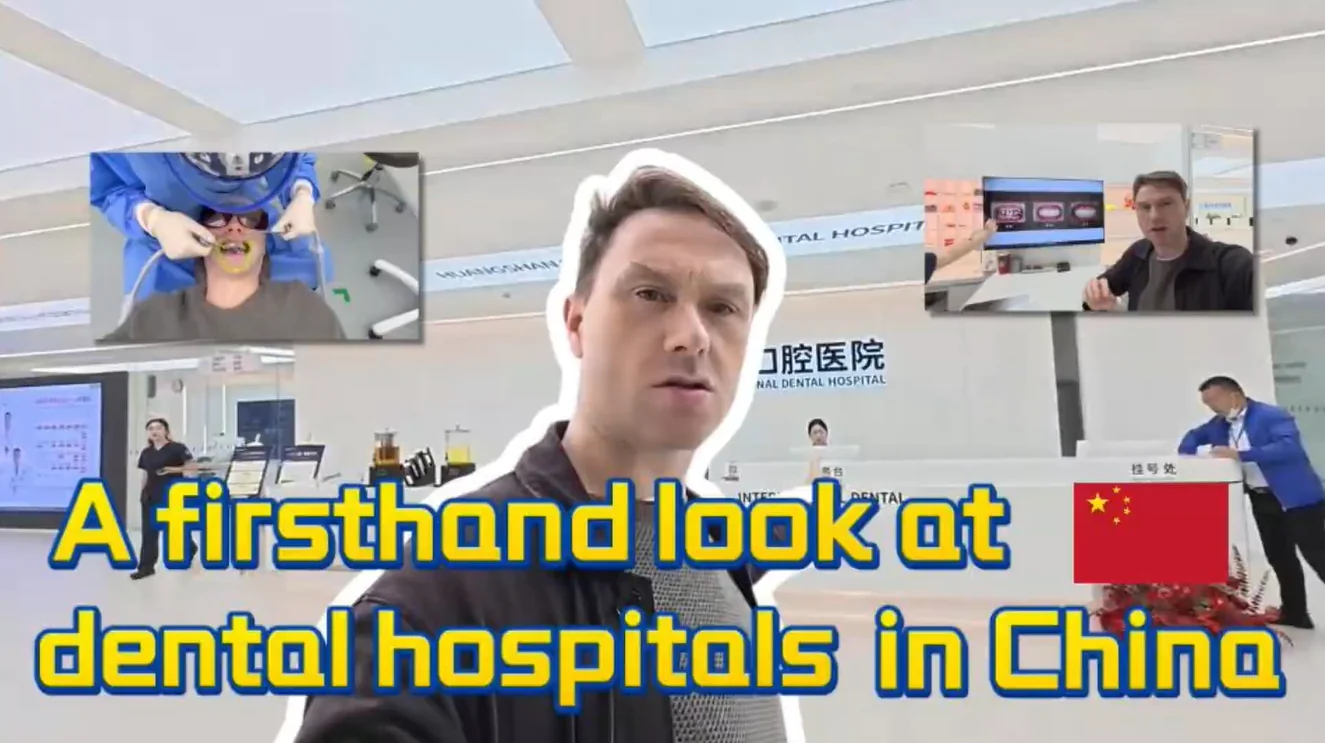
Jonny Asia Visits Huangshan Dental Hospital
Recently, we were excited to welcome overseas creator Jonny Asia to Huangshan International Dental Hospital.
Jonny traveled from Bangkok to Huangshan for dental treatment in China. During his visit, he documented the full experience for his international audience.
His treatment included:
- One dental filling
- Nine zirconia crowns
- Two implant-supported crowns
- Temporary restorations
- Digital scans and smile planning
- Final color and bite adjustments
Importantly, Jonny had received the two dental implants about six months earlier. During this visit, our team restored those healed implants with custom implant crowns.
Over several days, he explored our facilities, technology, international patient services, and in-house dental laboratory. Moreover, he shared an honest account of the experience from a foreign patient’s perspective.
Starting With a Detailed Digital Assessment
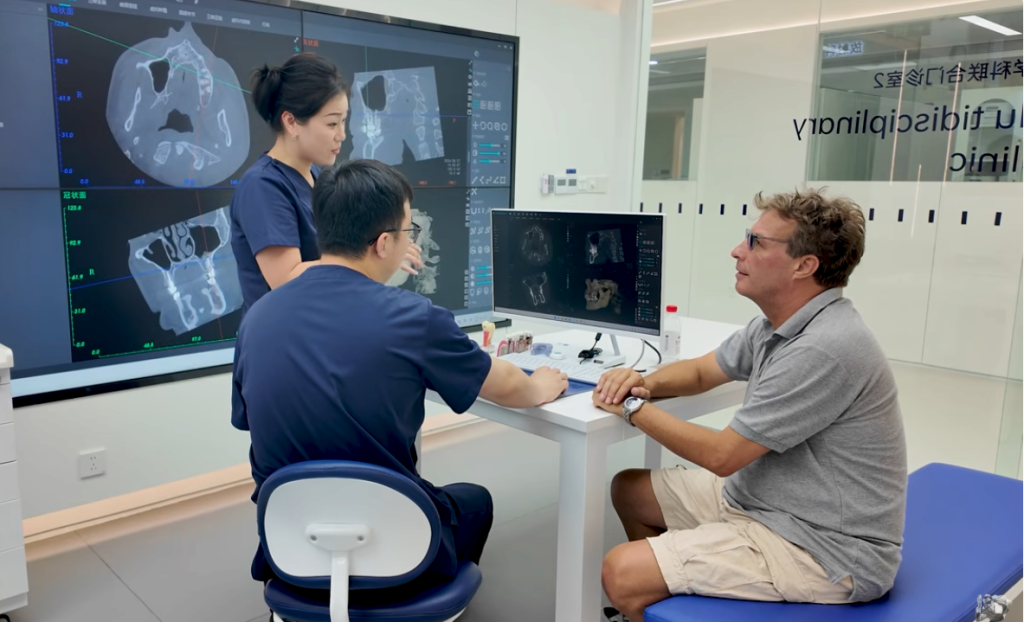
Jonny’s treatment began with registration, a clinical examination, and a 3D CT scan.
The scan helped our dental team examine his teeth, jaw, bone structure, and existing implants. Next, we used a digital intraoral scanner to create a detailed model of his mouth.
These digital records allowed the team to assess:
- His existing upper crowns
- The condition of his lower teeth
- The position of his existing implants
- The spaces that required restoration
- His bite and tooth alignment
- The color and shape of nearby teeth
Afterward, our international patient coordinator explained the findings, treatment options, schedule, and estimated costs.
Jonny said that viewing the scans helped him understand his oral condition. As a result, he could make a more informed treatment decision.
Every dental case is different. Therefore, our dentists create an individual plan instead of recommending the same procedure to every patient.
Why Crowns Were Recommended for His Case
Huangshan International Dental Hospital provides veneers, crowns, implants, and other restorative treatments. However, veneers were not the right option for Jonny’s lower teeth.
His upper teeth already had crowns. In addition, some lower teeth required greater coverage and support. Therefore, our clinical team recommended zirconia crowns.
Veneers mainly cover the visible front surface of a tooth. In contrast, crowns cover a larger part of the tooth. They may suit teeth that need more structural restoration.
When choosing between veneers and crowns, dentists consider:
- The amount of healthy tooth structure
- Existing crowns or fillings
- Tooth strength
- Bite pressure
- Previous root canal treatment
- Tooth color and shape
- The patient’s long-term needs
For Jonny, nine zirconia crowns offered a more appropriate treatment plan. Meanwhile, two implant crowns restored the spaces above his previously placed implants.
Tooth Preparation and Temporary Crowns
After reviewing and accepting the treatment plan, Jonny began the first clinical stage.
The dentist completed a filling and prepared nine lower teeth for crowns. Local anesthesia was used to manage discomfort. Afterward, another digital scan recorded the prepared teeth.
Our team then placed temporary crowns. These restorations protected the teeth while the laboratory produced the final zirconia crowns.
Temporary crowns can help:
- Protect prepared teeth
- Reduce sensitivity
- Maintain tooth position
- Support basic chewing
- Preserve the patient’s appearance
Jonny wore the temporary crowns for about two days. During that time, our laboratory designed and manufactured his final restorations.
Although his treatment moved quickly, the process still included diagnosis, planning, scanning, laboratory work, fitting, and final checks.
A Behind-the-Scenes Laboratory Tour
A special part of Jonny’s visit was his tour of our in-house dental laboratory.
He watched our designers and technicians create crowns from digital scan data. First, the design team used dental software to plan the shape of each restoration. Next, milling equipment produced the crowns from zirconia material.
The laboratory process included:
- Digital crown design
- Zirconia milling
- Sintering and strengthening
- Manual shaping and polishing
- Individual color application
- Final quality inspection
Jonny also watched a technician match his new lower crowns to his existing upper crowns. This step helped create a more consistent and natural-looking result.
Our integrated clinic and in-house laboratory allow dentists and technicians to communicate directly. Consequently, they can discuss color, shape, fit, and adjustments without relying on a distant external laboratory.
This model can also reduce waiting time for international patients with limited travel schedules.
Fitting the Final Zirconia Crowns
After the laboratory completed the restorations, Jonny returned for the final fitting.
First, the dentist removed his temporary crowns. Then, the team checked the fit, contact points, shape, and shade of the nine zirconia crowns.
The new lower crowns were designed to complement his existing upper dental work. Therefore, careful color matching was especially important.
Once Jonny and the dentist approved the appearance, the crowns were secured. The dentist also checked his bite and made the necessary adjustments.
Jonny was pleased with:
- The natural color match
- The new tooth shape
- The improved smile
- The speed of the process
- The team’s attention to detail
Zirconia is widely used for dental restorations because of its strength and appearance. However, all crowns require daily care and regular dental examinations.
Completing His Two Implant Crowns
Jonny’s two dental implants had already healed before he arrived at our hospital.
Our team scanned the implant area and designed two custom implant crowns. The laboratory then produced and color-matched them with the surrounding restorations.
The dentist fitted the implant crowns during the final stage of treatment. Afterward, the team checked their position, appearance, and bite.
It is important to distinguish between an implant and an implant crown. The implant sits inside the jaw and replaces the tooth root. The implant crown forms the visible part of the replacement tooth.
In Jonny’s case, we completed the restorative stage. We did not place two new implants and permanent crowns within several days.
New implant patients may need a healing period before receiving their final crowns. Therefore, treatment schedules depend on bone health, implant stability, and individual clinical needs.
Support for an International Creator
Traveling abroad for dental care involves more than clinical treatment. International patients may also need help with communication, transport, accommodation, and scheduling.
Throughout Jonny’s visit, our international service team provided English-language guidance. The team explained his scans, treatment plan, appointments, materials, and costs.
Huangshan International Dental Hospital can assist overseas patients with:
- Preliminary online consultations
- Appointment coordination
- Transportation arrangements
- Hotel accommodation assistance
- Professional translation
- Treatment schedule planning
- Post-treatment guidance
This coordinated service helped Jonny follow each stage of his treatment. Moreover, it allowed him to document the experience clearly for his audience.
International patients should always confirm what their treatment and travel arrangements include before booking.
Jonny Asia’s Final Impression
At the end of the visit, Jonny compared his before-and-after results. He expressed strong satisfaction with his smile and the overall treatment experience.
He also praised the dentist’s gentle approach, professional care, and English communication. In addition, the cleanliness, digital technology, and in-house laboratory exceeded his expectations.
Jonny completed the documented treatment in about four to five days. However, this timeline applied to his specific case. Other patients may require more time due to gum disease, root canal treatment, implant healing, or complex bite conditions.
Through Jonny’s video, international viewers can see:
- How digital dental planning works
- How zirconia crowns are produced
- Why an in-house laboratory matters
- What international patient support involves
- How crowns and implant crowns differ
His experience offers a transparent look at modern restorative dentistry in Huangshan.
Frequently Asked Questions
Is dental treatment in China affordable?
Dental care in China may cost less than comparable treatment in Australia, Europe, or the United States. However, costs depend on the procedure, materials, and complexity. Patients should request an itemized quotation.
How long does crown treatment take?
Some crown cases can be completed within several days when the clinic has an in-house laboratory. However, the dentist must first assess the teeth, gums, and bite.
Can dental implants and crowns be completed in one visit?
Not always. A newly placed implant often needs time to integrate with the bone. Jonny’s implants had already healed before our team fitted the final crowns.
What records should international patients take home?
Patients should request copies of scans, treatment records, material details, implant information, aftercare instructions, and recommended follow-up schedules.
A Real Look at Dental Treatment in China
Jonny Asia’s visit gave his audience an authentic view of dental treatment in China.
His journey included digital imaging, careful planning, nine zirconia crowns, two implant crowns, and a complete laboratory tour. Moreover, he saw how our dentists and technicians work together to produce personalized restorations.
We thank Jonny Asia for visiting Huangshan International Dental Hospital and sharing his experience with viewers around the world.
Patients interested in crowns, veneers, implants, smile makeovers, or dental tourism can contact our international team for a personalized assessment. Treatment recommendations, costs, and schedules will always depend on individual dental conditions.