


Dental Implant Materials: Why Does the Choice Matter?
When people plan to get dental implants, they often ask one important question. What material should I choose?
This question is very normal. After all, an implant stays in the jawbone for many years. Therefore, patients want something safe, stable, and natural-looking.
Today, the most common dental implant materials include titanium alloy, pure titanium, and zirconia. Each material has its own advantages. Also, each one fits different needs.
Some patients care more about long-term strength. Some care more about natural appearance. Meanwhile, some patients worry about metal sensitivity. Because of this, there is no single “best” material for everyone.
Instead, the best choice depends on your mouth, bone condition, gum thickness, bite force, missing tooth position, and aesthetic goals.
Therefore, this article will explain the main dental implant materials in simple language. It will also help you understand how to discuss your options with your dentist.
What Is a Dental Implant Made Of?
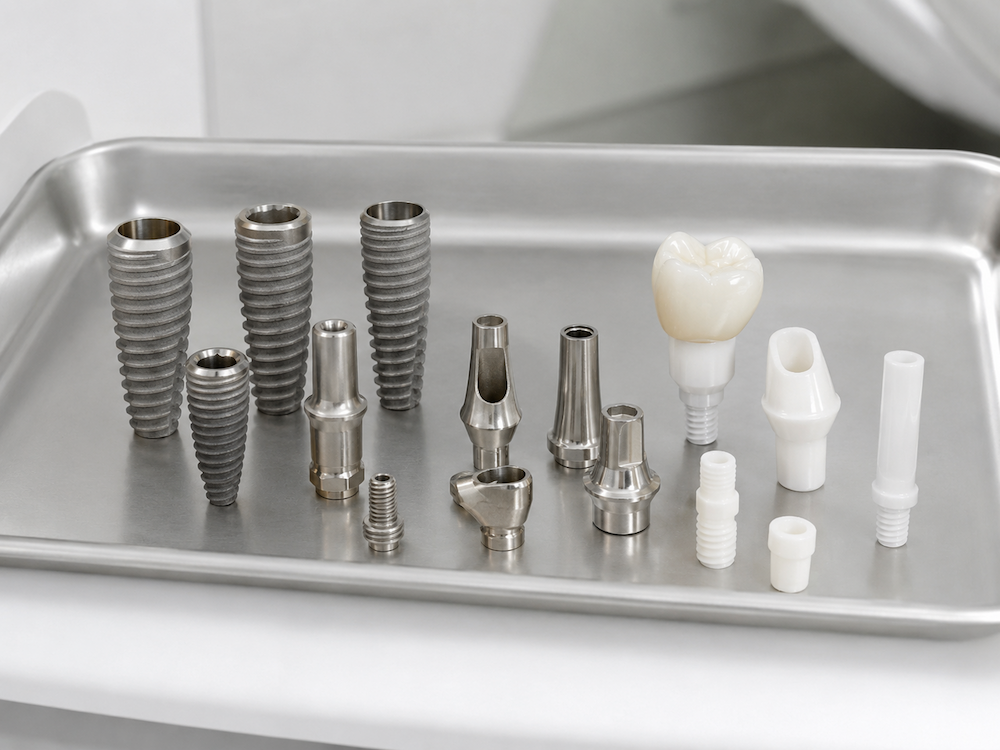
A complete dental implant restoration usually has three main parts.
First, there is the implant body. This part works like an artificial tooth root. The dentist places it into the jawbone. Then, the bone slowly grows around it.
Second, there is the abutment. This part connects the implant body and the dental crown. It plays an important role in the gum shape and final appearance.
Third, there is the crown. This is the visible tooth part. It helps you chew, speak, and smile naturally.
These three parts do not always use the same material. In fact, dentists often combine different materials for better results.
For example, many patients receive a titanium implant body, a zirconia abutment, and an all-ceramic crown. This combination gives both strength and beauty.
Therefore, when you ask about implant material, you should ask which part the dentist means. The implant body, abutment, and crown may all have different material choices.
Titanium Alloy: A Classic and Reliable Choice
Titanium alloy is one of the most widely used implant materials. It has a long clinical history. Also, dentists around the world use it very often.
The biggest advantage of titanium alloy is reliability. It bonds well with bone. This process gives the implant a stable foundation.
In addition, titanium alloy has strong mechanical strength. It can handle daily chewing force. This matters a lot, especially for back teeth.
Titanium alloy also works for many cases. Dentists may use it for front teeth, back teeth, single missing teeth, or multiple missing teeth.
Main features include:
- Good biocompatibility
- Strong chewing resistance
- Wide clinical use
- Long history of research
- Mature surgical techniques
- Good long-term stability
Therefore, titanium alloy remains a common choice for most implant patients.
If you want a proven and practical option, titanium alloy is worth discussing. Also, many implant systems use this material, so dentists often have rich experience with it.
Who May Consider Titanium Alloy Implants?
Titanium alloy implants may suit many patients. They are especially useful for people who want a stable and time-tested option.
For example, patients with missing back teeth often need strong support. Back teeth carry heavy chewing pressure. Therefore, titanium alloy can be a good choice.
Also, patients who have no known metal allergy may consider this option. Most people tolerate titanium very well. True titanium allergy is rare. Still, patients should tell their dentist about any allergy history.
Titanium alloy may also suit people who want flexible treatment choices. Because many implant brands use titanium alloy, dentists can choose from many sizes, shapes, and designs.
This can help in different bone conditions. For example, some patients have narrow bones. Others have limited height. A suitable implant design may improve treatment planning.
However, titanium alloy is not chosen only because it is strong. The dentist must still evaluate bone quality, gum health, bite force, and oral hygiene.
In short, titanium alloy is a steady choice for many patients. However, it still needs a personalized diagnosis.
Pure Titanium: A More Simple Metal Option
Pure titanium is another common dental implant material. It contains fewer added metal elements than titanium alloy. Therefore, some patients see it as a “cleaner” metal option.
Pure titanium has excellent biocompatibility. It can also bond well with bone. This makes it suitable for implant use.
In the mouth, pure titanium also shows good corrosion resistance. This matters because the oral environment contains saliva, food acids, and bacteria.
Pure titanium is slightly softer than some titanium alloys. However, implant design can still make it strong enough for daily chewing in suitable cases.
Main features include:
- High biocompatibility
- Simple metal composition
- Good corrosion resistance
- Stable oral performance
- Mature clinical use
- Good bone integration ability
Therefore, pure titanium remains a reliable material in implant dentistry.
However, patients should not assume pure titanium is always better than titanium alloy. The difference may be small in many cases. Also, implant design and doctor skill matter greatly.
Who May Consider Pure Titanium Implants?
Pure titanium may suit patients who prefer a simpler metal composition. Some people feel more comfortable when a material has fewer added components.
Also, pure titanium may suit certain bone conditions. In some cases, dentists may choose it based on implant system design, bone density, or treatment plan.
However, this decision should not rely only on personal preference. The dentist must check your mouth first.
For example, the dentist may evaluate:
- Jawbone width
- Jawbone height
- Bone density
- Gum thickness
- Bite force
- Missing tooth position
- Oral hygiene level
- Medical history
After that, the dentist can decide whether pure titanium fits your situation.
In general, both pure titanium and titanium alloys are mature choices. Their differences often appear in details. Therefore, patients should focus less on the material name alone.
Instead, they should ask about the whole implant system. They should also ask about long-term maintenance, surgical plan, and crown design.
Zirconia: A Natural-Looking Ceramic Choice
Zirconia is a high-strength ceramic material. It is not a metal. In recent years, more patients have become interested in zirconia dental implants.
The most obvious advantage is appearance. Zirconia is white. Therefore, it looks closer to natural tooth color than metal.
This can be important in the front tooth area. If the gum is thin, a metal implant or metal abutment may sometimes create a gray shadow. Zirconia can help reduce that concern.
Zirconia also gives a metal-free option. This may appeal to patients who worry about metal sensitivity. It may also suit patients who prefer non-metal restorations.
Main features include:
- White ceramic color
- Good aesthetic performance
- Metal-free structure
- Good gum color support
- Low thermal conductivity
- Smooth surface texture
Because of these features, zirconia often plays an important role in aesthetic implant dentistry.
However, zirconia implants need careful case selection. They may not suit every bite condition or every bone situation.
Who May Consider Zirconia Implants?
Zirconia may suit patients who place a high value on appearance. This is especially true for front teeth.
The front tooth area shows when you smile, speak, or laugh. Therefore, color and gum shape matter a lot. If the gum is thin, zirconia may help create a more natural look.
Zirconia may also suit patients who have metal allergy concerns. However, patients should still discuss this carefully with the dentist. Not every sensitivity problem means zirconia is necessary.
Also, zirconia may suit patients who want a metal-free treatment concept. Some people simply feel more comfortable with ceramic materials.
Patients who may consider zirconia include:
- People missing front teeth
- People with thin gum tissue
- People with high aesthetic needs
- People with metal sensitivity concerns
- People who prefer non-metal materials
- People who want a natural-looking gum line
However, zirconia implants are not always the first choice for heavy chewing areas. In the back teeth, bite force can be strong. Therefore, the dentist must judge carefully.
Zirconia as Crown, Abutment, and Implant Body
Zirconia can appear in different parts of implant treatment. This is very important to understand.
Today, zirconia is very common for dental crowns. Many implant crowns use zirconia or other all-ceramic materials. These crowns look natural and have good strength.
Zirconia is also common for abutments, especially in the front tooth area. A zirconia abutment can help the gum look brighter and more natural.
However, using zirconia as the entire implant body is a different topic. Zirconia implants are available. Still, titanium implants have a longer clinical history and more long-term data.
Therefore, many dentists still use titanium for the implant body. Then, they use zirconia for the abutment or crown.
This approach combines the strengths of both materials. Titanium gives reliable bone integration. Zirconia improves the visible aesthetic result.
So, when your dentist says “zirconia,” ask which part uses zirconia. It may mean the crown, abutment, or full implant body.
Common Material Combinations in Real Treatment
In real implant treatment, dentists rarely choose materials in a simple way. Instead, they create a combination based on function and appearance.
A common plan may be:
- Titanium or titanium alloy implant body
- Zirconia abutment
- All-ceramic zirconia crown
This combination is popular because each part has a clear job.
The implant body needs strong bone integration. Titanium performs very well in this role. Therefore, many dentists still choose titanium for the artificial tooth root.
The abutment affects gum color and crown support. In the front tooth area, zirconia abutments can create a better aesthetic effect.
The crown is the visible tooth. Therefore, all-ceramic materials can make the smile look natural. Zirconia crowns also offer good strength.
As a result, this mixed-material plan can balance function and beauty.
However, not every patient needs the same plan. For some back teeth, a titanium abutment may work well. For some front teeth, a zirconia abutment may be better.
Front Teeth: Appearance Comes First
Front teeth have high aesthetic requirements. They affect your smile, facial appearance, and confidence.
Therefore, dentists often pay close attention to material color in the front tooth area. If the gum is thin, the metal color may show through slightly. This can create a gray tone near the gum line.
In this situation, zirconia may help. A zirconia abutment or zirconia implant can reduce the risk of a gray shadow. Also, an all-ceramic crown can match natural teeth more closely.
However, appearance does not depend only on material. Gum shape, implant position, crown shape, and color matching also matter.
For front teeth, dentists usually consider:
- Smile line
- Gum thickness
- Tooth color
- Gum color
- Implant angle
- Bone volume
- Crown shape
- Patient expectations
Therefore, patients with missing front teeth should discuss aesthetics early. Do not wait until the final crown stage.
Good planning from the beginning creates a better final smile.
Back Teeth: Strength and Load Matter More
Back teeth have a different job. They handle strong chewing forces every day. Therefore, function and durability become very important.
For many back tooth cases, titanium or titanium alloy implants remain a reliable choice. These materials have strong mechanical performance. Also, they have long clinical use.
Zirconia crowns may still work well on top. They can handle chewing and look natural. However, the implant body often uses titanium in many cases.
The dentist must also check your bite. Some people grind their teeth at night. Others have a very strong chewing force. These habits can increase pressure on implants.
Therefore, back tooth implant planning should consider:
- Bite force
- Tooth grinding
- Jawbone quality
- Implant size
- Crown design
- Opposing teeth
- Cleaning difficulty
If you grind your teeth, your dentist may suggest a night guard. This can protect both implants and natural teeth.
In short, back teeth need strength first. Beauty still matters, but long-term load support matters more.
What If You Have Metal Allergy Concerns?
Some patients worry about a metal allergy. This concern is understandable. However, true titanium allergy appears uncommon.
Still, you should tell your dentist if you have a history of metal allergy. For example, mention reactions to jewelry, watches, belt buckles, or previous dental metals.
Your dentist may ask about symptoms such as swelling, rash, burning, or irritation. They may also suggest a medical allergy evaluation if needed.
If metal sensitivity is a real concern, zirconia may become an important option. Because zirconia is metal-free, it may help patients feel more comfortable.
However, do not choose a material based only on fear. Instead, discuss facts with your dentist.
Ask these questions:
- Do I truly have a metal allergy?
- Which implant parts contain metal?
- Can zirconia work in my case?
- Will my bite force affect the choice?
- What long-term data supports this option?
This conversation can help you make a calm and informed decision.
What If Your Gums Are Thin?
Gum thickness can affect the final implant appearance. This is especially true in the front tooth area.
If the gum is thin, the color beneath the gum may show more easily. With metal parts, a gray shadow may appear in some cases. This does not happen to every patient. However, it can affect people with thin or delicate gum tissue.
Therefore, dentists may recommend zirconia abutments for some aesthetic cases. Zirconia has a tooth-like color. So, it can support a brighter gum appearance.
Also, gum grafting may be considered in some patients. This can improve gum thickness and contour. However, not everyone needs it.
Your dentist may check gum thickness during the exam. They may also use photos, scans, or models to plan the final result.
For thin gums, material choice matters. However, surgical position and gum management matter just as much.
Therefore, patients should choose an experienced implant dentist for front tooth cases.
How Bone Condition Affects Material Choice
Bone condition plays a major role in implant planning. Even the best material needs enough bone support.
Before treatment, dentists often use CBCT scans. These scans show bone width, bone height, and important anatomical structures.
If the jawbone is healthy and thick enough, implant planning may be simpler. However, if bone volume is limited, the dentist may need extra steps.
These steps may include:
- Bone grafting
- Sinus lift
- Ridge expansion
- Guided implant placement
- Staged treatment
In many cases, titanium implants offer more design options. This may help dentists manage complex bone situations. However, zirconia implants may have fewer design choices in some systems.
Therefore, patients should not choose material before checking their bone condition.
The right order is simple. First, check the mouth and bone. Then, choose the treatment plan. Finally, select the material that fits the plan.
This approach is safer and more practical.
How to Choose the Right Implant Material
Choosing the right implant material should not feel like guessing. You can make the decision step by step.
First, consider the missing tooth position. Front teeth need more focus on appearance. Back teeth need more focus on chewing strength.
Second, consider your gum condition. If your gums are thin, zirconia may help improve aesthetics in visible areas.
Third, consider your allergy history. If you have metal sensitivity, tell your dentist early. This may affect the material plan.
Fourth, consider your bite force. If you grind your teeth or bite strongly, the dentist may recommend a more load-resistant plan.
Fifth, consider your budget. Different materials and implant systems may have different costs. However, do not choose only by price.
Finally, listen to professional advice. Your dentist will evaluate CT images, gum shape, bone quality, tooth position, and oral hygiene.
The best material is not the most expensive one. Instead, it is the one that fits your mouth best.
Questions to Ask Your Dentist Before Treatment
Before implant treatment, prepare a few questions. This helps you understand the plan clearly.
You may ask:
- What material will the implant body use?
- What material will the abutment use?
- What material will the crown use?
- Why do you recommend this combination?
- Is my missing tooth in an aesthetic area?
- Is my gum thick enough?
- Do I need bone grafting?
- Do I need a zirconia abutment?
- How long has this implant system been used?
- What maintenance will I need after treatment?
These questions are practical. They also help you avoid confusion.
In addition, share your own priorities. Tell the dentist if you care most about appearance, durability, metal-free materials, or cost.
Good communication leads to better treatment planning. It also helps the dentist design a plan that matches your real needs.
Do Materials Decide Implant Success Alone?
Many patients focus only on the material. However, implant success depends on much more.
Material is important. Still, it is only one part of the full treatment.
Other key factors include:
- Dentist experience
- Implant position
- Bone quality
- Gum health
- Surgical planning
- Bite design
- Crown shape
- Daily cleaning
- Regular checkups
- Smoking habits
- General health
For example, a well-placed titanium implant may last many years. However, even a high-quality implant can develop problems if the patient skips cleaning and follow-up.
Also, gum disease can harm implants. Therefore, patients need healthy gums before and after treatment.
In addition, bite pressure matters. If the crown receives too much force, the implant or crown may face complications.
So, do not judge implant treatment by material alone. A complete treatment plan matters more.
Daily Care After Getting Dental Implants
After implant treatment, daily care becomes very important. Implants do not decay like natural teeth. However, the gum and bone around implants can still become inflamed.
Therefore, brush twice a day. Clean around the gum line carefully. Also, clean between teeth and implants.
You may need dental floss, interdental brushes, or a water flosser. Your dentist can show you the right method.
In addition, visit your dentist regularly. Professional cleaning can remove plaque from areas that are hard to reach at home.
Also, avoid smoking if possible. Smoking can affect gum blood flow and healing. It may also increase the risk of implant problems.
If you grind your teeth, wear a night guard if your dentist recommends one.
In short, implant material matters. However, maintenance protects the result. A good implant needs good care.
Summarize
Dental implant materials mainly include titanium alloy, pure titanium, and zirconia. Titanium alloy and pure titanium focus more on long-term strength, bone integration, and clinical reliability. Zirconia focuses more on natural appearance and metal-free treatment.
However, there is no absolute winner. Each material has its own role. Titanium materials often work well as implant bodies. Zirconia often works well for crowns and aesthetic abutments. In some cases, dentists may also use zirconia implants.
For front teeth, patients may care more about natural color and gum appearance. Therefore, zirconia may offer useful aesthetic advantages. For back teeth, patients may need stronger chewing support. Therefore, titanium materials often remain a practical choice.
Most importantly, patients should not choose based on material names alone. Instead, they should consider tooth position, gum thickness, bone condition, bite force, allergy history, budget, and aesthetic goals.
A common and effective plan may combine different materials. For example, a titanium implant body, zirconia abutment, and all-ceramic crown can balance strength and beauty.
Dental implant materials should match your personal oral condition. Therefore, choose a regular dental clinic and an experienced implant dentist. A good dentist will not simply recommend the most expensive option. Instead, they will design the most suitable plan for your mouth, health, smile, and long-term function.