


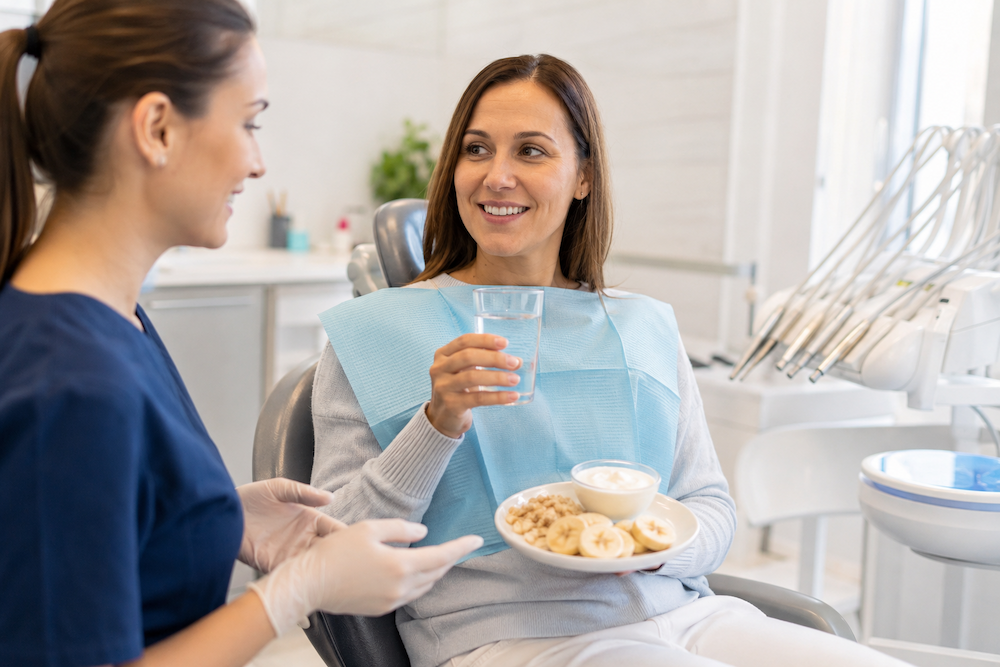
What Happens During A Teeth Cleaning?
A teeth cleaning is a routine dental procedure. First, a dentist or hygienist checks your teeth and gums. Then, they remove plaque and tartar from the tooth surface. They may also polish your teeth.
Plaque is soft and sticky. However, tartar is hardened plaque. You cannot remove tartar with brushing alone. Therefore, professional cleaning helps lower your risk of gum disease and tooth decay.
During the visit, your dental team may use:
- A small mirror
- A scaler
- An ultrasonic cleaning tool
- Polishing paste
- Dental floss
- Fluoride gel, foam, or varnish
After cleaning, your teeth may feel very smooth. Meanwhile, your gums may feel slightly tender. This happens more often if you have tartar near the gumline.
For most people, this feeling fades quickly. However, people with gum inflammation may feel soreness for longer. So, food choices matter after the appointment.
How Long To Wait To Eat After Teeth Cleaning?
For a regular cleaning without fluoride, you can usually eat right away. Still, it is better to wait until your mouth feels comfortable. If your gums feel tender, choose soft foods first.
However, if your dentist gives you fluoride treatment, wait about 30 minutes before eating or drinking. This gives the fluoride time to stay on your teeth. Fluoride can help strengthen enamel and lower cavity risk.
A simple rule works well:
- No fluoride: you may eat immediately
- Fluoride treatment: wait around 30 minutes
- Deep cleaning: wait until numbness wears off
- Gum soreness: start with soft foods
- Heavy bleeding or pain: call your dentist
Also, avoid chewing while your mouth is numb. You may bite your cheek, tongue, or lip without noticing.
Can I Eat Immediately After Tooth Cleaning?
Yes, you can often eat immediately after tooth cleaning. This is true after a basic cleaning with no fluoride and no numbness. However, your mouth may feel sensitive. So, gentle foods are the best first choice.
Good first foods include:
- Yogurt
- Scrambled eggs
- Oatmeal
- Soup that is warm, not hot
- Mashed potatoes
- Soft rice
- Bananas
- Smoothies without seeds
- Soft pasta
- Steamed vegetables
However, you should avoid very hot foods right away. Your gums may react more strongly after cleaning. Also, avoid hard foods if your gums feel sore.
For example, chips, nuts, and hard candy can irritate the gums. In addition, sticky candy can cling to freshly cleaned teeth. Therefore, it is smart to wait before eating these foods.
If your cleaning was simple, your normal diet can return the same day. Still, listen to your mouth. Mild sensitivity is a useful signal.
Best Foods To Eat After Dental Cleaning
After dental cleaning, soft and mild foods are usually the safest. They are easy to chew. Also, they do not scrape the gums.
Choose foods that are:
- Soft
- Mild in flavor
- Low in sugar
- Not too hot
- Not too cold
- Easy to rinse away
Here are some helpful options.
Soft breakfast foods:
- Oatmeal
- Soft eggs
- Plain yogurt
- Cottage cheese
- Banana slices
- Applesauce
Soft lunch or dinner foods:
- Rice
- Noodles
- Soft fish
- Tofu
- Steamed vegetables
- Mashed sweet potatoes
- Warm soup
Gentle snacks:
- Avocado
- Soft cheese
- Hummus
- Pudding with low sugar
- Seedless smoothies
However, avoid adding too much sugar. Sugar feeds harmful bacteria in the mouth. Therefore, a “soft food” is not always a tooth-friendly food.
Also, drink water after eating. Water helps rinse food particles. It also keeps your mouth moist.
Foods To Avoid After Teeth Cleaning
Some foods may bother your teeth after cleaning. Others may stain your teeth soon after polishing. Therefore, avoid them for a short time if your mouth feels sensitive.
Try to avoid these foods for a few hours:
- Hard chips
- Popcorn
- Nuts
- Hard bread crust
- Sticky candy
- Caramel
- Very spicy foods
- Very acidic foods
- Ice-cold drinks
- Very hot drinks
Also, limit stain-heavy drinks for the first day if possible. This includes coffee, tea, red wine, and dark soda. Your teeth are not “open” after cleaning. Still, polished teeth may pick up stains from strong pigments.
Acidic foods can also sting sensitive gums. So, be careful with:
- Lemon
- Vinegar
- Pickles
- Citrus juice
- Sour candy
- Tomato-heavy sauces
However, you do not need to follow a strict diet for days. Most people return to normal meals quickly. The key is comfort and common sense.
What To Do After Fluoride Treatment
Fluoride treatment changes the timing. After fluoride, many dentists ask patients to wait before eating or drinking. In many cases, 30 minutes is enough. However, your dentist may give different instructions.
Fluoride helps protect enamel. It can be useful for people with cavities, dry mouth, braces, gum recession, or sensitive roots. Therefore, you should let it stay on the teeth as directed.
After fluoride treatment:
- Wait before eating or drinking
- Avoid hot drinks at first
- Avoid crunchy foods right away
- Avoid alcohol-based mouthwash
- Follow your dentist’s exact advice
- Ask how long your fluoride type needs
There are different fluoride products. For example, varnish may stay on the teeth longer than gel or foam. So, instructions can vary.
If you forget and eat too soon, do not panic. Just return to your normal care routine. Then, ask your dentist next time for clear timing.
Do And Don’t After Dental Cleaning
After dental cleaning, small habits can protect your teeth and gums. Also, they can reduce sensitivity.
Do:
- Drink water after the visit
- Eat soft foods if your gums feel sore
- Brush gently the same day
- Floss carefully
- Follow fluoride instructions
- Use a soft-bristled toothbrush
- Call your dentist if the pain feels severe
- Keep your next dental appointment
Don’t:
- Eat while your mouth is numb
- Bite hard foods right away
- Smoke after deep cleaning
- Drink very hot coffee too soon
- Use harsh whitening products immediately
- Ignore bleeding that does not stop
- Skip brushing because your gums feel tender
Some light bleeding can happen after cleaning. This is more common when gums are inflamed. However, heavy bleeding is not normal. Also, pain that gets worse needs dental attention.
Therefore, watch your symptoms. A little tenderness is common. Severe pain is a reason to contact your dental office.
How To Reduce Sensitivity After Cleaning
Tooth sensitivity after cleaning is common. Usually, it happens because tartar was removed from areas near the gums. As a result, exposed areas may react to cold, heat, or pressure.
To reduce sensitivity:
- Use a toothpaste for sensitive teeth
- Brush with gentle pressure
- Avoid ice-cold drinks
- Avoid acidic foods for a short time
- Use warm water when rinsing
- Avoid whitening strips for a few days
- Ask your dentist about fluoride
Also, do not brush aggressively. Hard brushing can irritate gums. It can also wear the enamel and roots over time.
If sensitivity lasts more than a few weeks, contact your dentist. You may have gum recession, cavities, enamel wear, or exposed roots. Therefore, do not ignore long-term discomfort.
However, mild sensitivity after cleaning usually improves. With good home care, your mouth should feel better soon.
FAQ
Can I eat immediately after tooth cleaning?
Yes, you can eat immediately after a regular tooth cleaning if you did not receive fluoride and your mouth is not numb. However, choose soft foods if your gums feel tender.
If you had fluoride, wait about 30 minutes or follow your dentist’s advice. Also, if you had deep cleaning, wait until numbness disappears. This helps prevent accidental biting.
Best first foods include:
- Yogurt
- Eggs
- Oatmeal
- Rice
- Soft pasta
- Soup
- Bananas
Avoid hard, sticky, hot, spicy, or acidic foods at first. They may irritate your gums.
Do and don’t after dental cleaning?
Do drink water, eat gentle foods, brush softly, and follow your dentist’s instructions. Also, floss carefully and keep your mouth clean.
Do not eat while numb. Do not bite hard foods right away. Also, avoid smoking, sticky candy, very hot drinks, and harsh whitening products.
Simple aftercare helps your mouth recover faster. It also protects the fresh feeling after your cleaning.
Why do dentists push deep cleanings?
Dentists recommend deep cleanings when they see gum disease. These may include deep pockets, bleeding gums, tartar under the gums, or bone loss.
A regular cleaning cannot remove bacteria deep under the gumline. Therefore, scaling and root planing may be needed. It helps clean the roots and control gum infection.
However, you can ask for proof. Ask about your gum pocket numbers, X-rays, and treatment plan. A clear explanation builds trust.
Summarize
So, how long to wait to eat after teeth cleaning depends on your dental treatment. After a regular cleaning, you can usually eat right away. However, after fluoride, wait about 30 minutes. After deep cleaning, wait until numbness wears off and start with soft foods.
In general, choose mild foods first. Drink water often. Avoid hard, sticky, spicy, acidic, very hot, and very cold foods if your mouth feels sensitive. Also, follow your dentist’s advice if you had fluoride or periodontal treatment.
A dental cleaning is not just for a brighter smile. It also helps remove tartar, protect gums, and support long-term oral health. Therefore, smart eating after your visit can make recovery easier and more comfortable.