


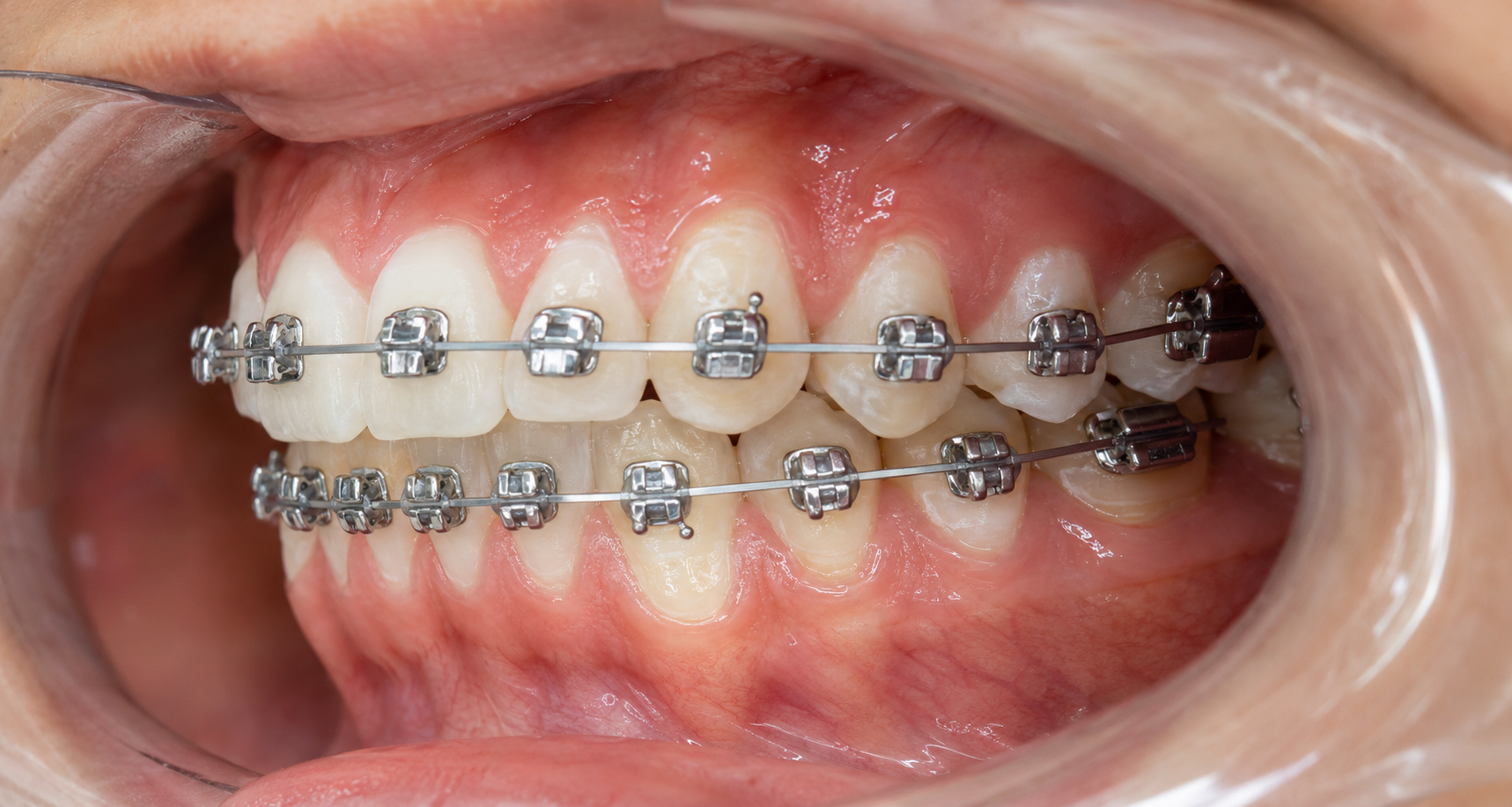
What Is Orthodontic Archwire Replacement?
Orthodontic archwire replacement is the process of changing the wire that runs through the brackets on braces. This wire is not just a simple “metal string.” In fact, it is one of the main parts that helps move teeth.
The archwire fits into the small slots of the brackets. Then, it applies gentle and steady pressure. Over time, this pressure guides teeth toward better positions.
However, one wire cannot finish the whole job. Teeth move in stages. Therefore, orthodontists often change the wire as treatment progresses. Each new wire has a different shape, size, stiffness, or purpose.
In simple words, the wire changes because your teeth are changing. As a result, each appointment may bring your smile one step closer to its final plan.
What Is an Archwire?
An archwire is the curved wire that connects the brackets on your teeth. It follows the shape of your dental arch. Usually, you have one archwire for the upper teeth and one for the lower teeth.
Although many patients call it “steel wire,” that is not always correct. Some archwires contain nickel-titanium. Others contain stainless steel or beta-titanium. Each material has its own strength and flexibility.
For example, nickel-titanium wires can return toward their original shape after bending. Because of this, they work well during early alignment. They can place light force on crowded or rotated teeth.
Meanwhile, stainless steel wires are often stronger and more stable. Therefore, orthodontists may use them later for space closure and bite control.
Why Do Braces Need Wire Changes?
Braces need wire changes because tooth movement is a controlled biological process. Teeth do not move safely when the force is too strong. Instead, they move best with steady and suitable pressure.
At the beginning, teeth may be crowded, tilted, or rotated. Therefore, the orthodontist often starts with a thin and flexible wire. This wire can fit into uneven brackets without placing too much stress on the teeth.
Later, the teeth become straighter. At that point, the orthodontist can use a larger or stiffer wire. This wire can control tooth movement more accurately.
Also, different treatment goals need different tools. First, the teeth need alignment. Next, gaps may need closing. Then, the bite needs correction. Finally, small details need refinement.
So, changing wires is not random. Instead, it is part of a planned sequence. Each wire has a job, and each appointment helps check whether the teeth are ready for the next step.
Stage One: Leveling And Aligning
The first stage of braces treatment usually focuses on leveling and aligning the teeth. During this stage, teeth may look crowded, uneven, or twisted. Therefore, the orthodontist needs a wire that can work gently.
Most often, this stage uses a thin and flexible nickel-titanium archwire. This type of wire can bend easily. However, it still tries to return to its original arch shape. As a result, it can guide teeth into a smoother line.
This stage is like building a foundation. The goal is not to finish every detail. Instead, the goal is to make the teeth easier to control later.
Also, gentle force matters a lot here. If the orthodontist used a very stiff wire too early, the force could feel too intense. It may also increase the risk of discomfort or unwanted tooth movement.
Therefore, early wires often feel light, flexible, and mild. Even so, they do important work.
Stage Two: Space Closure And Bite Control
After the teeth become more aligned, treatment often moves into a stronger control phase. At this point, the orthodontist may need to close spaces. These spaces may come from extra gaps, tooth spacing, or planned tooth extraction.
In this stage, the wire usually needs more stability. Therefore, orthodontists may use stainless steel or beta-titanium archwires. These wires can help guide teeth along a more stable path.
Also, the orthodontist may add other tools. For example, elastic chains, springs, or rubber bands may help move teeth. However, the archwire still plays a central role. It supports the brackets and helps control direction.
This stage may take time. That is normal. Closing gaps needs careful force. If teeth move too quickly, the roots may not stay in ideal positions.
Therefore, this stage focuses on balance. The orthodontist wants efficient movement, but also safe movement.
Stage Three: Fine Detailing And Finishing
The final stage focuses on small details. By now, the teeth may look straight to the patient. However, the orthodontist still checks many fine points.
For example, the upper and lower teeth should meet well. The tooth edges should line up naturally. Also, the bite should feel comfortable during chewing.
During this stage, the orthodontist may use finishing archwires. These wires help refine tooth angles, rotations, and contact points. Sometimes, the orthodontist may bend or adjust the wire in small ways.
These changes may look minor. However, they can make a big difference. A beautiful smile should also be stable and functional.
Therefore, patients should not rush this stage. Even when the teeth look good, the bite may still need final adjustment. In many cases, this careful finishing helps reduce the chance of relapse after braces come off.
Why The Wire Gets Thicker Or Stiffer
Many patients notice that wires often become thicker as treatment continues. This is common. However, thicker does not always mean “better.” It simply means the treatment goal has changed.
At first, a thin wire can fit into crowded brackets more easily. Also, it can apply a lighter force. That makes it useful for early tooth alignment.
Later, the teeth become straighter. Therefore, the brackets line up better. At that point, a thicker wire can fit more predictably.
A larger wire can also fill more of the bracket slot. As a result, it gives the orthodontist better control over tooth position. This can help with root movement, bite correction, and final detailing.
However, orthodontists do not choose wires by size alone. They also consider the material, shape, and patient response.
So, if your wire changes, it usually means your treatment plan is moving forward.
Does A New Wire Mean Treatment Is Working?
In many cases, yes. A new wire often means the orthodontist sees enough progress to move to the next step. However, progress does not always look dramatic after every visit.
Sometimes, the orthodontist changes the wire to increase control. Other times, they may keep a similar wire because the teeth need more time. Both decisions can be correct.
Also, some appointments may focus on adjustment rather than replacement. For example, the orthodontist may tighten a wire, add elastics, or check your bite.
Therefore, patients should not judge progress only by the wire change. Instead, they should look at the full treatment plan.
Still, wire changes are often a good sign. They show that your braces are not passive. Instead, your orthodontist is actively guiding the teeth through planned stages.
So, when you see a new wire, think of it as an update in the treatment process.
Is It Normal To Feel Sore After A Wire Change?
Yes, mild soreness after a wire change is common. After the orthodontist places a new wire, your teeth may feel pressure. This usually means the wire has started applying force.
The soreness often appears within a few hours. Then, it may last for a few days. However, it should gradually improve.
During this time, soft foods can help. For example, soup, yogurt, eggs, pasta, and mashed vegetables may feel easier to eat. Also, cold water may offer short-term relief for some patients.
However, severe pain is not normal. Sharp wire ends, broken brackets, or ulcers should be checked. If something feels wrong, contact your orthodontic clinic.
Also, do not try to bend or cut the wire by yourself. That can change the force system and delay treatment.
In short, some pressure is expected. But severe or lasting pain deserves attention.
Common Myths About Braces Wire Changes
Many patients misunderstand the changes to the braces wire. Therefore, it helps to clear up a few common myths.
First, changing the wire does not mean the old wire “stopped working” completely. Instead, the teeth may have reached the limit of what that wire can do.
Second, a stronger wire does not always mean faster treatment. In orthodontics, safe force matters more than heavy force.
Third, every patient does not follow the exact same wire sequence. Your case may differ from another person’s case. Crowding, bite problems, extractions, age, and bone condition can all affect the plan.
Also, wire changes do not replace good oral hygiene. Braces make cleaning harder. Therefore, brushing and flossing still matter every day.
Finally, wire changes are not just cosmetic. They help create a healthier bite, better function, and a more stable result.
How Patients Can Support Treatment
Patients play an important role during braces treatment. Even the best archwire cannot work well if brackets break often or oral hygiene is poor.
First, avoid very hard or sticky foods. These foods can loosen brackets or bend wires. For example, hard nuts, sticky candy, and chewing ice can cause problems.
Next, brush carefully around brackets and wires. Food and plaque can collect easily. Therefore, use an orthodontic toothbrush, interdental brush, or water flosser if your dentist recommends one.
Also, wear rubber bands as instructed. If your orthodontist gives elastics, they usually help correct the bite. Skipping them can slow progress.
In addition, keep your appointments. Wire changes and adjustments depend on timing. Missed visits can extend treatment.
Finally, tell your orthodontist about discomfort, broken parts, or loose wires. Early fixes are usually simple. Delayed fixes may interrupt your treatment plan.
When Should You Contact Your Orthodontist?
Most wire changes cause only mild pressure. However, some signs need attention. You should contact your orthodontist if a wire pokes your cheek or gum.
Also, call the clinic if a bracket becomes loose. A loose bracket may stop that tooth from moving correctly. As a result, treatment may slow down.
You should also ask for help if pain feels severe or does not improve. Mild soreness is normal, but strong pain needs a professional check.
In addition, contact your orthodontist if your bite suddenly feels very different. Sometimes, a small adjustment can solve the problem.
However, do not panic over normal tightness. Pressure after a new wire often means the braces are active again.
The key is simple. If the problem is mild and improving, it is usually part of treatment. If it is sharp, severe, or getting worse, ask for help.
Summary: Why Archwire Changes Matter
Orthodontic archwire replacement matters because braces treatment happens in stages. First, flexible wires help align crowded or rotated teeth. Then, stronger wires help close spaces and improve bite control. Finally, finishing wires help refine small details.
Therefore, each wire has a purpose. The orthodontist does not change it just to “tighten braces.” Instead, they use different wires to match the current stage of tooth movement.
Also, these changes help protect your teeth. Gentle and controlled force can move teeth more safely than sudden heavy pressure.
So, the next time your orthodontist changes your wire, you can understand what is happening. Your braces are following a plan. Your teeth are adapting. And your smile is moving step by step toward a healthier, more stable result.