


Introduction
The periodontal treatment stages can sound confusing at first. Many patients hear words like cleaning, deep cleaning, scaling, root planing, or flap surgery. Then they learn they need several appointments. Naturally, they wonder why the dentist cannot finish everything in one visit.
However, periodontal treatment does not work like a simple filling. Gum disease affects the gums, the tooth roots, and the bone that supports the teeth. Therefore, treatment must follow a step-by-step plan. Each step has a different goal. First, the dentist checks the level of damage. Next, the dentist removes plaque and tartar. Then the dentist reviews healing. Finally, the dentist decides whether surgery is needed.
So, multiple visits are not a way to make treatment complicated. Instead, they help keep the patient more comfortable and help the dentist achieve a better result. In addition, they make it easier to monitor healing and adjust the plan when needed.
Why Can’t Periodontal Treatment Be Done All at Once?
Many patients want a one-time fix. That idea sounds easier. However, periodontal therapy usually works better when the dentist divides it into several appointments.
First, deep cleaning below the gums can be uncomfortable. The dentist often uses local anesthesia. If the dentist treats the whole mouth at once, the numb area becomes too large. As a result, speaking, eating, and drinking can become difficult for hours.
Second, the gums need time to recover. After scaling and root planing, the treated area may feel sore or sensitive for a few days. Therefore, treating one or two sections at a time allows the patient to chew more easily on the other side.
Third, the dentist needs time to judge the response. Gum tissue may shrink, bleeding may decrease, and pockets may become shallower. However, some sites may still stay inflamed. In that case, the dentist may recommend a more advanced step, such as flap surgery.
So, several visits are not a sign of weak treatment. Instead, they are part of proper periodontal care.
Reason One: Too Much Treatment in One Visit Is Hard on the Patient
Periodontal treatment often involves long appointments. During deep cleaning, the dentist or hygienist must reach below the gumline and carefully clean the root surfaces.
That process takes time. In addition, the patient must keep the mouth open for a long period. If the clinician tries to clean the entire mouth in one session, the jaw may become tired. The lips and cheeks may also feel sore.
Local anesthesia creates another issue. When one area is numb, most patients tolerate it well. However, when the whole mouth is numb, normal activities become more difficult. The patient may drool, bite the lips by accident, or struggle to eat afterward.
Therefore, many clinicians split the mouth into sections. Often, they treat one quadrant or two quadrants per visit. For example, they may clean the upper right and lower right side first, then return for the left side. In some cases, they may choose a different schedule based on the severity of the disease and the patient’s comfort.
So, the goal is not to delay care. The goal is to make treatment safer and easier to tolerate.
Reason Two: The Gums Need Healing Time
Deep cleaning treats infection, but it also irritates inflamed tissue during the process. That is normal. The dentist removes tartar, bacterial deposits, and contaminated root surface material. As a result, the gums begin to heal, but they do not heal instantly.
For a few days, the treated area may feel tender. The teeth may also feel sensitive, especially to cold foods. In addition, the gums may look slightly swollen or red before they settle down.
If the whole mouth were treated at once, the patient could feel sore everywhere at the same time. That would make brushing, flossing, and eating more difficult. However, when the dentist treats one section at a time, the patient usually copes better.
Healing time also helps the clinician see the true condition of the gums. At first, inflamed gums often look puffy. After treatment, that swelling decreases. Therefore, the pocket depth may change. The dentist can then make a more accurate decision about the next step.
So, treatment spacing protects comfort and improves judgment.
Reason Three: Follow-Up Helps the Dentist Adjust the Plan
Periodontal treatment is not just cleaning. It is also an evaluation. After each stage, the clinician needs to check how the gums respond.
For example:
- Does bleeding decrease?
- Do the pockets become shallower?
- Does the patient clean better at home?
- Does one area still trap bacteria?
- Is there persistent inflammation around a specific tooth?
These answers matter. If most areas improve, the patient may only need maintenance care. However, if some pockets stay deep, the dentist may recommend flap surgery or another targeted procedure.
This review period is one of the most important parts of therapy. Without it, the dentist would have less information. As a result, some patients might receive treatment that is either too little or too aggressive.
A common schedule includes one visit every one to two weeks during the active deep cleaning phase. Then the dentist often performs a re-evaluation four to six weeks after the last deep cleaning appointment. However, the exact timing can vary.
So, several visits create a smart treatment sequence. They are not random appointments.
What Is the Difference Between Cleaning, scaling, root planing, and Flap Surgery?
Many patients use the word “cleaning” for every periodontal procedure. However, these treatments are not the same. They differ in depth, purpose, and complexity.
A regular dental cleaning removes plaque and tartar above the gumline. It mainly helps people with healthy gums or mild gingivitis.
Scaling and root planing, often called deep cleaning, goes below the gumline. It removes tartar and bacterial deposits from the root surfaces. It also smooths the roots so the gums can heal more easily.
Periodontal flap surgery is a surgical procedure. The dentist or periodontist lifts the gum tissue to gain better access to deep areas. This step helps remove deposits and diseased tissue in places that instruments could not fully clean before.
Therefore, these are three different levels of care. A simple cleaning helps prevent disease. Deep cleaning treats established periodontitis. Flap surgery helps treat advanced or persistent disease after non-surgical therapy.
So, the right treatment depends on the severity of the problem.
Regular Cleaning: The Surface-Level Step
A regular cleaning is also called prophylaxis or routine scaling above the gums. It is the least invasive of the three treatments.
What it does
- Removes plaque and tartar above the gumline
- Polishes the tooth surfaces
- Helps reduce surface stains
- Supports routine maintenance
How deep it goes
- It stays mainly above the gumline
- It does not thoroughly clean deep periodontal pockets
Who needs it
- Patients with healthy gums
- Patients with mild gingivitis
- Patients who need routine prevention every 6 to 12 months
Does it need anesthesia?
- Usually no
What does it feel like afterward?
- Mild tenderness or sensitivity
- Sometimes slight bleeding if the gums are inflamed
- Usually quick recovery within a day or two
In short, a regular cleaning is a preventive and maintenance treatment. It is very important. However, it does not replace deep cleaning when true periodontitis is present.
Scaling and Root Planing: The Deep Non-Surgical Treatment
Scaling and root planing is the standard first-line treatment for many patients with periodontitis. Dentists often call it a “deep cleaning,” but the technical term matters because it explains what the clinician actually does.
What it does
- Removes tartar and plaque from below the gumline
- Cleans the root surfaces
- Reduces bacterial load
- Smooths rough root areas so the gums can reattach more easily
How deep it goes
- Below the gumline
- Into periodontal pockets
- Around the roots of affected teeth
Who needs it
- Patients with diagnosed periodontitis
- Patients with bone loss seen on X-rays
- Patients with deep pockets and bleeding on probing
Does it need anesthesia?
- Usually yes, especially when the pockets are deep or the roots are sensitive
What does it feel like afterward?
- Gum tenderness for a few days
- Tooth sensitivity
- Temporary soreness during healing
In short, scaling and root planing is the core non-surgical treatment for gum disease. It is more than a normal cleaning. It is a therapeutic step.
Periodontal Flap Surgery: The Surgical Step for Deeper Disease
Flap surgery treats areas that remain problematic after non-surgical therapy or areas that are too deep to manage predictably with instruments alone.
What it does
- Opens the gum tissue under local anesthesia
- Gives the dentist direct visibility of the root and bone
- Allows removal of deep deposits and inflamed tissue
- May include bone reshaping or regenerative procedures when needed
- Ends with sutures so the area can heal properly
How deep it goes
- It gives direct access to the deepest areas
- It allows the clinician to see and clean areas hidden under the gums
Who needs it
- Patients with advanced periodontitis
- Patients with persistent deep pockets after deep cleaning
- Patients with areas that keep bleeding or stay inflamed
Does it need anesthesia?
- Yes
What does it feel like afterward?
- More swelling and soreness than deep cleaning
- A short healing period
- Follow-up visits for monitoring and sometimes suture removal
In short, flap surgery is not the first step. Instead, it becomes an option when basic treatment alone cannot fully control the disease.
What Does a Full Periodontal Treatment Process Look Like?
Patients with moderate or severe periodontitis often move through a clear sequence. This structure helps the dentist treat infection first and then judge the next step carefully.
The usual process includes:
- examination and diagnosis
- initial cleaning and oral hygiene instruction
- scaling and root planing over several visits
- healing and re-evaluation
- surgical treatment only if needed
- long-term maintenance
This process may sound long. However, it protects the teeth more effectively than a rushed approach.
Also, not every patient needs every stage. Some improve well after deep cleaning and never need surgery. Others may need a small surgical procedure in one area only. Therefore, the treatment plan should match the patient’s actual condition.
The important message is simple: periodontal care is a sequence, not a single event. Each stage builds on the one before it. As a result, the clinician can preserve more healthy tissue and make better decisions.
Stage One: Examination and Preparation
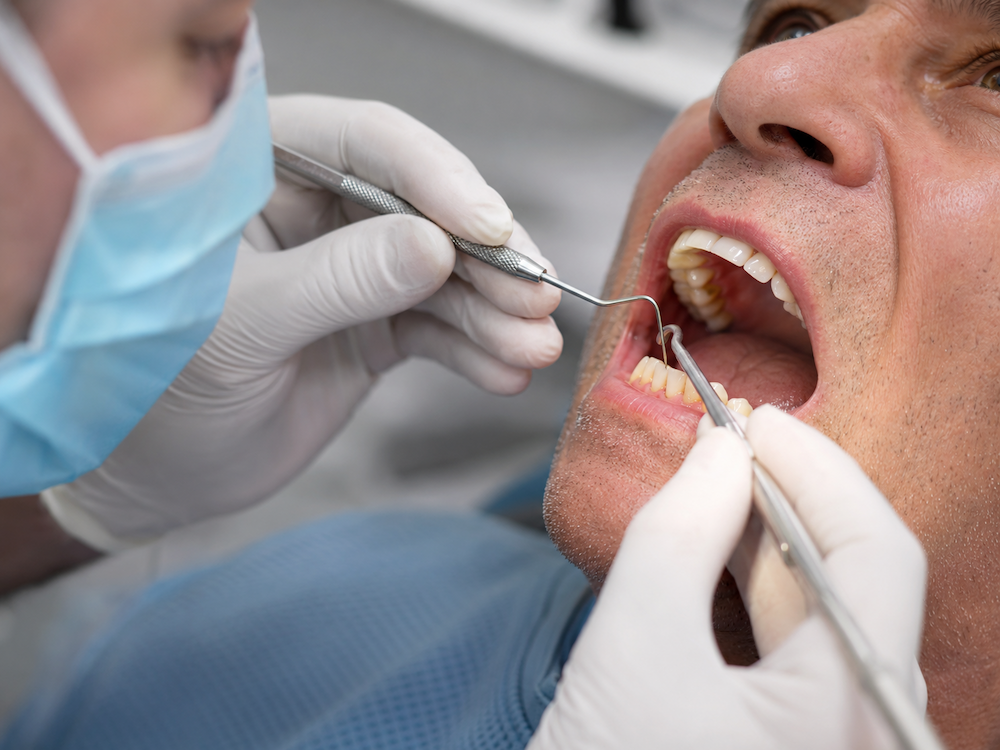
The first stage focuses on diagnosis. The dentist needs to understand how severe the disease is and which teeth face the highest risk.
This stage often includes:
- full medical and dental history
- gum examination
- periodontal probing around each tooth
- pocket depth charting
- checking for bleeding
- mobility testing
- X-rays to assess bone loss
- review of plaque control habits
The clinician may then create a periodontal chart. This chart records pocket depths and bleeding points. It helps show where the disease is mild, moderate, or severe.
In addition, the dentist explains the findings to the patient. That discussion is very important. Many patients do not realize they have gum disease until they see the measurements or X-rays.
The clinician also gives oral hygiene instructions at this stage. Better brushing, flossing, and interdental cleaning can improve treatment results. Therefore, home care starts before deep cleaning begins.
This stage forms the foundation of the entire plan.
Stage Two: Basic Treatment With Deep Cleaning
The second stage is active non-surgical treatment. It usually begins with removal of visible tartar and then moves into scaling and root planing.
The dentist often divides the mouth into quadrants:
- upper right
- upper left
- lower right
- lower left
Then the dentist treats one or two quadrants per visit. This schedule depends on the disease severity, the patient’s schedule, and the patient’s comfort level.
During this stage, the dentist also reinforces home care. The patient may learn:
- how to brush along the gumline
- how to use floss correctly
- how to use interdental brushes
- how to clean around bridges or crowded teeth
This phase often takes several weeks. In some patients, it finishes quickly. In others, it takes longer. However, the goal stays the same: reduce the bacterial load, control inflammation, and create better conditions for healing.
Without this stage, the dentist cannot judge whether surgery is truly necessary.
Stage Three: Re-Evaluation After Healing
Re-evaluation is one of the most overlooked steps, yet it is one of the most important. Usually, the dentist performs it four to six weeks after the deep cleaning phase, although timing can vary.
At this visit, the dentist checks:
- pocket depth again
- bleeding on probing
- gum color and firmness
- plaque control
- tooth mobility
- areas that still trap food or collect plaque
Many patients improve significantly at this stage. Their gums bleed less. Their breath improves. Their pockets become shallower. If that happens, the dentist may move them into maintenance care.
However, some areas may still show deep pockets or persistent inflammation. Those specific sites may need additional treatment. In that case, flap surgery may be the next step.
This stage is also a chance to motivate the patient. Good home care can make a major difference. Therefore, the clinician often reviews cleaning technique again.
In short, re-evaluation tells the dental team whether the current plan is working.
Stage Four: Flap Surgery If Certain Areas Still Fail to Improve
Not every patient needs surgery. That point matters. Many patients do well with non-surgical care alone.
However, surgery becomes helpful when:
- pockets remain deep
- bleeding continues
- bone defects need better access
- tartar remains in hard-to-reach areas
- inflammation keeps returning in one site
During flap surgery, the periodontist lifts the gum tissue gently. Then the clinician cleans the area thoroughly under direct vision. If necessary, the clinician may reshape bone or place regenerative materials in selected cases.
The dentist usually treats one section at a time. Therefore, healing remains easier to manage. After surgery, the patient returns for follow-up visits. The clinician checks healing and removes sutures if needed.
Although surgery sounds intimidating, it often helps preserve teeth that might otherwise be lost. Also, it follows a logical step. It does not replace deep cleaning. Instead, it builds on the results of basic therapy.
Stage Five: Lifelong Maintenance
Periodontal disease behaves like a chronic condition. Dentists can often control it very well, but patients usually remain susceptible over time. Therefore, maintenance is essential.
Maintenance visits often happen every three to six months. The exact interval depends on:
- previous disease severity
- smoking status
- home care quality
- medical conditions such as diabetes
- amount of remaining pocket depth
- history of gum inflammation
At these visits, the dentist or hygienist may:
- clean the teeth
- check pocket depths
- monitor bleeding
- review oral hygiene
- assess mobility
- look for disease recurrence
This stage is not optional. Many patients feel better after treatment and assume they are “cured forever.” However, without maintenance, bacteria can return and the disease can flare up again.
So, lifelong maintenance protects the results of the earlier stages. It also lowers the risk of future tooth loss.
FAQ:
Patients often ask practical questions. Here are some of the most common ones.
Is deep cleaning or flap surgery more painful?
Deep cleaning usually does not hurt during treatment because the dentist uses local anesthesia. Afterward, the gums may feel sore or sensitive for a few days. Flap surgery often causes more postoperative discomfort. However, dentists usually provide pain control instructions, and most patients manage well.
Why do the spaces between my teeth look larger after treatment?
This often happens because swollen gums shrink as inflammation improves. In addition, the dentist removes tartar that may have filled part of the space. So, the gap may look more visible. That change does not mean the treatment caused damage. Instead, it often reveals the true shape of the teeth and gums.
Can I skip deep cleaning and go straight to flap surgery?
Usually no. Standard care starts with non-surgical treatment. Most patients improve after scaling and root planing. Therefore, surgery should target only areas that still need it.
Will periodontal treatment make my teeth loose?
Treatment itself does not cause harmful looseness. However, heavy tartar may act like a false support. Once the dentist removes it, existing mobility may become more noticeable. Also, inflamed tissues may need time to tighten. In the long run, disease control usually improves stability.
Conclusion
The periodontal treatment stages exist for a reason. Dentists do not divide treatment into multiple visits just to stretch out the process. Instead, they do it to improve comfort, allow healing, and make better clinical decisions.
Regular cleaning, scaling and root planing, and periodontal flap surgery are three different levels of treatment. Each one serves a different purpose. Therefore, the right choice depends on how serious the gum disease has become.
The most important lesson is this: do not wait until you need surgery to seek care. If you notice bleeding gums, bad breath, gum swelling, or loose teeth, book an appointment early. Early treatment often saves time, money, and discomfort.
Periodontal disease is one of the leading causes of tooth loss in adults. However, it is manageable. With the right diagnosis, the right treatment steps, and good home care, many patients keep their teeth for many years. In other words, when you understand the periodontal treatment stages, you are in a much better position to protect your oral health.