


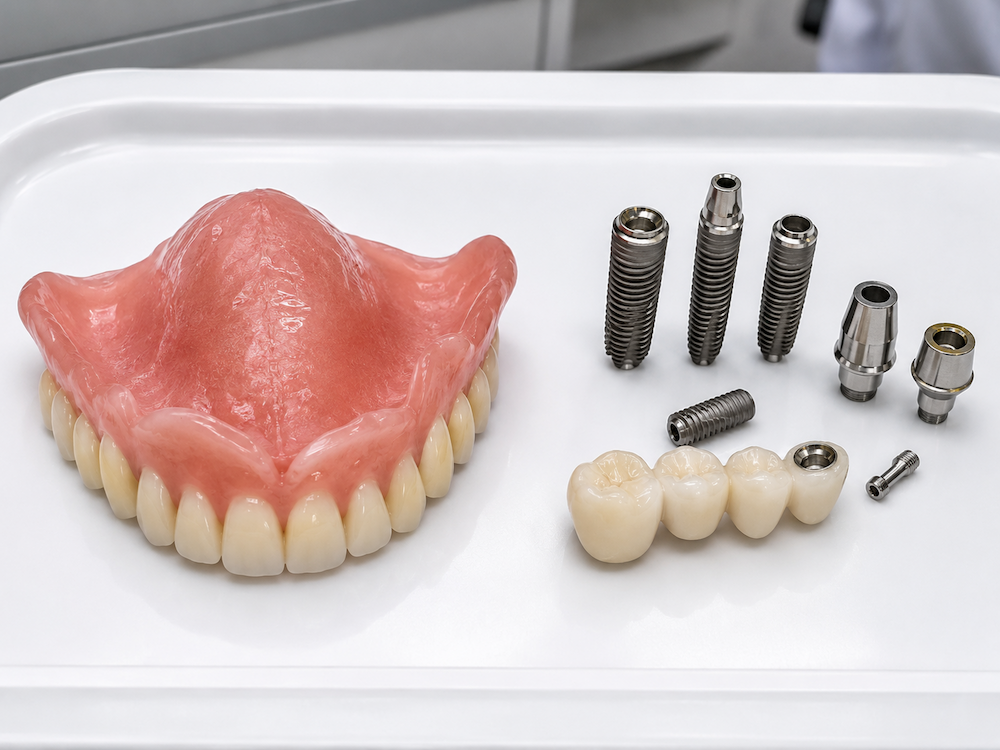
Removable Dentures vs Dental Implants: Why Patients Compare Them
When people compare removable dentures vs dental implants, they usually ask one simple question first: “Which one feels more like real teeth?” That question matters. Missing teeth affect eating, speech, facial support, and confidence. Therefore, a replacement should not only look good. It should also feel comfortable in daily life.
Removable dentures can replace several teeth or a full arch. They usually cost less, and treatment is often faster. However, some patients feel a bulky plate in the mouth. They may also notice movement while eating.
Dental implants work differently. A dentist places implant posts in the jawbone. Then crowns, bridges, or implant-supported dentures attach to them. As a result, implants often feel more stable.
Still, implants are not suitable for everyone. Bone condition, gum health, medical history, and budget all matter. So, the best choice depends on the patient, not only the product.
What Are Removable Dentures?
Removable dentures are artificial teeth that patients can take out by themselves. Dentists use them when a person has lost some teeth or all teeth. They can improve chewing, restore appearance, and support the lips and cheeks.
There are two main types:
- Partial dentures replace several missing teeth.
- Complete dentures replace all teeth in one jaw.
Partial dentures may use clasps around nearby teeth. Complete dentures often rely on suction, gum support, and the shape of the jaw ridge. Because of this design, dentures need a base. This base may cover the gums or the palate.
This base helps hold the denture, but it can also create discomfort. Some patients adapt quickly. However, others need several adjustments. In addition, the mouth changes over time after tooth loss. Therefore, dentures may need relining, repair, or replacement later.
Even so, removable dentures remain useful. They are practical, affordable, and suitable for many people who cannot or do not want surgery.
What Are Dental Implants?
Dental implants are artificial tooth roots. They are usually made from titanium or similar biocompatible materials. A dentist places the implant into the jawbone. After healing, the implant supports a crown, bridge, or denture.
Implants can replace:
- One missing tooth.
- Several missing teeth.
- A full arch of missing teeth.
- A loose denture with implant support.
Unlike traditional dentures, implants gain support from bone. This is why they usually feel firmer during chewing. Also, fixed implant teeth do not need a large removable base.
However, implants require more planning. The patient needs enough bone volume and healthy gum tissue. If the bone has shrunk, bone grafting may be needed. Also, some health problems can affect healing.
Therefore, dental implants are not a quick one-day choice for every patient. They often need imaging, surgery, healing time, and follow-up visits. Still, for suitable patients, they can offer excellent comfort and stability.
Foreign-Body Feeling: Why Dentures Often Feel Bulkier
Foreign-body feeling is one of the biggest concerns with removable dentures. Many patients say they feel like “something extra” sits in the mouth. This happens because dentures need a base to stay in position.
Upper complete dentures may cover much of the palate. Lower complete dentures sit close to the tongue. As a result, the tongue has less room to move. Also, the palate may feel blocked.
Patients may notice:
- A thick feeling in the mouth.
- More saliva at first.
- Trouble speaking clearly.
- Gagging or nausea.
- Reduced taste sensation.
- Sore spots on the gums.
These symptoms often improve after adjustment. However, some patients remain sensitive. This is especially true for people with a strong gag reflex.
Dental implants usually create less of a foreign-body feeling. Fixed implant crowns and bridges do not cover the palate. They also do not need a large plastic base. Therefore, many patients describe them as closer to natural teeth.
Stability: Why Movement Matters During Meals
Stability affects daily comfort. If a denture moves, eating becomes stressful. Patients may chew slowly, avoid hard foods, or worry about the denture slipping during speech.
Traditional dentures rely on suction, clasps, and soft tissue support. However, gums are not fixed like bone. Also, the jaw ridge may shrink after tooth loss. As a result, dentures can loosen over time.
Common stability problems include:
- Dentures lifting while chewing.
- Food is getting under the base.
- Clicking sounds during speech.
- Lower dentures moving with the tongue.
- Clasps becoming loose.
- Discomfort with sticky foods.
Dental implants offer stronger support because they connect with the jawbone. Once healing is complete, implant-supported restorations usually move far less. This makes chewing more controlled.
However, implant design still matters. A poorly planned restoration may cause cleaning issues or bite problems. Therefore, patients should choose an experienced dental team and attend regular checkups.
Comfort: Gum Pressure, Sore Spots, and Daily Wear
Comfort is not only about the first day. It is about how the replacement feels after hours of talking, chewing, and smiling. Removable dentures press on the gums. If pressure spreads evenly, many people wear them well. However, if the fit is poor, pain can develop.
Denture discomfort may include:
- Gum soreness.
- Small ulcers.
- Red pressure spots.
- Burning sensations.
- Loose fit.
- Trouble wearing the denture all day.
Dentists can often adjust these problems. They may smooth the denture, relieve pressure points, or reline the base. However, patients should not keep wearing a painful denture without help.
Dental implants reduce many gum-pressure issues because they use bone support. A fixed implant crown does not sit on the gums like a denture base. Therefore, many patients feel more comfortable after healing.
Still, implants need healthy tissue. Poor cleaning can cause inflammation around implants. So, comfort also depends on hygiene and maintenance.
Chewing Ability and Food Choices
Many patients want to know whether they can eat normally again. This is a fair question. Missing teeth can make meals difficult, and unstable dentures can make eating frustrating.
Removable dentures improve chewing compared with having no teeth. However, they usually provide less bite force than natural teeth or implants. Sticky and hard foods may pull or lift the denture. In addition, food can get trapped under the base.
Patients with loose dentures may avoid:
- Apples.
- Nuts.
- Steak.
- Crusty bread.
- Sticky rice cakes.
- Chewy candy.
Dental implants often restore stronger chewing ability. Because implants sit in bone, they can support more stable biting. Many patients can enjoy a wider range of foods.
However, implants are not indestructible. Patients should avoid chewing ice, opening packages with their teeth, or biting very hard objects. Also, crowns can wear or chip. Regular dental visits help protect the restoration.
Speech and Taste Differences
Tooth replacement can change speech. This is especially true with removable dentures. The tongue must learn a new shape inside the mouth. At first, some sounds may feel difficult.
Upper dentures can affect speech because they cover the palate. The palate helps shape many sounds. Therefore, a large denture base may make speech feel less natural during the adjustment period.
Taste can also change. Although most taste buds are on the tongue, the palate helps with food texture and temperature. So, when a denture covers the palate, some patients feel that food tastes less vivid.
Dental implants usually affect speech and taste less. Fixed implant teeth often leave the palate open. They also stay in place during conversation. As a result, patients may feel more confident.
However, every case is different. A full-arch implant bridge must still be designed carefully. If the shape is too bulky, speech can still change.
Cleaning and Maintenance
Both dentures and implants need daily care. The difference lies in the routine. Removable dentures must be taken out for cleaning. Patients should clean the denture, gums, tongue, and remaining teeth.
A healthy denture routine may include:
- Rinsing after meals.
- Brushing the denture daily.
- Cleaning the gums.
- Soaking the denture as advised.
- Avoiding hot water.
- Visiting the dentist for fit checks.
Hot water can distort some denture materials. Also, sleeping with dentures may not suit every patient. A dentist can give personal advice.
Dental implants stay in the mouth. Patients brush them like natural teeth. However, implant bridges may need special floss, interdental brushes, or a water flosser.
Implants are easier for some patients because they do not need removal. However, they still require careful cleaning. Poor hygiene can lead to gum disease around implants.
Lifespan and Long-Term Changes
Removable dentures and dental implants age differently. Dentures may need replacement because the jaw changes after tooth loss. When teeth are missing, the bone under the gums can shrink. Then the denture may lose its fit.
Over time, dentures may show:
- Looseness.
- Worn teeth.
- Stains.
- Cracks.
- Gum irritation.
- Bite changes.
Dentists may reline or remake dentures to improve fit. This is normal maintenance.
Dental implants can last many years with proper care. However, they are not maintenance-free. The implant post may remain stable, while the crown or bridge may need repair later.
Possible implant issues include:
- Gum inflammation.
- Bone loss around the implant.
- Crown wear.
- Porcelain chipping.
- Screw loosening.
- Problems from teeth grinding.
Therefore, long-term success depends on planning, cleaning, bite control, and regular dental visits.
Who May Be Better Suited for Removable Dentures?
Removable dentures may be a good choice for patients who want a faster and more affordable solution. They may also suit people who cannot have surgery.
Dentures may fit patients who:
- Need a lower initial cost.
- Want to avoid surgery.
- Have medical risks.
- Have severe bone loss.
- Need a temporary replacement.
- Prefer a removable option.
Dentures can also help older patients who want function without a long treatment process. In many cases, a well-made denture improves eating, speech, and appearance.
However, patients should understand the limits. Dentures may move. They may feel bulky. They may need adjustments. Also, they require daily removal and cleaning.
Therefore, dentures are not “bad.” They are simply different. For the right patient, they remain a reliable and practical tooth replacement option.
Who May Be Better Suited for Dental Implants?
Dental implants may be better for patients who want stronger stability and a more natural mouthfeel. They are often preferred by people who dislike loose dentures or bulky bases.
Implants may suit patients who:
- Want fixed teeth when possible.
- Have enough jawbone.
- Have healthy gums.
- Can accept surgery.
- Can wait for healing.
- Maintain good oral hygiene.
- Want better chewing stability.
However, some conditions need special attention. Uncontrolled diabetes, heavy smoking, severe gum disease, and certain medications may affect implant healing. Also, patients with major bone loss may need grafting first.
Therefore, the dentist must examine the mouth and review the medical history. X-rays or 3D scans may also be needed. With this information, the dentist can decide whether implants are suitable.
For the right person, implants can greatly improve confidence. They can also reduce the fear of movement during meals.
Cost, Treatment Time, and Practical Value
Cost matters for almost every patient. Removable dentures usually cost less at the beginning. They also take less time to make. This makes them attractive for people who need a practical solution soon.
Dental implants usually cost more. The fee may include surgery, implant parts, scans, temporary teeth, final crowns, and follow-up visits. If bone grafting is needed, the cost and timeline may increase.
However, value is not only about the first payment. Patients should also consider comfort, food choices, repair needs, replacement needs, and confidence. A denture may cost less now, but need more adjustments later. An implant may cost more now, but feel more stable for years.
Therefore, patients should ask for a complete treatment plan. The plan should explain cost, steps, timing, risks, and maintenance. This helps people compare options fairly.
Final Thoughts on Removable Dentures vs Dental Implants
Removable dentures vs dental implants is not a simple choice between cheap and expensive treatment. It is a choice about comfort, stability, health, time, and daily life.
Removable dentures can restore missing teeth without surgery. They are affordable and useful for many patients. However, they may feel bulky, move during chewing, and require daily removal.
Dental implants often feel more stable and natural. They can reduce foreign-body feeling and improve chewing confidence. However, they require surgery, enough bone, healing time, and a higher budget.
So, the best option depends on the patient. If speed and cost matter most, dentures may be suitable. If comfort and stability matter most, implants may be worth considering.
Before choosing, visit a qualified dentist for an exam. A personal diagnosis gives the clearest answer. With proper planning, removable dentures vs dental implants can both help restore a healthier smile.