


Patient Background
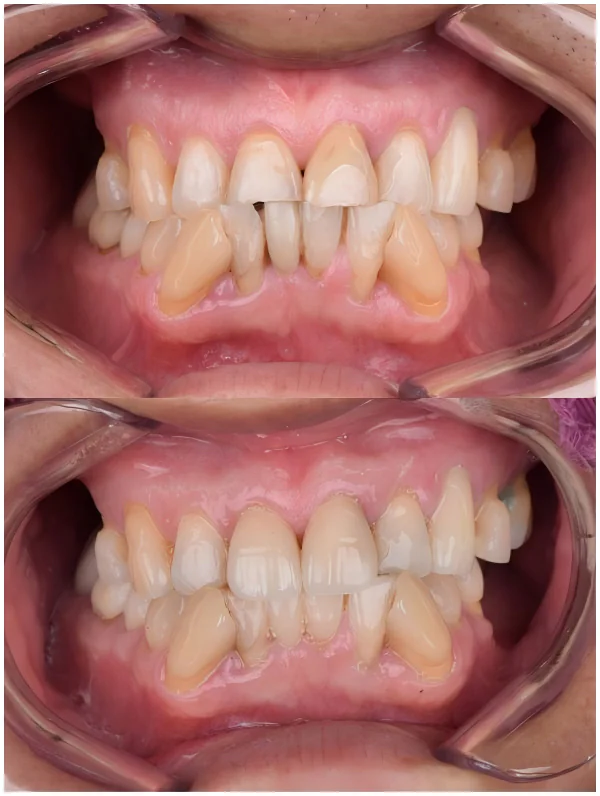
This dental restoration in China case involved a 63-year-old patient from New Zealand. The patient wanted to improve tooth color, missing teeth, and chewing comfort.
However, this was not a simple smile makeover. The patient had several dental concerns at the same time. He had uneven tooth color, worn teeth, and lower anterior tooth loss.
Also, he had a history of taking anticoagulant medication. Therefore, the Huangshan International Dental Hospital team needed careful planning. Any procedure with bleeding risk requires extra attention.
The patient also reported implant failure. In addition, some previous restorations had become loose or had fallen off.
As a result, the treatment plan had to be staged. First, the Huangshan International Dental Hospital team focused on color and diagnosis. Then, they managed unstable restorations. After that, they planned the final aesthetic repair.
Dental Problems Analysis
The patient’s dental problems were connected. Therefore, the dentist could not treat only one tooth.
Main dental issues included:
- Uneven tooth color.
- Severe tooth wear.
- Lower anterior tooth loss.
- Poor chewing efficiency.
- Loose old restorations.
- Fallen previous restorations.
- Implant failure history.
- Possible bite instability.
- Aesthetic dissatisfaction.
Uneven tooth color often affects smile confidence. However, color correction alone cannot solve missing teeth or worn teeth.
Also, severe wear can change the bite. When teeth lose height or shape, chewing becomes less efficient. Then, patients may avoid hard foods.
Missing lower front teeth also affect function. They can change speech, biting comfort, and smile balance.
So, this case needed a combined plan. Whitening, bridge repair, veneer restoration, and bite evaluation all mattered.
Why Anticoagulant History Matters
The patient had taken anticoagulant medication. This detail is important in dental care.
Anticoagulants can increase bleeding tendency. Therefore, the dentist must review the patient’s medical history before treatment.
In this case, the dental team had to consider:
- The name of the medication.
- The reason for taking it.
- The patient’s bleeding history.
- The type of dental procedure.
- Whether gum treatment may cause bleeding.
- Whether physician advice was needed.
However, patients should not stop anticoagulants by themselves. This can increase medical risk.
Instead, the dental team should assess the case carefully. For many non-surgical dental procedures, treatment can continue with proper precautions.
Therefore, this case needed safe planning, not rushed treatment.
Why Tooth Color Was Treated First
The treatment plan began with in-office laser teeth whitening. This helped improve uneven tooth color before final restorations.
This step made sense for several reasons.
First, whitening helped create a better color base. Then, the dentist could match E-max veneers more accurately.
Second, whitening allowed the patient to see a brighter smile before veneer planning. This helped guide shade selection.
Third, old restorations and natural teeth may not whiten the same way. Therefore, the dentist needed to evaluate color response.
In-office whitening can be useful for:
- Yellow teeth.
- Uneven tooth color.
- Mild staining.
- Smile preparation before veneers.
- Patients who want faster results.
However, whitening cannot repair missing teeth or severe wear. So, it was only the first step.
In-Office Laser Teeth Whitening
In-office laser teeth whitening can improve tooth brightness under dental supervision. It is often faster than home whitening.
For this patient, whitening helped address the uneven tooth color. It also supported the later veneer design.
The process usually includes:
- Gum protection.
- Whitening gel application.
- Light or laser activation.
- Shade checking.
- Sensitivity monitoring.
- Post-whitening instructions.
However, whitening results vary. Age, enamel thickness, stains, and old restorations all matter.
Also, crowns, bridges, and veneers do not whiten like natural teeth. Therefore, dentists often whiten natural teeth first. Then, they match new restorations to the improved shade.
For this patient, that order was helpful. It allowed a cleaner plan for E-max veneers and Maryland bridge work.
Loose and Fallen Restorations
The patient had loose or fallen previous restorations. This is a common reason for dental repair.
A restoration may loosen due to many causes:
- Weak bonding.
- Tooth decay.
- Poor fit.
- Heavy bite force.
- Tooth wear.
- Gum changes.
- Old cement failure.
- Poor oral hygiene.
When a restoration becomes loose, patients should not ignore it. Food and bacteria can enter the gap. Then, the tooth may decay or become sensitive.
Also, a loose restoration can affect chewing. It may move under pressure. This can make eating uncomfortable.
In this case, the Huangshan International Dental Hospital team planned to remove or manage unstable restorations. Then, they could rebuild the area with better stability.
This step protected both function and appearance.
Maryland Bridge for Lower Missing Teeth
A Maryland bridge can replace a missing front tooth in selected cases. It uses a false tooth with wings bonded to nearby teeth.
For lower anterior tooth loss, this can be a conservative option. It often requires less tooth reduction than a traditional bridge.
A Maryland bridge may help with:
- Front tooth replacement.
- Smile appearance.
- Speech support.
- Short-term or long-term repair.
- Patients who want conservative treatment.
- Selected non-implant cases.
However, it is not suitable for every patient. The bite must be carefully checked. If the patient bites heavily on the bridge, it may loosen.
In this case, chewing was already not ideal. Also, severe tooth wear existed. Therefore, bite planning was very important.
A Maryland bridge could help restore the missing lower area. Yet the final design needed careful occlusal control.
E-max Veneers for Aesthetic Repair
E-max veneers are a popular ceramic option for smile improvement. They can improve tooth color, shape, and symmetry.
For this patient, E-max veneers were considered after whitening and repair planning. This was a logical sequence.
E-max veneers may help improve:
- Uneven tooth color.
- Worn tooth edges.
- Minor shape problems.
- Smile harmony.
- Visible front tooth aesthetics.
However, veneers need healthy gums and stable teeth. They also need a controlled bite. If the patient grinds heavily or bites edge-to-edge, veneers may chip or loosen.
Therefore, the dentist must evaluate the bite before final placement. Sometimes, a night guard may be needed after treatment.
For this patient, E-max veneers could improve the smile. However, the plan had to respect wear, function, and long-term stability.
Chewing Problems and Severe Tooth Wear
The patient reported poor chewing comfort. Severe tooth wear likely contributed to this problem.
Worn teeth can affect chewing in several ways:
- Teeth lose proper shape.
- Bite height may change.
- Food cutting becomes harder.
- Jaw muscles may feel tired.
- Restorations may loosen.
- Front teeth may take excess pressure.
Also, missing lower teeth can make chewing less balanced. The patient may shift food to one side. Over time, this can create more strain.
Therefore, the treatment plan should not focus only on beauty. It should also improve function.
A good restorative plan checks:
- Bite contacts.
- Tooth wear pattern.
- Missing tooth spaces.
- Gum health.
- Existing restorations.
- Jaw comfort.
- Patient habits.
This helps create a result that looks good and works better.
Treatment Process
The treatment plan followed a staged structure. This helped reduce risk and improve control.
The main steps included:
- Medical history review.
- Anticoagulant history assessment.
- Full dental examination.
- Bite and restoration evaluation.
- In-office laser teeth whitening.
- Management of loose restorations.
- Removal of failed or unstable work.
- Maryland bridge planning.
- E-max veneer planning.
- Final shade and shape design.
- Follow-up and aftercare.
This sequence matters. Whitening first helped with shade planning. Then, repair work helped stabilize loose restorations.
After that, the dental team could plan the Maryland bridge and veneers more accurately.
Also, staging helped the patient understand each step. This is important for international patients with limited travel time.
Before and After Result
Before treatment, the patient had uneven tooth color, missing lower teeth, worn teeth, and unstable restorations. Chewing was not comfortable.
The main “before” concerns included:
- Uneven tooth shade.
- Lower dental arch defect.
- Loose restorations.
- Implant failure history.
- Severe wear.
- Poor chewing comfort.
- Aesthetic concerns.
After the planned treatment stages, the expected improvements included:
- Brighter tooth color.
- Better smile harmony.
- More stable lower front appearance.
- Improved tooth shape.
- Better restoration fit.
- More comfortable chewing.
- Clearer long-term repair plan.
However, final results depend on diagnosis, gum health, bite control, and patient care.
This case shows an important point. A better smile should not only look brighter. It should also feel stable during daily use.
Why Choose Huangshan International Dental Hospital
Huangshan International Dental Hospital was a good fit for this case because the patient needed coordinated restorative care.
One key advantage is the integrated clinic and in-house lab model. Dentists and technicians can work closely together. This helps with shade matching, veneer shape, and bridge design.
This model can offer:
- Better-fitting restorations.
- Faster communication.
- Shorter waiting time.
- More precise aesthetic planning.
- Better control of temporary and final work.
Another advantage is fast and efficient treatment. Veneers can often be completed in approximately 3 days, depending on the case.
This matters for international patients. A patient from New Zealand may have limited time in China. Therefore, efficient scheduling can reduce stress.
Still, speed should not replace safety. In this case, the team had to respect gum health, wear, and anticoagulant history.
Why Dental Restoration in China Appeals to International Patients
Many patients search for dental restoration in China because they want quality care at a more accessible cost.
For overseas patients, dental treatment can be expensive at home. Also, insurance may not cover cosmetic or complex restorative work.
Huangshan International Dental Hospital offers highly competitive pricing. Treatment costs are often lower than in the U.S. and Europe.
However, cost alone should not guide the choice. Patients also need:
- A qualified dental team.
- Clear diagnosis.
- Safe medical history review.
- Reliable materials.
- Good lab support.
- Transparent treatment planning.
- Follow-up instructions.
For this patient, the case involved whitening, Maryland bridge repair, and E-max veneer planning. So, both cost and clinical coordination mattered.
In the right case, China can offer a practical solution for international dental restoration.
Aftercare Tips
After whitening, bridge repair, or veneers, aftercare is essential. Good habits protect the result.
Patients should follow these tips:
- Brush twice daily.
- Use a soft toothbrush.
- Clean between teeth every day.
- Avoid biting hard objects.
- Do not chew ice.
- Avoid using teeth as tools.
- Wear a night guard if grinding exists.
- Attend follow-up visits.
- Report looseness early.
- Maintain gum health.
After whitening, patients should also avoid strong staining foods for a short time. Coffee, red wine, tea, and tobacco can affect the shade.
For Maryland bridge care, cleaning around the bridge is important. Food can collect near the bonded wings.
For E-max veneers, bite care matters. Patients should avoid heavy front-tooth biting if advised.
FAQ
Is E-max good for worn teeth?
E-max can work well for selected worn front teeth. It can improve shape, color, and smile balance.
However, the dentist must check the bite first. If the patient has heavy grinding or severe bite stress, extra protection may be needed.
What is a Maryland bridge?
A Maryland bridge replaces a missing tooth with a false tooth bonded to nearby teeth.
It can be more conservative than a traditional bridge. However, it needs a suitable bite and stable supporting teeth.
Can teeth whitening be done before veneers?
Yes, whitening is often done before veneers. It helps improve the natural tooth shade first.
Then, the dentist can match the veneers to the new color. This can create a more natural smile.
Can anticoagulant patients have dental treatment?
Many patients taking anticoagulants can still receive dental treatment. However, the dentist must review the medication and bleeding risk.
Patients should not stop medication without medical advice. If needed, the dentist may consult the patient’s physician.
Why do dental restorations fall off?
Restorations may fall off due to weak bonding, decay, heavy bite force, poor fit, old cement, or tooth wear.
A dentist should check the cause before rebonding or replacing the restoration.
Is Dental Restoration in China suitable for overseas patients?
Dental Restoration in China can suit overseas patients who want careful planning, competitive pricing, and efficient treatment.
However, patients should choose a qualified hospital, ask for a personalized plan, and understand follow-up needs.
Conclusion
This case shows how dental restoration in China can help an international patient with complex needs. The 63-year-old patient from New Zealand had uneven tooth color, lower tooth loss, loose restorations, an implant failure history, severe wear, and poor chewing comfort.
The treatment plan did not rely on one solution. Instead, it combined in-office laser teeth whitening, restoration repair, Maryland bridge planning, and E-max veneer design.
This approach helped address color, function, and appearance together. Also, the patient’s anticoagulant history required careful planning.
At Huangshan International Dental Hospital, the in-house lab model and efficient treatment process can support cases like this. Patients can receive coordinated care with less waiting and clearer communication.
In the end, dental restoration in China is not only about a brighter smile. It is also about restoring comfort, confidence, and daily function through a personalized dental plan.