


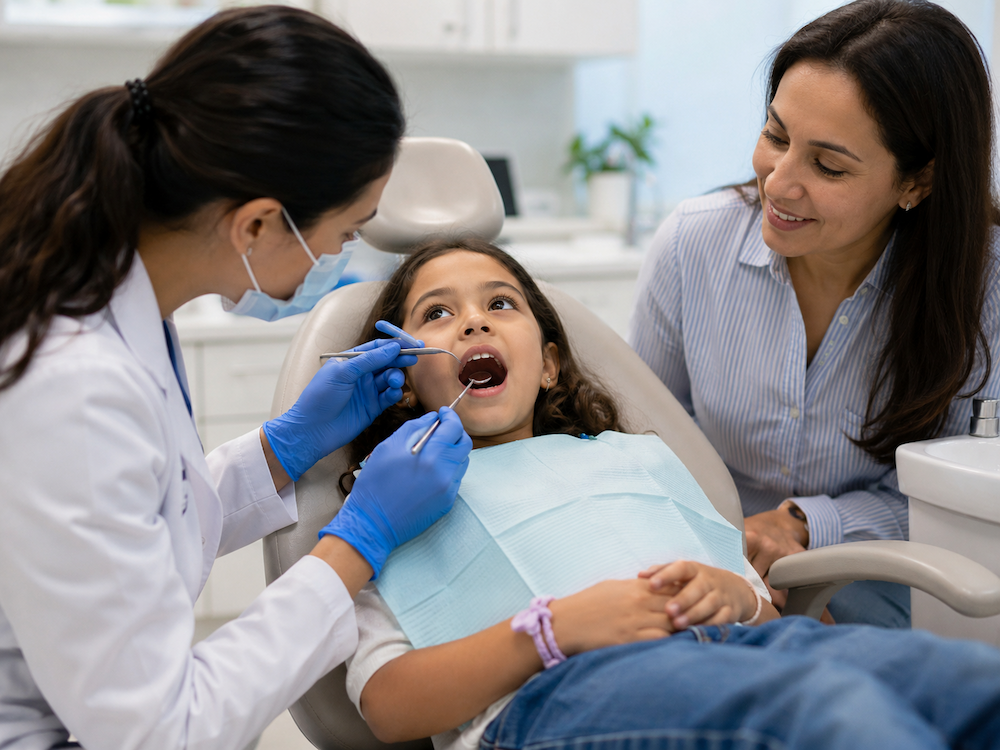
When Do Kids Start Going to the Dentist?
Many parents ask, when do kids start going to the dentist for the first time?
Some parents think a dental visit is only needed when a child has pain. Others wait until all the baby teeth have appeared. However, the first dental visit should usually happen much earlier.
Parents can arrange a checkup after the first baby tooth appears. In most cases, they should not wait beyond the child’s first birthday.
At this stage, the visit is usually simple. The dentist may only look inside the mouth, check the new teeth, and speak with the parents.
The main goals are to:
- Check whether the teeth are developing normally.
- Look for early signs of tooth decay.
- Review feeding and cleaning habits.
- Help the child become familiar with the clinic.
- Answer the parents’ questions.
Therefore, the first appointment is not mainly about treatment. Instead, it introduces the child to dental care in a calm and positive way.
Why the First Visit Should Happen Early
Many parents think a very young child has too few teeth to examine. However, even one or two teeth need care.
Once a tooth enters the mouth, plaque can begin to collect on its surface. In addition, feeding habits may affect the risk of early tooth decay.
An early visit gives the dentist a chance to identify possible concerns before they become painful.
For example, the dentist may discuss:
- How often the child drinks milk or sweetened drinks.
- Whether the child falls asleep with a bottle.
- How the parents clean the new teeth.
- Whether fluoride toothpaste is being used correctly.
- Whether the child has unusual tooth development.
Moreover, early visits help parents form better routines. Small changes at this stage may prevent larger problems later.
Most importantly, the child can meet the dentist without pain or pressure. As a result, the clinic may feel less frightening during future visits.
Do Not Wait Until a Tooth Hurts
A painful tooth often creates a difficult first dental experience.
The child may already feel tired, frightened, or uncomfortable. In addition, the dentist may need to perform treatment instead of a simple examination.
As a result, the child may connect the dental clinic with pain.
A routine visit feels very different.
The child may only need to:
- Sit in the dental chair.
- Open the mouth for a few seconds.
- Let the dentist count the teeth.
- Look at a small dental mirror.
- Listen to simple instructions.
- Receive praise for cooperating.
Therefore, it is better to arrange the first visit before an emergency develops.
A calm appointment allows the dentist to move slowly. It also allows the child to leave with a positive impression.
Even when the child does not fully cooperate, the visit can still be useful. Familiarity often grows over several appointments.
What Happens During a Child’s First Dental Visit?
Parents often wonder what a dentist can examine in such a young child.
In fact, the first visit focuses on several important areas. The dentist does not only look for cavities.
The appointment may include:
- A review of the child’s health history.
- A discussion about feeding habits.
- A check of the gums and baby teeth.
- An assessment of tooth eruption.
- Advice about brushing and toothpaste.
- A review of oral habits.
- Guidance about future visits.
For very young children, the examination may remain brief.
Sometimes, the child sits on a parent’s lap. The parent and dentist may use a knee-to-knee position for a better view.
Meanwhile, the dentist may explain each step in simple language.
X-rays are not always needed at the first visit. The dentist usually recommends them only when the child’s condition or dental risk makes them useful.
Checking Tooth Growth and Eruption
Baby teeth usually appear in stages. However, the exact timing varies between children.
During the visit, the dentist may check:
- Which teeth have erupted.
- Whether the number of visible teeth seems appropriate.
- Whether the teeth appear in a normal sequence.
- Whether any teeth look unusually shaped.
- Whether the enamel has visible defects.
- Whether the gums appear healthy.
A child does not need to follow an exact eruption schedule. Some children get their first tooth earlier. Others get it later.
Therefore, a small difference does not always indicate a problem.
However, the dentist may recommend further observation when a tooth appears very early, very late, or in an unusual position.
In addition, developmental enamel defects may make some teeth more vulnerable to decay.
Early recognition helps parents protect those teeth more carefully. It also helps the dentist plan future monitoring.
Looking for Early Signs of Tooth Decay
Tooth decay does not always begin as a dark hole.
Early changes may appear as dull, chalky, or white areas on the tooth surface. These marks often develop near the gumline.
Parents may not notice them during daily brushing.
The dentist may look for:
- White spots on the enamel.
- Yellow or brown surface changes.
- Plaque near the gums.
- Rough areas on the teeth.
- Visible cavities.
- Food traps between teeth.
- Signs of gum irritation.
If the dentist finds an early problem, treatment may still remain simple.
For example, the family may need to improve brushing, change feeding habits, or use fluoride more consistently.
However, deeper cavities may require dental treatment.
Therefore, regular checks help identify problems before they lead to pain, infection, or difficulty eating.
Reviewing Brushing and Cleaning Habits
Many parents brush their child’s teeth every day. However, some areas are easy to miss.
Common problems include:
- Brushing for only a few seconds.
- Missing the gumline.
- Ignoring the back teeth.
- Using too much toothpaste.
- Letting the child brush alone too early.
- Skipping brushing when the child resists.
- Forgetting spaces between touching teeth.
During the visit, the dentist may demonstrate a more effective method.
For example, parents may learn how to:
- Lift the lip to see the front teeth clearly.
- Brush every surface with small movements.
- Support the child’s head during brushing.
- Use a soft, age-appropriate toothbrush.
- Use a small amount of fluoride toothpaste.
- Begin flossing when teeth touch.
Although young children can practise brushing, they still need help from an adult.
Their hand control is not yet strong enough for complete cleaning.
Checking the Bite and Oral Habits
A child’s mouth develops as the teeth, jaws, muscles, and breathing patterns change.
Therefore, the dentist may also observe the child’s bite and oral habits.
The dentist may ask about:
- Thumb or finger sucking.
- Pacifier use.
- Lip biting.
- Tongue habits.
- Mouth breathing.
- Teeth grinding.
- Chewing mainly on one side.
- Difficulty biting or chewing food.
Not every habit needs immediate treatment.
For example, thumb sucking is common in babies and young toddlers. However, a habit that continues for many years may influence tooth position or jaw development.
Likewise, mouth breathing can have several possible causes. A dentist may notice the pattern, but further medical assessment may be needed.
Therefore, the first visit helps identify habits that deserve observation. It does not always mean that the child needs treatment.
How Parents Should Prepare the Child
A child often learns how to react by watching the parent.
Therefore, the parent’s words and behavior can shape the first appointment.
Before the visit, keep the explanation simple.
Parents can say:
- “The dentist will look at your teeth.”
- “You may sit in a special chair.”
- “The dentist may count your teeth.”
- “We are going to help keep your teeth healthy.”
However, avoid giving too many details.
Long explanations can make the visit sound serious. In addition, promises such as “nothing will hurt” may increase the child’s attention to pain.
Instead, use a calm and neutral tone.
The goal is to make the visit feel normal. It should sound similar to going for a regular health check.
Words Parents Should Avoid
Some common phrases create fear before the child even enters the clinic.
Parents should avoid saying:
- “Do not be scared.”
- “It will not hurt.”
- “You need to be brave.”
- “The dentist might give you a shot.”
- “If you do not behave, the dentist will pull your tooth.”
- “You have bad teeth.”
- “The dentist is going to drill your tooth.”
Even when parents mean well, these words can cause anxiety.
The child may focus on words such as “hurt,” “shot,” or “pull.”
Therefore, allow the dental team to explain procedures with child-friendly language.
Dentists may use phrases such as:
- “Tooth counter.”
- “Tooth camera.”
- “Sleepy water.”
- “Tooth shower.”
- “Special toothbrush.”
These terms can make unfamiliar equipment feel less threatening.
Do Not Ask Too Many Fear-Based Questions
Parents sometimes ask the child:
- “Are you scared?”
- “Do you think it will hurt?”
- “Are you nervous?”
- “Will you cry?”
- “Can you be brave?”
However, these questions suggest that there may be something frightening.
The child may begin to worry even if no fear existed before.
Instead, focus on neutral or positive details.
For example, parents may say:
- “You will meet the dentist today.”
- “The dentist will count your teeth.”
- “You can show the dentist your smile.”
- “We will learn how to clean your teeth.”
Moreover, avoid discussing your own negative dental experiences in front of the child.
Children often copy adult emotions. Therefore, a nervous parent can unintentionally make the child nervous.
A calm voice, relaxed expression, and simple explanation usually work better.
Choose the Right Appointment Time
The timing of the appointment can affect the child’s behavior.
Whenever possible, choose a time when the child usually feels rested and alert.
For many young children, a morning visit works well.
Try to avoid appointments when the child is:
- Very tired.
- Hungry.
- Close to nap time.
- Overstimulated.
- Unwell.
- Already upset.
- Rushed between other activities.
In addition, give yourself enough travel time.
Arriving late can increase the parent’s stress. The child may notice that tension.
A light meal before the appointment may also help. However, parents should follow any special instructions from the clinic.
Bringing a familiar comfort item may be useful. For example, a young child may feel calmer with a favorite toy.
Still, avoid bringing too many distractions. The dentist needs the child’s attention during the examination.
Should Parents Practise at Home?
Simple practice can help a child understand what will happen.
For example, parents can play a short “dentist game” at home.
They may:
- Ask the child to open wide.
- Count the child’s teeth.
- Use a clean toothbrush as a pretend dental tool.
- Let the child examine a toy’s teeth.
- Read a positive book about dental visits.
- Practise sitting still for a few seconds.
However, keep the activity light and playful.
Do not force the child to practise for long periods. In addition, avoid pretending to perform painful procedures.
The goal is familiarity, not training.
A child does not need to behave perfectly during the real appointment.
The dentist understands that young children may move, talk, or close their mouths.
Therefore, home practice should build confidence without creating pressure.
What If the Child Cries?
Crying during a first dental visit is common.
Young children may cry because the room feels unfamiliar. They may also dislike lying back or having someone look inside their mouth.
Crying does not mean the appointment has failed.
In fact, the dentist may still complete a basic examination while the child stays close to the parent.
Parents can help by:
- Remaining calm.
- Following the dentist’s instructions.
- Using a steady voice.
- Avoiding criticism.
- Avoiding threats.
- Praising small efforts.
- Allowing the dentist to lead the visit.
However, too much reassurance can sometimes increase anxiety.
Repeatedly saying “It is okay” may suggest that something is wrong.
Instead, use brief support. For example, say, “You are opening your mouth well.”
The dental team may stop when the child reaches their limit. A short positive visit can be more useful than a long stressful one.
How Often Should Children Visit the Dentist?
The dentist will suggest a schedule based on the child’s needs.
Many children benefit from regular visits about every six months. However, the ideal interval can vary.
A child may need more frequent checks when they have:
- Early tooth decay.
- A high risk of cavities.
- Enamel defects.
- Poor plaque control.
- Frequent sugary snacks.
- Certain medical conditions.
- Dry mouth.
- Ongoing dental treatment.
Meanwhile, a child with healthy teeth and a low risk may follow a different schedule.
Therefore, parents should follow the dentist’s individual recommendation.
Regular visits allow the dentist to monitor changes over time.
They also help the child become familiar with the clinic. As a result, future care may feel more routine and less stressful.
Common Myth: Baby Teeth Do Not Matter
Some parents believe baby teeth need little care because they will eventually fall out.
However, baby teeth perform several important jobs.
They help children:
- Chew food.
- Speak clearly.
- Smile with confidence.
- Maintain space for adult teeth.
- Support jaw development.
- Develop normal eating habits.
A badly decayed baby tooth can cause pain or infection.
In addition, early tooth loss may affect the space available for permanent teeth.
Some baby teeth also remain in the mouth for many years. Therefore, neglecting them can create long-term problems.
Although baby teeth will eventually be replaced, they still deserve daily care and regular checks.
Protecting them supports the child’s comfort, growth, and oral development.
Common Myth: No Pain Means No Problem
Children do not always report dental problems clearly.
A small cavity may cause no pain. In addition, a child may adapt by chewing on the other side.
Some children cannot explain sensitivity or pressure.
Parents may only notice indirect signs, such as:
- Avoiding hard foods.
- Chewing on one side.
- Waking at night.
- Touching the mouth.
- Refusing cold drinks.
- Developing bad breath.
- Becoming irritable during meals.
- Showing swelling near a tooth.
Therefore, pain should not be the only reason for a dental visit.
Routine checks can find problems before symptoms begin.
Early care may also reduce the need for larger procedures.
Common Myth: School Age Is Early Enough
Waiting until school age may seem reasonable. However, many children develop dental problems before then.
Baby teeth often begin erupting during the first year. Therefore, several years may pass before the child starts school.
During that time, feeding and brushing habits become established.
In addition, early childhood cavities can develop quickly.
An early visit gives parents guidance when it matters most.
For example, the dentist can help with:
- Bottle use.
- Night feeding.
- Toothpaste amounts.
- Brushing resistance.
- Snack frequency.
- Pacifier habits.
- Thumb sucking.
- Fluoride exposure.
Therefore, the first visit should not depend on school enrollment.
Dental care should begin when the first teeth appear.
When to Arrange an Earlier Appointment
Parents should not wait for a routine visit when they notice a possible problem.
Contact a dentist when the child has:
- Tooth pain.
- Facial swelling.
- Gum swelling.
- A broken tooth.
- A dental injury.
- Bleeding that does not stop.
- A dark tooth after an injury.
- Difficulty eating.
- A visible cavity.
- A mouth sore that does not heal.
- Unusual tooth eruption.
- Persistent bad breath.
In addition, fever and facial swelling may require urgent attention.
Parents should also arrange an assessment when a tooth gets knocked out or pushed out of position.
Quick action may improve the outcome.
Therefore, keep the dental clinic’s contact information available. It may be useful during an emergency.
Summary
The answer to when do kids start going to the dentist is earlier than many parents expect.
Parents can arrange the first visit after the first baby tooth appears. In general, they should try not to wait beyond the child’s first birthday.
The appointment may include a simple examination, advice about brushing, a review of feeding habits, and a discussion about oral development.
Moreover, an early visit helps the child become familiar with the dental clinic before pain occurs.
Parents can prepare by using calm language, avoiding frightening words, and choosing a suitable appointment time.
They should also remember that crying does not mean failure. Young children often need several visits to build confidence.
Most importantly, baby teeth need proper care. They support chewing, speech, appearance, and future dental development.
Therefore, the first dental visit should not be viewed as a treatment event. Instead, it should mark the beginning of regular, comfortable, and preventive dental care.