


Main Content
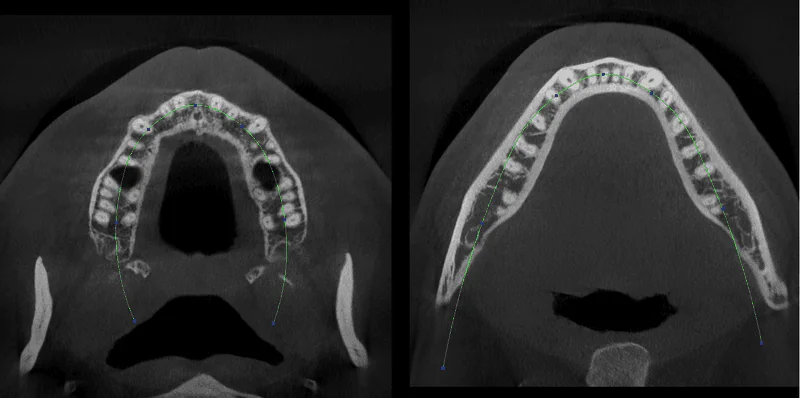
 AI’s algorithm provides coordinates of the maxillary & mandibular arch, enabling an accurate outline of the arch anatomy.Patient Management Made Easy The purchasers will obtain their annual or bi-annual reminder for a dental checkup from AI-enabled software program. The diagnoses, prescriptions and former interactions inside healthcare organizations are available for dentists. Based mostly on this, a customized therapy plan may be offered. Drawing inspiration from IBM’s Watson platform, Dr John Kois of US had developed Evidentiae, cloud-based software for Dental Care. Other than giving an overall perspective, it gives ideas to improve the aesthetics and functionality of the patient’s dental structure. The Future Already there!
 Source:www.denti.ai Smart brushes in the market that reminds folks that they do not brush adequately. Soon these brushes will be able to identify hairline cracks, cavities and upload images into the cloud. The data will be further sent to the dentist who will reach out to the patient. It is to be noted that, in China, a Robo dentist has already carried out the first successful autonomous dental implant surgical procedure whereby two new teeth were added to a woman’s oral cavity. The artificial teeth were created by 3D printing. Such Robo dentists might assist countries which face a dearth of dentists. It was found that around 400 million patients in China require new teeth, but there was high waiting time due to the lack of qualified dental surgeons. Key Players
- Glidwell.io
- Pearl
- Dentistry.ai
- Dentem
- Orca
- Videahealth
- Dentem
- Promaton
- Dental monitoring
- Cellmatiq
- Denti
- Necois
AI is expected to be used in all aspects of medicine in the coming days. Dentistry will be the first to be benefitted in terms of clinical results, cost reductions, improved access and patient satisfaction. Little more about Videahealth:
Florian Hillen, executive director of the new startup VideaHealth, first started working on problems in dentistry about three years ago. An employee at the Massachusetts Institute of Technology and Harvard has been researching machine learning and image recognition for many years.His ultimate goal was to apply these technologies in an area that desperately needed them.
Dentistry, although not the initial goal, turned out to be a market that ideally suited the young researcher.
“Everyone goes to the dentist, but roentgens are still the main diagnostic tool in the office. Dentistry lacks a single standard. If you go to three different dentists, you will get three different opinions.”
VideaHealth’s machine learning technologies can introduce a common standard in dental practice. This is especially true given the fact that dental enterprises are turning into large service providers. Dentists also represent a more receptive audience for the benefits of automation than some other medical professionals. Since they are often very busy, image recognition technologies can be considered as something that will help them work more efficiently and not overload themselves with work.
“Artificial intelligence in radiology competes with the radiologist himself,” says Hillen.“We will help the dentist identify diseases more reliably, more accurately, and earlier.”
According to Hillen, the ability to receive more patients and identify problems earlier, without requiring longer and more invasive procedures, plays into the hands of both doctors and patients. A year has passed since Hillen founded the company, and he has already attracted investors such as Zetta Venture Partners, Pillar and MIT Delta V, who invested $ 5.4 million in initial financing for the company. Already, the company is collaborating with dental clinics and organizations throughout the United States.For example, one of the partners is Heartland Dental, a company that operates more than 950 clinics in the Midwest.The company will use its funds for widespread hiring and further research and development. Source:
- www.techcrunch.com
- www.aithority.com