As an oral surgeon and prosthodontist specialising in full-mouth rehabilitation, I have consistently sought to integrate advanced technologies into my practice to achieve superior outcomes for my patients. Over the years, digital dentistry has proved to be a game-changer, particularly in cases for which comprehensive treatment is required to address both functional and aesthetic challenges. This clinical case report details the use of Smilecloud and digital workflows to restore oral health, function and aesthetics in a 61-year-old patient with advanced periodontal disease, as well as tooth loss and several hopeless teeth.
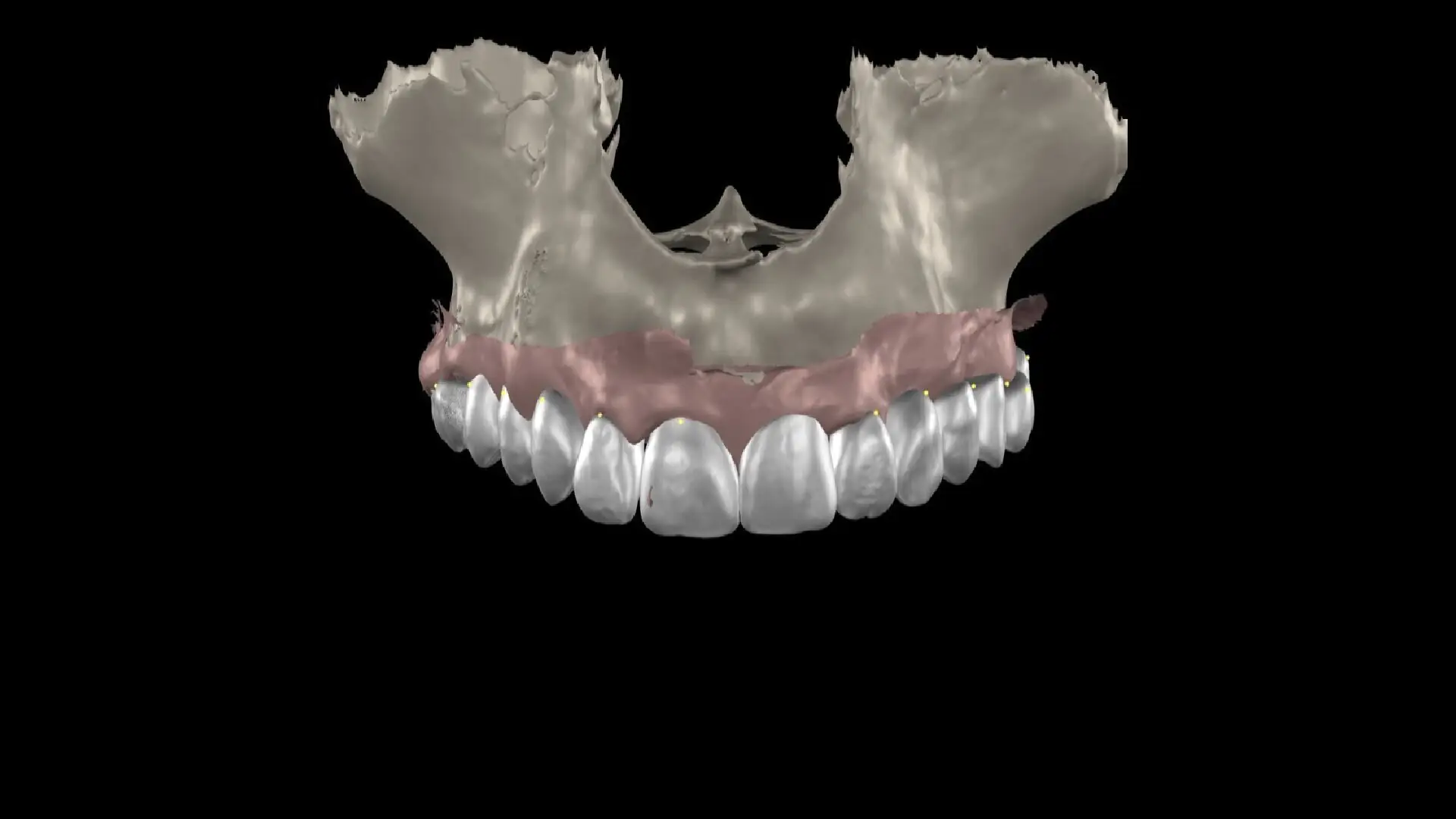
Smilecloud is an innovative digital tool that combines artificial intelligence with a vast library of natural smile designs, enabling the creation of highly personalised treatment plans. Its integration with digital workflows—such as those of CBCT imaging, intra-oral scanning and guided implant surgery—streamlines every stage of treatment, from diagnosis and planning to execution. These technologies enhance precision in implant placement and prosthetic design, reduce chairside time and foster better communication with patients by providing them with a clear understanding of the proposed outcomes.
In this case, Smilecloud played a key role in designing a smile that harmonised with the patient’s facial features while addressing her functional priorities. The combination of digital workflows allowed for the immediate placement and loading of implants, ensuring a seamless transition from compromised dentition to stable, implant-supported restorations. The treatment achieved a stable and natural-looking result, addressing the patient’s aesthetic concerns and restoring her ability to eat comfortably.
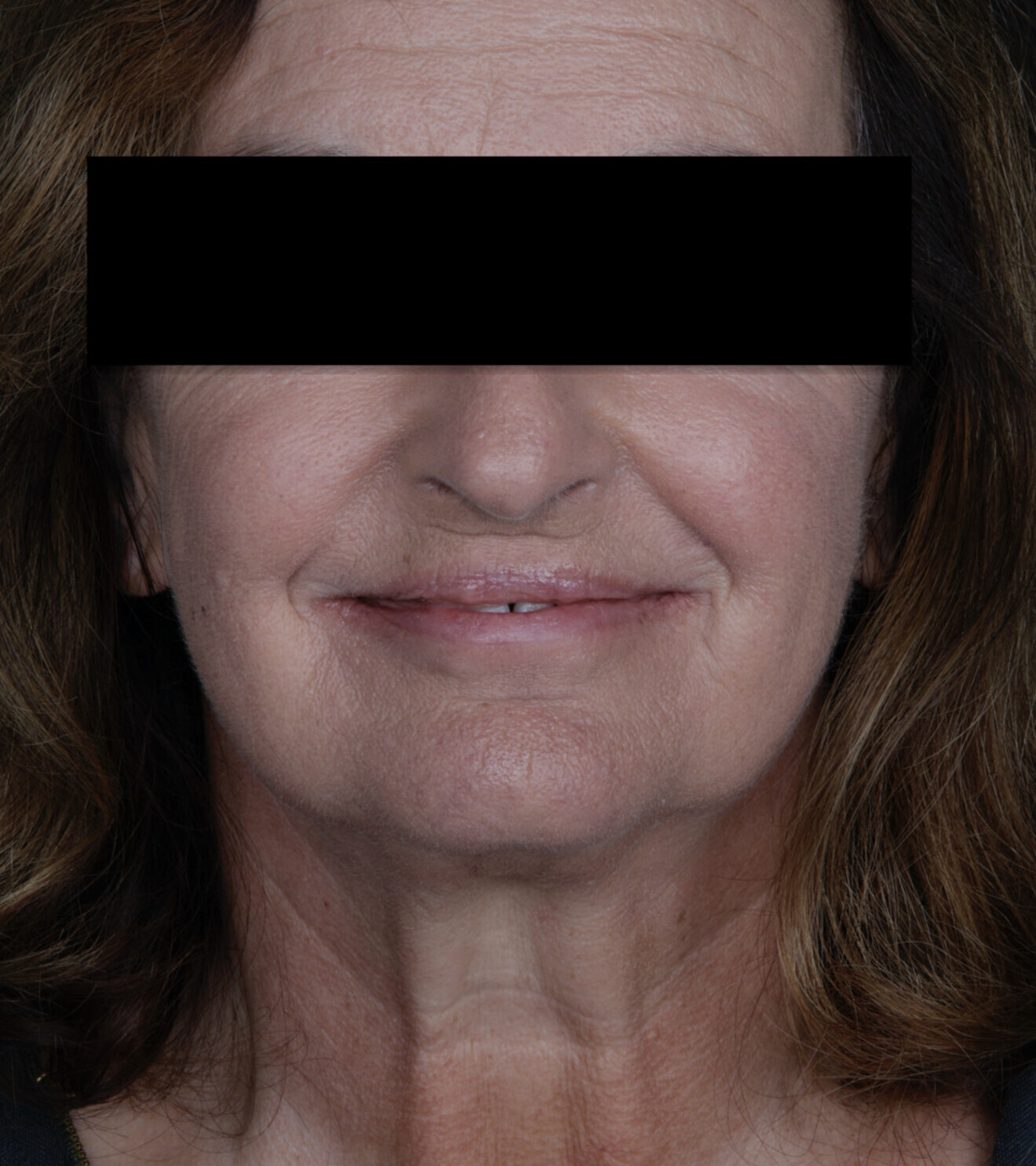
Figs. 1–3: The initial situation showed significant spacing between the teeth
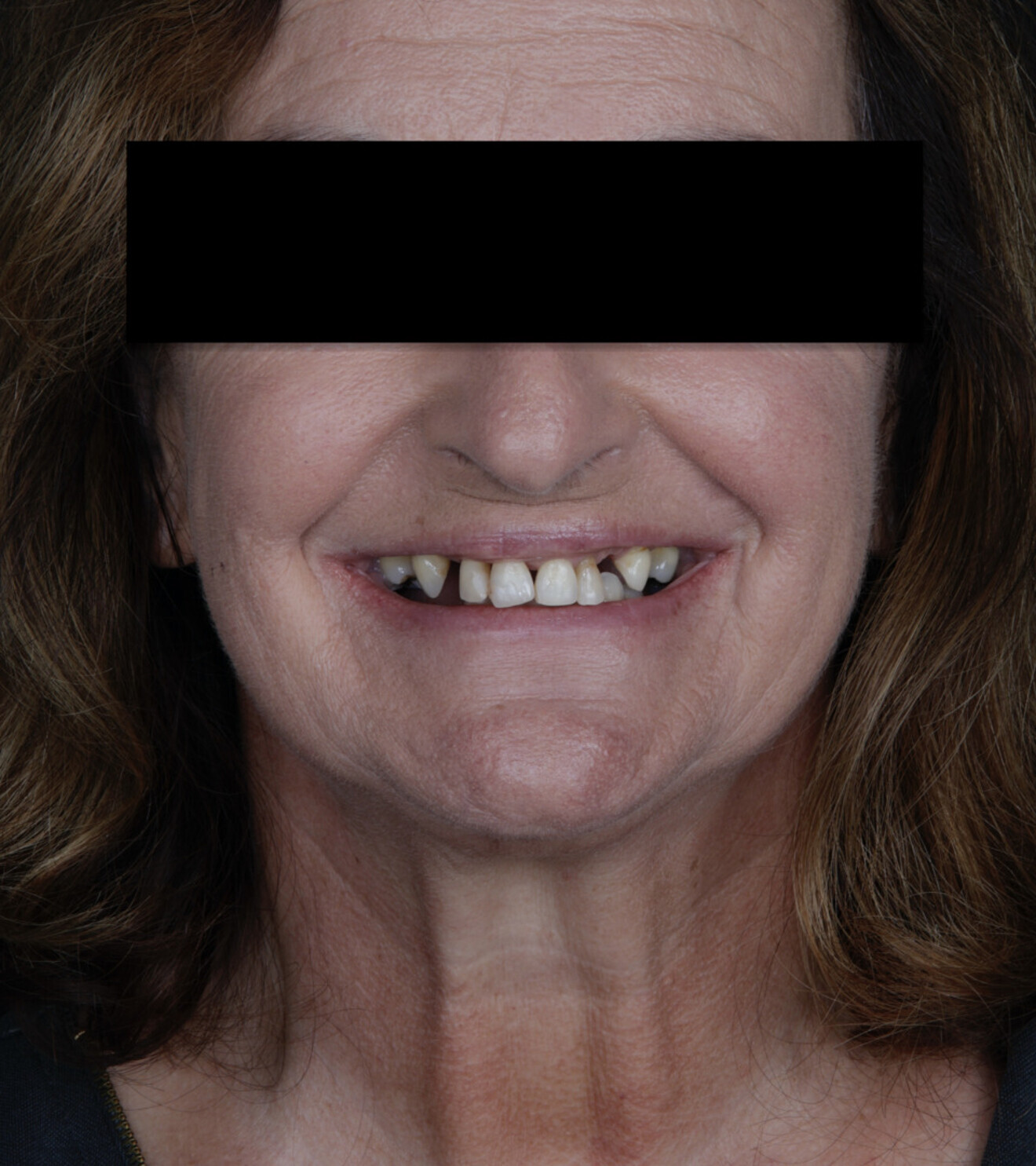
Fig. 2
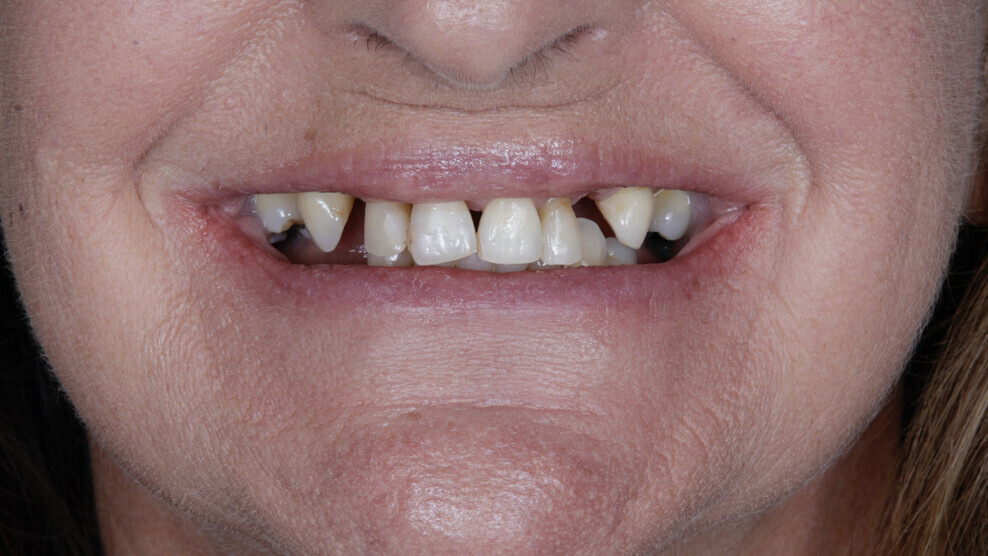
Fig. 3
Initial situation
A healthy 61-year-old female patient with no significant medical history and who took no medications and had no known systemic diseases or risk factors such as smoking that could compromise treatment outcomes came to our clinic. She was concerned about the mobility of her teeth and their appearance. She also reported finding it difficult to eat properly, affecting her daily life. The patient’s primary focus was improving the aesthetics of her teeth to achieve a natural appearance that would complement her facial features. She also prioritised restoration of proper function to eat comfortably without difficulty. She was opposed to wearing a denture and desired a long-term solution that would maintain her quality of life while ensuring stable teeth and optimal oral health.
In the extra-oral examination, a medium smile line was observed with prominent spaces between the teeth owing to tooth loss and the presence of black triangles (Figs. 1–3). Intra-orally, the patient presented with generalised plaque accumulation and inflammation, affecting approximately 30% of the oral cavity. Periodontal examination revealed areas of localised bleeding on probing, indicating active inflammation. Tooth mobility was evident for multiple teeth, consistent with the patient’s history of periodontal disease.
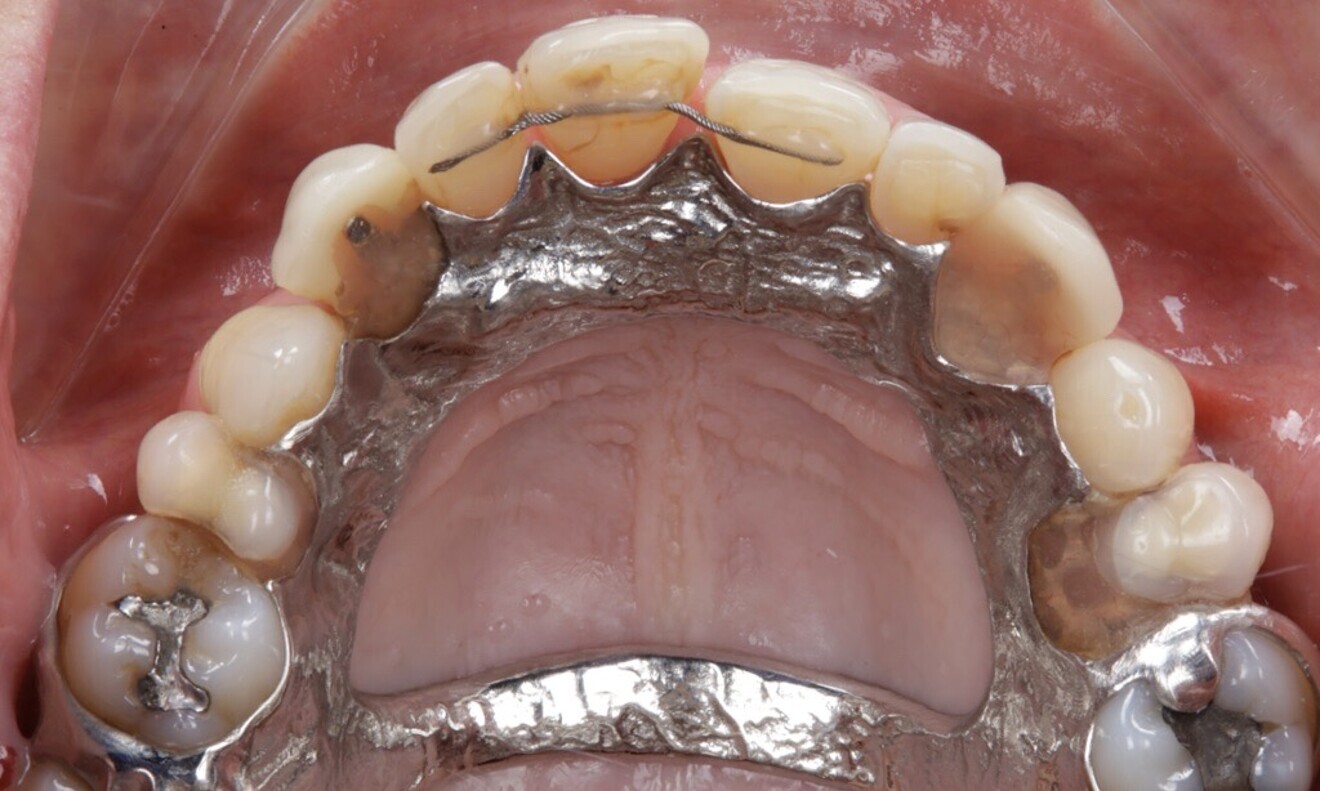
The patient wore a removable restoration in the maxillary arch and presented with anterior retainers in both the maxillary and mandibular arches owing to tooth mobility caused by periodontal disease. Teeth #15, 13, 23, 25, 27, 36, 35, 44, 45, 46 and 47 were missing. Additionally, the patient presented with several dental fillings (Figs. 4–7).
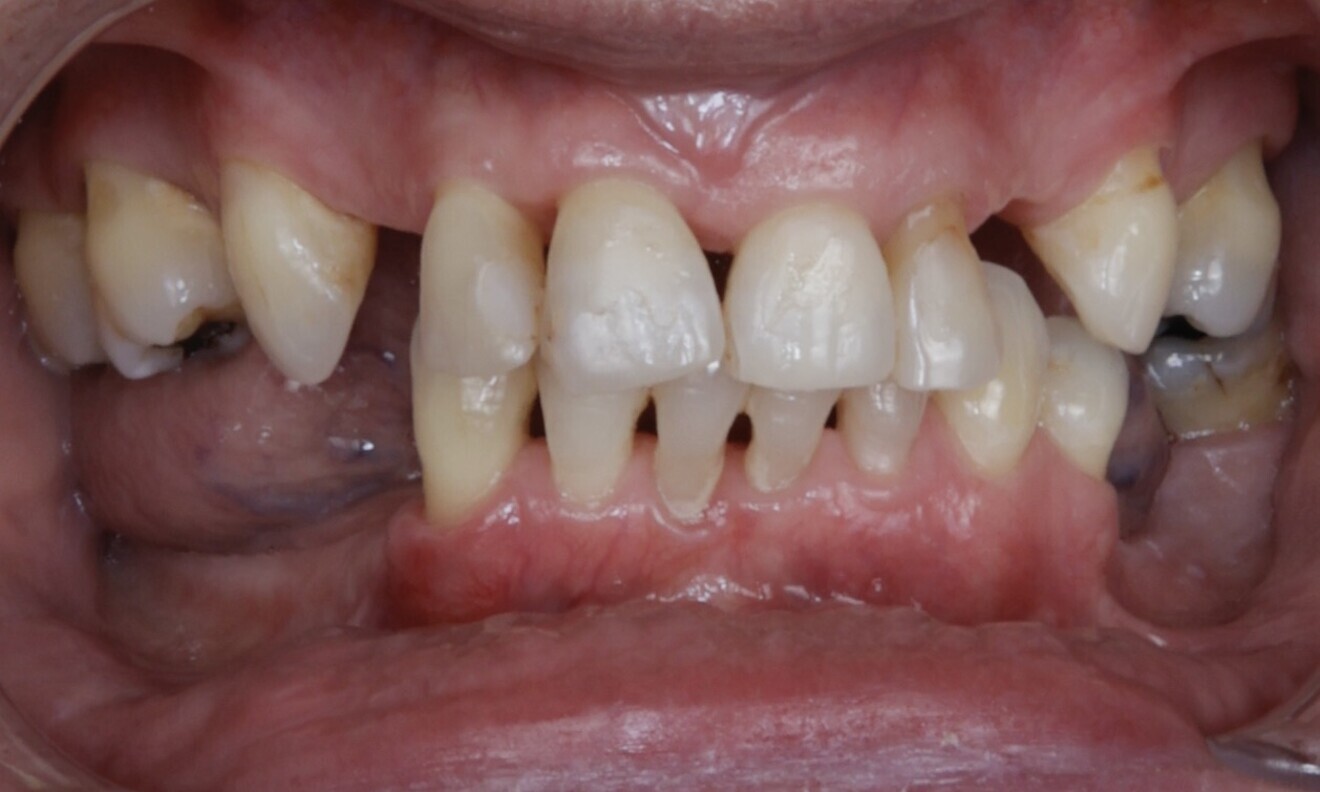
Figs. 4–7: The intra-oral examination showed generalised periodontitis, a removable maxillary restoration and multiple missing mandibular and maxillary teeth.