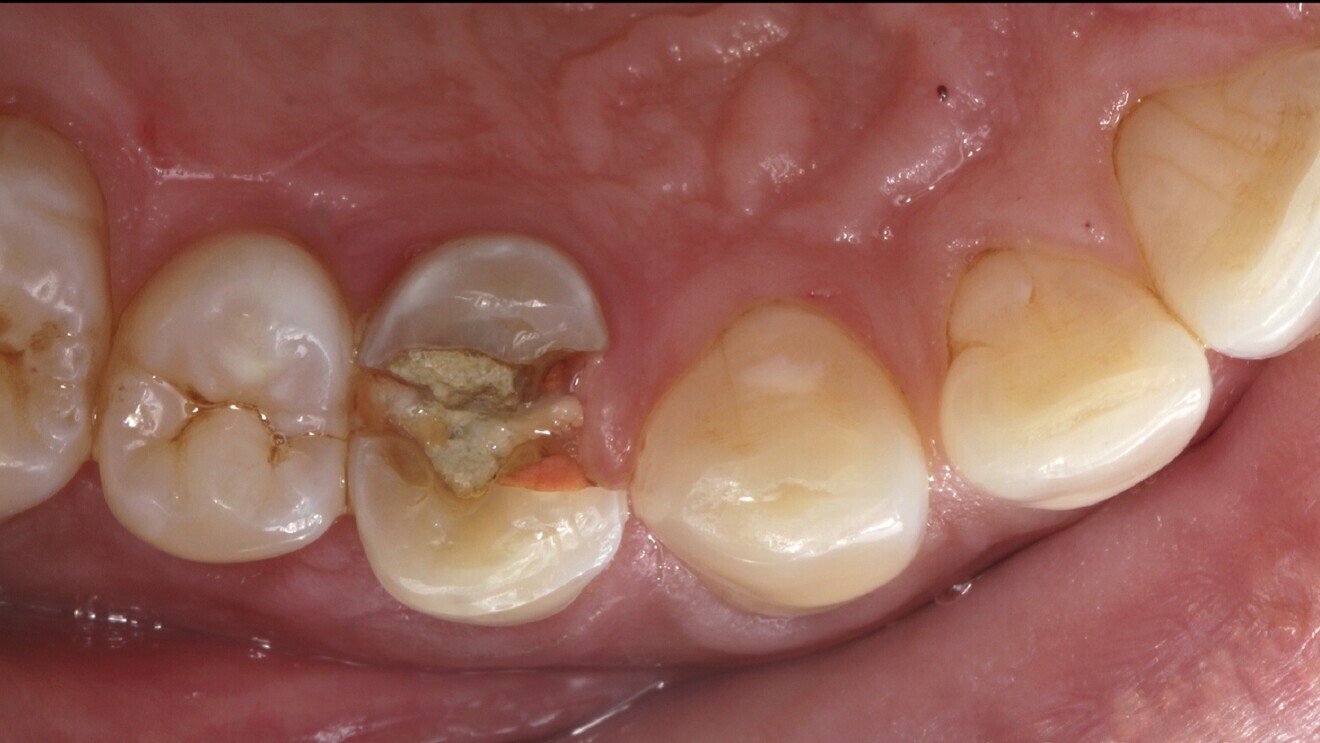
Single-unit and short-span restorations present clinicians with an excellent opportunity to utilise digital workflows. These high-accuracy appliances benefit from the precision, consistency and cost-effectiveness that digital systems offer. This article outlines a step-by-step workflow showcasing the advantages of digital techniques.
Phase 1: Implant planning and guided surgery
A well-placed implant is critical for a successful restoration because implant positioning affects the thickness of the restoration, location of the screw access hole, emergence profile and aesthetics. The digital workflow begins with meticulous implant planning using advanced software to design a surgical guide for precise implant placement (Fig. 1).
3D printing of surgical guides
3D-printing technology facilitates rapid, cost-effective production of surgical guides (Figs. 2 & 3). Key considerations when selecting a 3D-printing resin include:
- printer quality, as high accuracy ensures a proper fit;
- precision, as sleeves must align perfectly with the guide; and
- translucency, as it enhances surgical visibility and supports sterilisation.
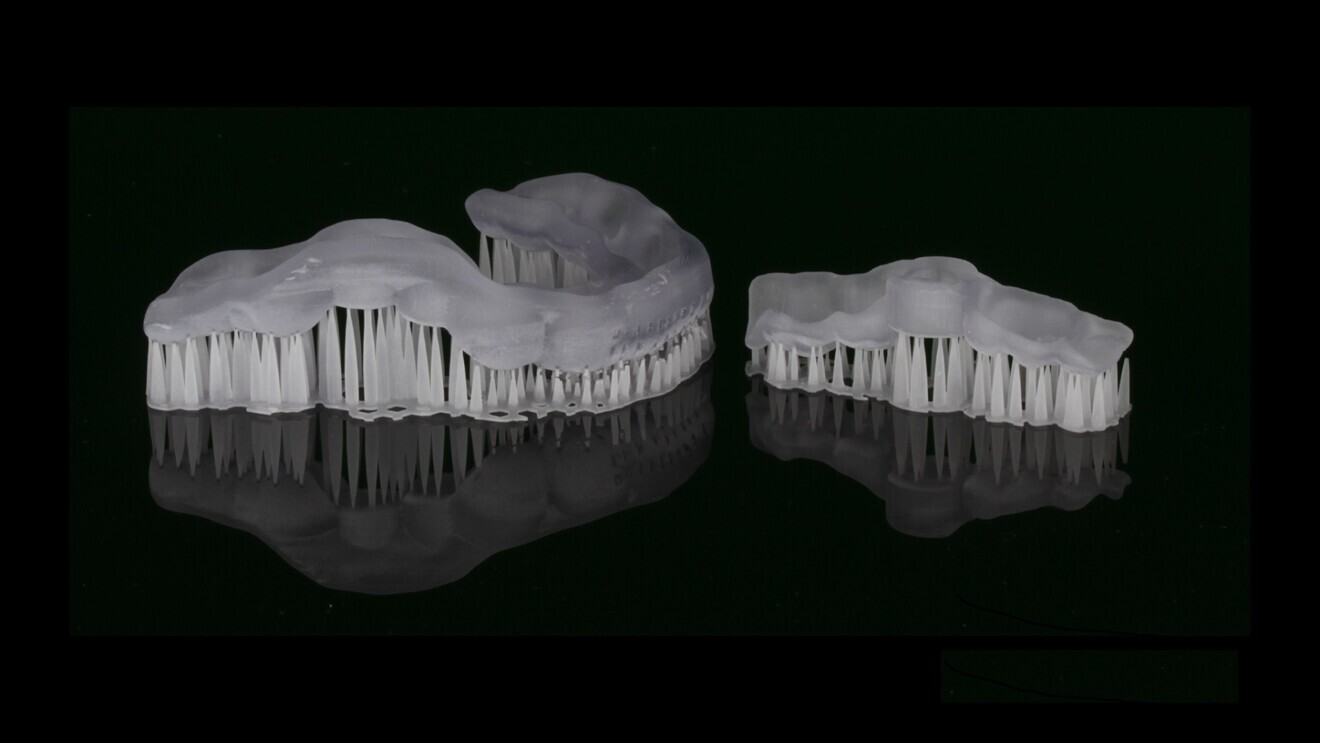
Fig. 2: 3D-printed surgical guides straight from the printer.
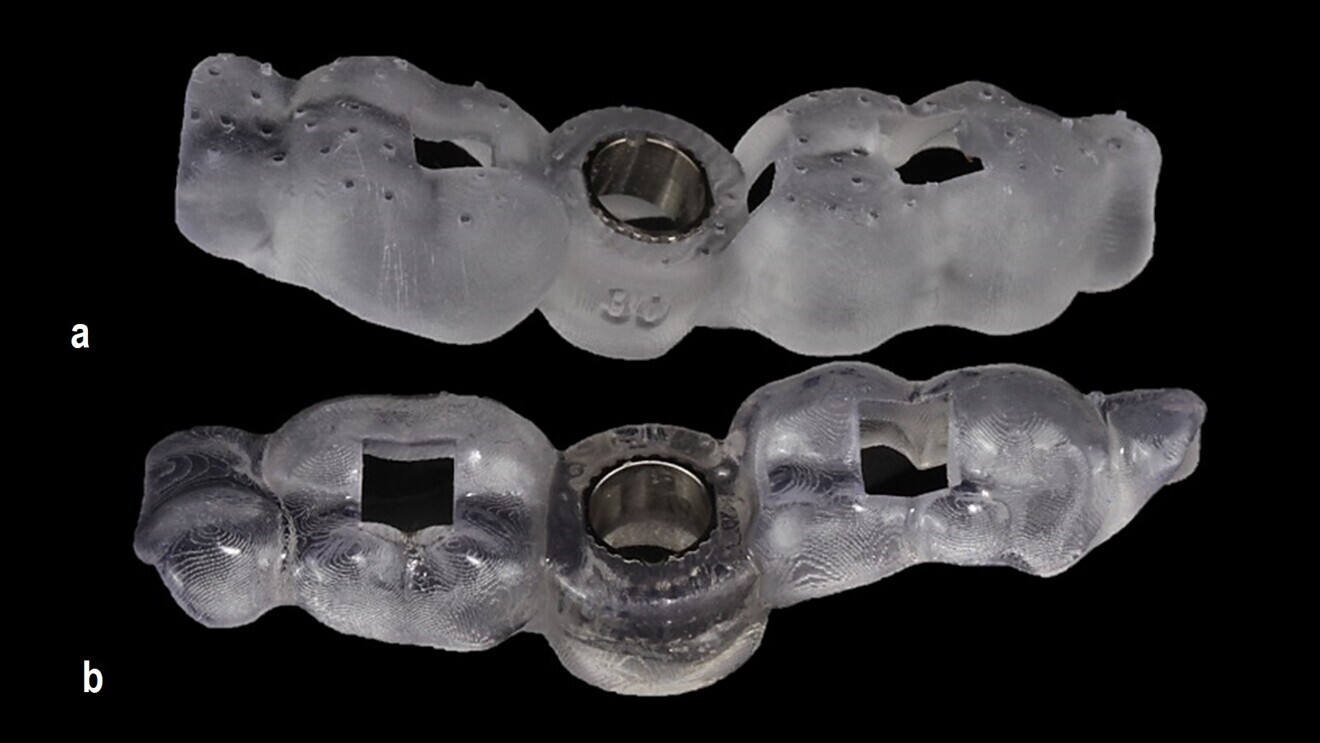
Figs. 3a & b: Surgical guide with a fitted sleeve. Straight from the printer (a). After post-processing (b).
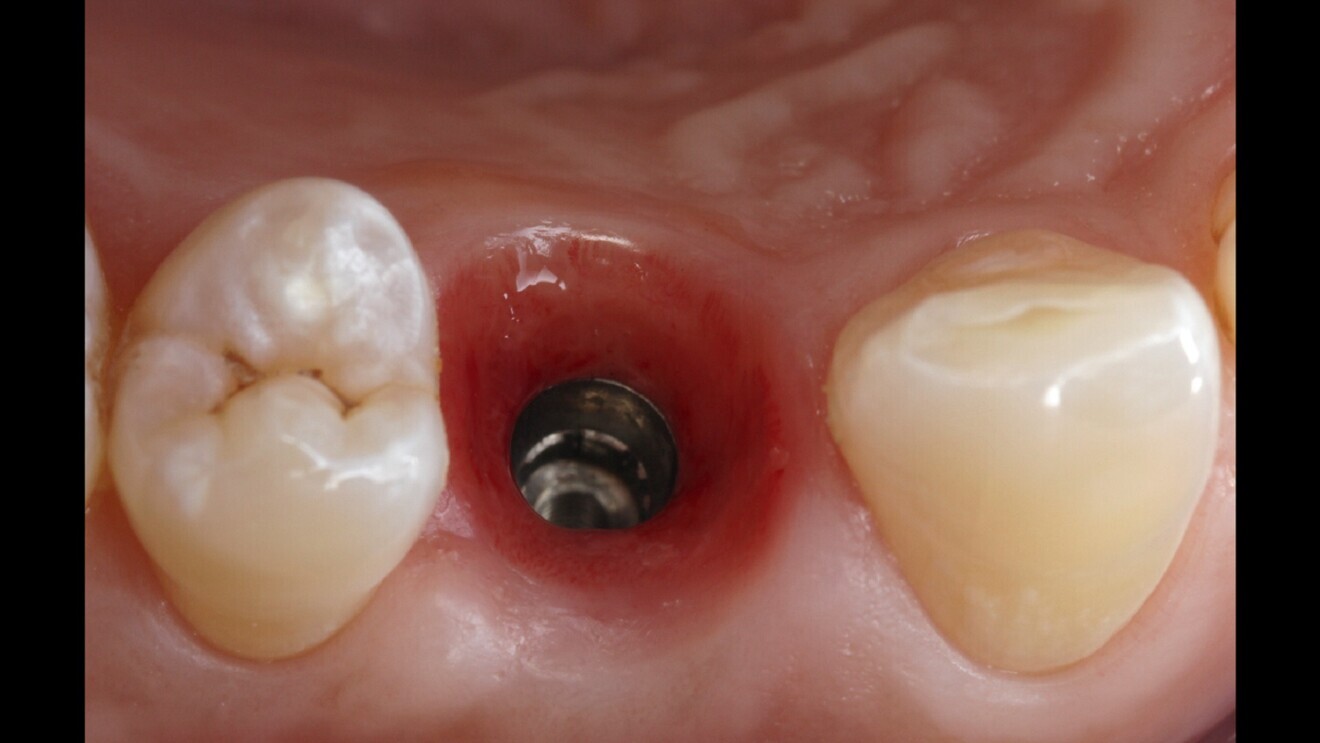
Fig. 4: Soft-tissue maturation three months after immediate provisional restoration in region #14.
Best practices
When nesting surgical guides in slicing software, avoid placing supports near the sleeve hole or intaglio surface. Manual support adjustments may be necessary, but this is not a common problem with supports generated in the artificial intelligence-based software Print Studio (Rapid Shape).
Phase 2: Soft-tissue shaping
After accurate implant placement, shaping the soft-tissue profile is essential for a natural emergence around the restoration. Digital workflows streamline this step using custom healing abutments and provisional restorations.
Custom healing abutments
Custom abutments support soft-tissue profiles and seal extraction sockets. They can be designed preoperatively, thereby eliminating the complexities of traditional workflows and reducing chair time significantly.
Provisional restorations
Provisional restorations are an alternative to custom healing abutments, providing additional flexibility to determine size, form and aesthetics. 3D printing enables precise, cost-effective production of these restorations, which can also be customised with stains and chairside adjustments.
Selecting a good 3D-printing resin for custom healing abutments and provisional restorations
The availability of multiple shades is arguably the most significant factor. High-strength resins will also allow short- to medium-term use. A typical custom healing abutment needs to last through the osseointegration period, whereas a provisional restoration may need to last for the entire phase of soft-tissue healing and maturation (Fig. 4). The ability to polish these resins to a high-quality tissue-compatible finish is crucial to patient satisfaction. Custom healing abutments and provisional restorations also need to fit implant componentry extremely accurately. This means that the quality of the surface finish and the accuracy of the printer cannot be under-estimated.
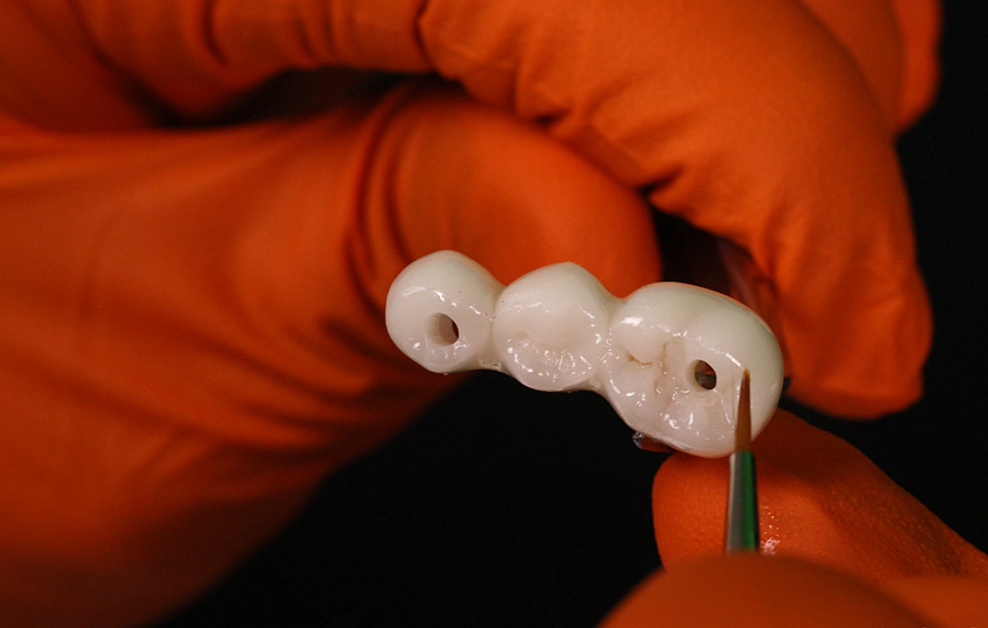
Fig. 5: Characterisation of 3D-printed implant restoration using a stain and glaze system.
Phase 3: Definitive restoration
Digital workflows ensure a seamless transition from provisional to definitive restorations by replicating the approved provisional and emergence profiles. Restorative interfaces include:
- titanium bases, integrating emergence profiles into the design; and
- split restorations, combining custom abutments and zirconia or titanium components for tissue-level restorations.
Benefits of 3D-printed restorations
3D-printed implant restorations can be produced with or without models. If an implant model is required, clinicians may use printed gingival mask resins and high-accuracy model resins that incorporate digital implant analogues. The key advantages of 3D printing of implant restorations include:
- material strength, promoting reduced force transfer to implants and a durability suitable for definitive restorations;
- precision, ensuring excellent marginal fit and adaptability for design changes;
- cost-efficiency, having lower equipment costs and enabling simultaneous production of multiple restorations; and
- aesthetics, achieving high-polish finishes and supporting compatibility with staining systems (Fig. 5).