

Blog

Clinical tip: How to properly remove aligners

Dr. Shalin Shah returns this week with another clinical tip, courtesy of CDOCS, that will benefit your dental patients who are undergoing orthodontic treatment. An unexpected error occurred: Unexpected token < in JSON at position 0 “Sometimes it can be quite challenging to remove those trays. Some of the tricks that can really help with this is going unilaterally and trying to lift up one side. We highly recommend to

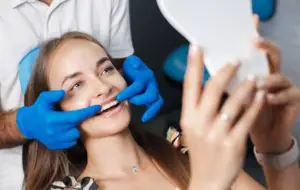
Discover the Art of Facial Aesthetics at Denpure

At Denpure in Uxbridge, your smile isn’t the only feature we cherish—your confidence and facial harmony matter just as much. That’s why our facial aesthetics services—including dermal fillers and anti-wrinkle injections (Botox)—are delivered by skilled dentists who understand both dental and facial anatomy, ensuring naturally beautiful outcomes. What Makes Denpure’s Approach Unique? Dentist-Performed Treatments with Deep Anatomical Understanding Our facial aesthetic treatments are overseen and carried out by experienced dentist-clinicians

Sensitive teeth? Nanobots may come to the rescue

Magnetic nanobots — tiny machines — may be the solution for sensitive teeth by plugging “holes” in tooth enamel to provide instant relief, according to a press release from the Indian Institute of Science. Researchers from the institute’s Center for Nano Science and Engineering (CeNSE) in Bangalore, India, and technology startup Theranautilus have engineered magnetic nanobots, called CalBots, that can travel deep into dentinal tubules, forming durable seals for worn

How Often Should You Visit the Dentist? A Guide to Routine Dental Care

Is twice a year really enough? This question pops up in conversations everywhere—from family dinners to workplace break rooms. Many people wonder if they’re visiting the dentist too often, not often enough, or just right. The confusion around dental visit frequency is understandable. Some friends swear by annual visits, while others book appointments every few months. Social media is full of conflicting advice, and even family members might have different

Good and Bad Dental Habits: What to Practice and What to Avoid

Your smile depends on more than just genetics. The small choices you make every day—how you brush, what you eat, and which habits you’ve picked up over the years—have a massive impact on your oral health. Some routines protect your teeth and gums, while others can cause lasting damage you might not notice until it’s too late. Understanding which dental habits help and which ones harm is the first step

Thyroid hormone levels may predict gum disease

Thyroid hormone (TH) levels may be useful biomarkers for identifying an individual’s gum disease risk, potentially aiding early treatment and personalized care. This study was recently published in the International Dental Journal. Furthermore, thyroid-stimulating hormone (TSH) was identified as an important factor in evaluating both the risk and severity of periodontitis, the authors wrote. “Our findings demonstrate that thyroid function parameters, particularly TSH levels, may serve as valuable biomarkers for

Early caries? Maybe it has to do with how kids are fed

Preschoolers may face an increased risk of tooth decay from certain factors, including extended breastfeeding, which was linked to more than double the odds of having early childhood caries (ECC), according to a study published in BMC Pediatrics. Also, parents’ irregular toothbrushing habits and maternal smoking may affect early caries development, the authors wrote. “Irregular parental brushing, extended breastfeeding, and parental smoking habits were found to be associated with increased

Cosmetic vs. Restorative Dentistry: Which One Is Right for You?

A healthy, beautiful smile can boost your confidence and improve your overall quality of life. But when dental issues arise, you might find yourself wondering about the different treatment options available. Many patients ask about the difference between cosmetic dentistry and restorative dentistry—and for good reason. Understanding these two branches of dental care can help you make informed decisions about your oral health. While both play important roles in maintaining

The pitfalls of compounded pharmaceuticals in dentistry

Editor’s note: The following was submitted as a letter to the editor by Dr. Richard Nagelberg. Dear Editor, I am writing to express my concerns regarding the increasing use of non-U.S. Food and Drug Administration (FDA)-approved minocycline gel as an adjunctive treatment for periodontitis, being ordered from compounding pharmacies. While innovation in dental therapeutics is always welcome, it is imperative that such advancements align with rigorous safety and regulatory standards

Amino acid may fight caries better than fluoride

Depending on its concentration, amino acid arginine toothpaste may reduce active caries in children better than dentifrices containing sodium fluoride, according to the International Association for Dental, Oral, and Craniofacial Research (IADR). A randomized clinical trial of 6,000 children ages 10 to 14 with two or more active caries lesions was conducted by researchers at Sichuan University in China between April 2019 and March 2022 to determine whether dentifrices with

Ormco launches new aligner workflow

Ormco Corporation has launched Spark StageRx, a visual workflow tool for aligner treatment planning. The platform is designed to improve communication between doctors and treatment designers while offering standardized and customizable protocols. Its workspace aims to improve efficiency, accuracy, and ease of use.

Mindfulness may improve TMD-related pain

Mindfulness practices may help address the cognitive, behavioral, and emotional aspects of managing pain-related temporomandibular disorders (TMD), according to a study recently published in the Journal of Oral Rehabilitation. Furthermore, mindfulness strategies for chronic TMD pain led to fewer pain points and higher pain thresholds, the authors wrote. “Significant associations were observed between mindfulness-based intervention and various measures related to pain and the cognitive-behavioural-emotional axis of participants with chronic pain

WhatsApp