


For decades, dentistry textbooks have repeated a compelling story: that ancient Egyptians and Etruscans pioneered orthodontics, using gold wires and catgut to straighten teeth. The idea painted early civilisations as unexpectedly modern in their pursuit of perfect smiles. New historical scrutiny, however, shows the story is largely fiction.
Archaeologists and dental historians now agree that the evidence long cited to support “ancient braces” has been misunderstood. The gold wires and bands found in ancient burials were not orthodontic devices designed to move teeth. Instead, they served a very different purpose.
One of the most frequently referenced examples is the El-Quatta dental bridge from Egypt, dated to around 2500 BC. Gold wire was found alongside human remains, once assumed to be part of a tooth-straightening system. Closer examination revealed otherwise. The wires were used to stabilise loose teeth or secure replacement teeth, functioning as prostheses rather than braces.
Finds from Etruscan tombs tell a similar story. Gold bands discovered around teeth were likely dental splints, intended to support teeth weakened by gum disease or injury. There is no evidence they were used to reposition teeth into new alignments.
Practical considerations further undermine the orthodontics myth. Analysis of Etruscan dental appliances shows the gold was about 97% pure. Pure gold is extremely soft and bends easily under pressure. Effective braces require firm, spring-like metals capable of applying steady force over long periods. Gold of this purity would deform or fail long before it could straighten a tooth.
Who wore these devices also raises questions. Many gold bands were found in the remains of adult women, suggesting they may have doubled as status symbols or decorative items. Crucially, none were discovered in children or adolescents—the age group most likely to receive orthodontic treatment if such practices had existed.
Perhaps the most important reason ancient braces were unnecessary lies in human biology. Malocclusion, or crowded and misaligned teeth, was rare in ancient populations. Studies of Stone Age skulls show jaws that were larger and stronger than those of modern humans, with ample space for teeth.
The difference is diet. Early humans consumed tough, fibrous foods that required extensive chewing, stimulating jaw growth. Modern diets, dominated by soft and processed foods, provide far less mechanical challenge. As a result, jaws have become smaller over time while tooth size has remained relatively unchanged, leading to widespread crowding today.
Because crooked teeth were uncommon in antiquity, there was little incentive to develop sophisticated methods to correct them. Still, simple interventions did exist. In the first century AD, Roman medical writer Aulus Cornelius Celsus described gently pushing a child’s crooked tooth into position with a finger each day. While basic, the method relied on the same principle used in modern orthodontics: consistent, gentle pressure.
After the Roman era, progress stalled for centuries. By the 18th century, interest in tooth alignment returned, often through painful and crude techniques. One method involved inserting small wooden wedges between teeth. As the wood absorbed saliva, it expanded, forcing teeth apart.
Scientific orthodontics emerged in 1728 with French dentist Pierre Fauchard, often called the father of modern dentistry. In his landmark work The Surgeon Dentist, Fauchard described malocclusion treatment in detail and introduced the “bandeau,” a curved metal strip designed to widen the dental arch using controlled force.
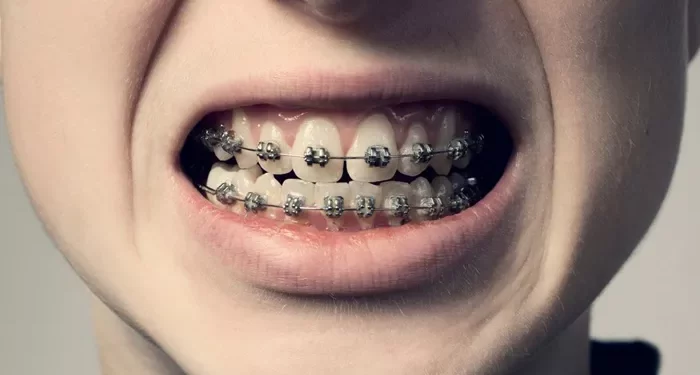
From there, orthodontics evolved rapidly. The 19th and 20th centuries brought metal brackets, archwires, elastics, and eventually stainless steel. Later innovations included ceramic braces, lingual systems, and clear aligners. Today, digital scans and 3D printing allow for precise, personalised treatment.
The image of ancient people wearing gold braces may be appealing, but it does not reflect historical reality. While ancient societies understood dental problems and attempted simple solutions, true orthodontics is a product of modern science—not antiquity.