


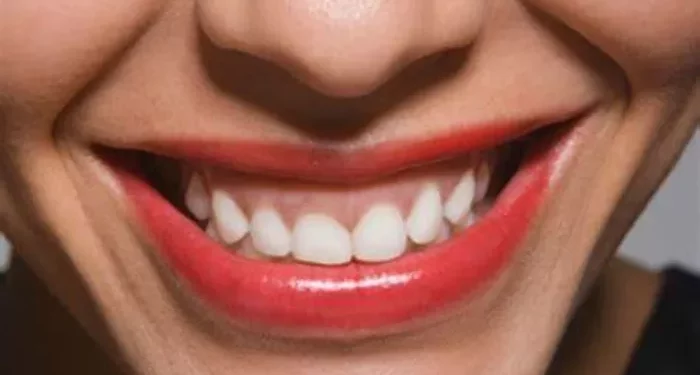
Every time I walk into a dental office, I am hopeful, but I am prepared—not for white teeth, but for another sky-high bill.
“Your grooves are too deep, and your teeth are prone to chipping,” the dentist’s voice always reads, “It’s genetic, just like some people are more susceptible to heart disease.”
I have done everything I can to take care of my teeth: using a Waterpik, an electric toothbrush, staying away from sugar, and flossing every night. However, the reality is that in the past four years, almost all of my teeth have been crowned—17 in total, at a cost of more than $20,000.
My dental insurance has a limited limit, so I max it out every year and wait for the next renewal.
Now, the remaining incisors and canines are still exposed, and I can only pray that these crowns don’t fall off. The clinic wall is hung with smiley balloons, creating a birthday party atmosphere, but a poster next to it coldly reminds me: People with periodontal disease have a 25% higher risk of cardiovascular disease; those with poor oral hygiene have a 4.5 times higher risk of stroke.
I was in the waiting area, flipping through a brochure about a dental credit card—a partnership with VISA that offered an annual interest rate of 24 percent. I was tempted by the idea of “flexible financing.” But I remembered the nightmare of student loans: interest accrued while I studied, slept, and attended classes. After that, I vowed not to let debt consume my life.
In fact, I was able to pay off my student loans by being a “sugar baby”—a gentle-sounding but cruel title. I traded my body for cash in cheap hotel rooms, seeing the same “client”—John—over and over again. At the time, I was working at a strip club and making much more money than I was at Whole Foods.
I wasn’t driven by depravity, but by desperation. Working full-time, I couldn’t afford to live. I decided to use the only resource I had left: an attractive, 24-year-old body. I wanted to finish school, pay off my loans, and treat my dental problems.
I first met John in the corner of a strip club, under the dim electric tea light that witnessed our first interaction. I made him laugh, and he started asking me to meet privately.
I struggled for a long time before I agreed to his date condition of “$500 plus a meal”. But six weeks later, when he asked me what I wanted for Christmas while putting on my socks, I blurted out: “I want to go to the dentist.”
It was my first time to see a dentist in six years. After I turned 18, I no longer had my family’s insurance. John agreed, and I almost cried with joy.
I remember that after the first appointment, I had to text him the amount of the bill – $7,000, not just for the filling, but also for two crowns. He thought it was just a teeth cleaning and an X-ray.
“Ouch! Your teeth must have been hurting for a long time!” he replied to me.
At that moment, I felt for the first time that I was understood, cared for, and even saved. I lay in the treatment chair, watching the light reflect on the fake leather chair, and the dental hygienist praised the neatness of my full mouth of crowns – this was a “masterpiece” funded by John.
The old dentist looked at my tooth, which had been filled with amalgam and jam fillings many times, and said, “I’ve never seen such a combination.” The tooth was cracked, and she shook her head, “It has to be this way.”
I wanted to seal everything with John forever. Quietly pay off the debt, treat the tooth, and live a “normal” life. But without his financial support, I might not have completed my studies.
With the income from “Sugar Baby”, I paid off my $32,000 loan, successfully completed my undergraduate studies, applied for a full scholarship to study for graduate school, and found a career I love. Frankly, if it weren’t for that experience, I don’t know where I would be now.
The dentist couldn’t see the teeth under my crowns, and could only use X-rays to determine whether there was inflammation or necrosis. I often fantasized about being interviewed by Howard Stern on the show one day. When he asked questions like “Does sex work really make you feel empowered?”, I already had the answer.
“I don’t think sex work empowers me. Trading my body for money was never my dream. But money empowers me, and it has changed my life.”
When I say this, I know that the world finally understands my story—or at least stops judging.
During a recent visit to the dentist, she said, “No new cavities.” I was relieved, but then she added, “But your gums are very receding and you’re losing bone. You have early-onset periodontal disease.”
I try to stay calm. The accountant quotes the amount—$811 after insurance. I’ve saved up in advance, but the bill still hurts. Over the past decade, I’ve spent $42,000 on dentists, more than I spent on college.
I think of the line from Cardi B: “I got my teeth fixed, and I hope you know it’s not cheap.” There’s a kind of helpless pride in that line.
I swipe my card to pay, telling myself that the expense is worth it. In my next therapy session, I’ll cry about my childhood poverty and anxiety and my adult gamble. Each step I took led me away from the abyss of poverty.
I would tell my therapist that the fear was still there – that if I fell, I might never get up again.
But she would bring me back to the present and remind me to be grateful for who I am now. At least I don’t have cavities now, I can pay my own bills, and I’m out of trouble.
I would whisper about John – at least he gave me a ladder to hope, and I stepped on it bravely.