


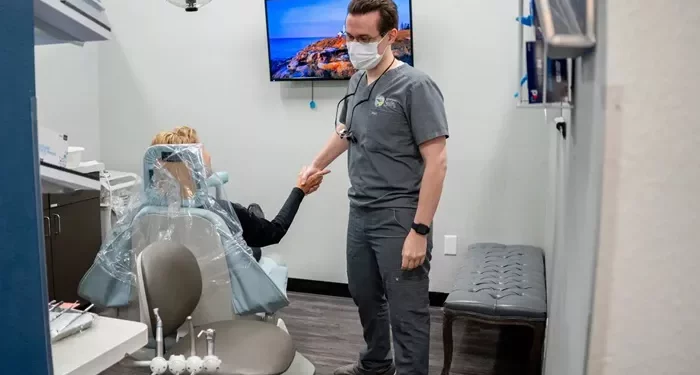
BRADENTON, Fla. — When a dentist from Bradenton travels to rural communities such as Arcadia, Plant City and Dover, the contrast in oral health needs is stark. As a volunteer with Mission Smiles Mobile, the dentist regularly treats patients whose cavities have advanced, infections have spread and pain has become part of everyday life.
After more than a decade in practice, the dentist says most of these problems are preventable. But in many parts of Florida, especially rural areas, limited access to routine dental care allows minor issues to worsen into serious conditions.
Florida faces a shortage of dentists in underserved communities, forcing many residents to delay cleanings, exams and early treatment. As a result, manageable dental disease often escalates into infections and emergencies that are harder and more expensive to treat.
That gap in access is increasingly showing up in hospital emergency departments. In 2024, more than 146,000 Floridians sought care in emergency rooms for dental conditions that could have been addressed earlier in a dental office. Those visits generated nearly $1 billion in costs for families and the state’s health care system. Children made up a significant portion of those cases, according to recent analyses.
Emergency rooms can provide temporary relief for dental pain or infection, but they are not equipped to deliver preventive or restorative dental care. Patients often leave with antibiotics or pain medication, only to return later when the underlying problem remains untreated.
Advocates say a proposal in the Florida Legislature offers a practical way to address the problem. House Bill 363 would authorize dental therapists to practice in the state. Dental therapists are licensed oral health professionals who work under the supervision of dentists and provide routine services such as exams, fillings and uncomplicated extractions.
Supporters within the dental profession argue that dental therapy would expand access without compromising quality. By delegating appropriate routine procedures, dentists could see more patients while focusing on complex cases that require advanced training.
Dental therapists, they emphasize, are not intended to replace dentists. Instead, they function as part of a team-based model that allows practices and clinics to operate more efficiently, particularly in areas with few providers.
The model is well established elsewhere. Dental therapists have practiced for decades in other countries and in several U.S. states, including Minnesota and Alaska. Studies from those states show improved access to care, shorter wait times and fewer emergency dental visits, especially in rural communities. Quality and safety standards are maintained through defined scopes of practice and required dentist supervision.
Proponents also point to cost savings. Dental therapists can be trained more quickly than dentists, allowing clinics to expand capacity faster. Earlier access to care helps prevent small problems from becoming complex procedures and reduces reliance on emergency departments for dental issues.
Other strategies, such as loan forgiveness programs or recruitment incentives for dentists, can help over time. But supporters of House Bill 363 say those measures alone are not enough to meet current needs.
They argue the state already operates under a two-tiered system: residents with easy access to dental care and those without. Expanding the workforce through dental therapy, they say, would help close that gap rather than widen it.
For dentists working in underserved areas, the goal is simple: provide care closer to where patients live. That means children receiving sealants and fillings before decay turns into infection, seniors avoiding long trips for basic services, and fewer families ending up in emergency rooms for preventable dental problems.
House Bill 363 does not require dentists to change how they practice. Instead, supporters say, it gives communities and providers an additional tool to address a growing dental access crisis across Florida.