


By a reporter from Goyang City, Gyeonggi Province — 39-year-old Kang recently accompanied his 70-year-old father to a dentist. The doctor diagnosed his father’s gums as severely deteriorating and required two teeth extraction.
Kang recalled that a year ago, his father still had his teeth cleaned every four months; however, since moving into a nursing home due to illness, his oral care has been noticeably inadequate.
Kang said, “Relying solely on the help of a caregiver is clearly not enough,” and was shocked when the doctor told him that dental problems could lead to serious complications such as pneumonia.
As South Korea enters a super-aging society, the number of cases of periodontal disease among the elderly has increased significantly. An analysis of data from the Health Insurance Review and Assessment Service over the past five years shows that the number of patients aged 65 and over with periodontal disease in 2024 will increase by 48.4% compared to 2020, significantly higher than the 21.9% increase in the population aged 65 and over during the same period.
The proportion of all periodontal disease cases among patients aged 65 and older also increased from 18.4% in 2020 to 22.9% in 2024, exceeding the increase in the proportion of the elderly population from 15.7% to 19.2% during the same period.
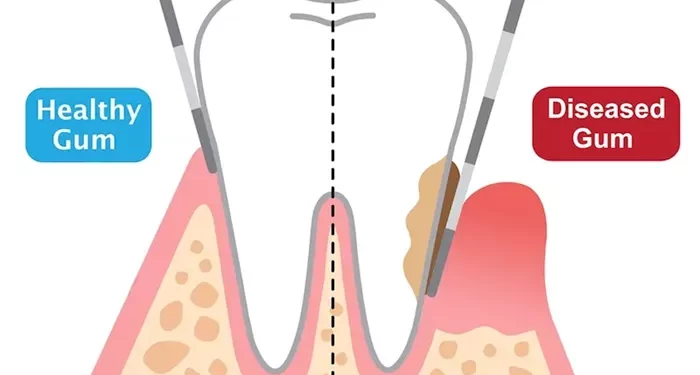
Ahn Hyung-joon, director of Yonsei University Dental Hospital, noted that while tooth decay tends to stabilize after age 35, periodontal disease becomes more common with age. He said, “Periodontal disease is more than just swollen gums. Severe inflammation can damage periodontal tissues and may require surgical treatment.”
Experts attribute the recent increase in incidence to modern dietary habits and metabolic changes, particularly the increase in the number of people with diabetes.
Professor Kim Young-taek of the Department of Periodontology at the Korea Health Insurance Corporation’s Ilsan Hospital emphasized that periodontal disease is a chronic bacterial disease prone to recurrence; diabetics are more susceptible to recurrent inflammation due to their weakened immune system.
Since the inclusion of teeth cleanings in the National Health Insurance in 2013, people have become more willing to seek medical attention, and the detection rate of periodontal disease has also increased accordingly.
Professor Xue Liangzhao of Seoul National University Dental Hospital stated that people used to tolerate minor gum swelling or pain, but that attitude has changed, with more people now believing such symptoms warrant medical attention.
Even more worryingly, periodontal disease may not be limited to the oral cavity itself. Research suggests a link between periodontal disease and age-related diseases such as cancer and dementia.
A study of approximately 2,000 elderly people in Kashiwa City, Chiba Prefecture, by Professor Katsuya Iijima of the University of Tokyo found that those with decreased oral function had twice the risk of frailty, muscle loss, and death compared to those with normal oral function.
A 2022 study by Yonsei Cancer Hospital also showed that periodontal disease may increase the risk of cancer by approximately 13 percentage points.
Weakened chewing function can also lead to swallowing and digestive problems, which in turn can contribute to malnutrition, muscle atrophy, and a weakened immune system, ultimately posing a life-threatening risk.
Several domestic scholars have called for “oral frailty” to be recognized as a health issue requiring national attention.
Zheng Yingzhu, dean of the Yonsei University College of Dentistry, warned that oral fragility increases the risk of aspiration pneumonia, saying, “Food entering the airway can be life-threatening.”
Experts suggest that the key to preventing oral fragility lies in maintaining good oral hygiene and regular cleanings. Xue Liangzhao of Seoul National University specifically advises brushing teeth thoroughly after eating foods that stick easily (such as bread and chocolate), and visiting the dentist for regular checkups and cleanings to reduce periodontal disease and its associated systemic risks.