



Waking up with a dry, sticky feeling in your mouth is not only an unpleasant experience, but it can lead to dental problems over time. Persistent dry mouth at night may be a symptom of an underlying health condition, such as sleep apnea.
Fortunately, dry mouth (xerostomia) is treatable. This article explains common causes of dry mouth at night, how to treat dry mouth with home remedies, and when to see a doctor.
What Causes Dry Mouth at Night?
Medications, aging, dehydration, and mouth breathing are the most common causes of dry mouth at night:
- Increasing age — Salivary glands produce less saliva over time
- Dehydration — Insufficient water intake can decrease saliva production
- Autoimmune diseases — Sjogren’s disease is linked to dry mouth, dry eyes, and joint pain
- Certain medications — Antidepressants, antihistamines, and hormone therapy can all cause dry mouth as a side effect
- Cancer treatment — Some cancer treatments, such as radiation therapy, can damage the salivary glands and reduce saliva production
- Lifestyle habits — Alcohol, tobacco, recreational drugs, and even caffeine, can all cause dry mouth
- Mouth breathing — Taking breaths through your mouth instead of your nose can dry it out
- Sleep apnea — Dry mouth is a common symptom of sleep apnea alongside loud snoring and daytime sleepiness
What Is Dry Mouth?
Dry mouth is when there’s insufficient saliva to coat the oral tissues. This leaves people susceptible to bad breath, plaque build-up, and mouth sores.
An adequate amount of saliva is beneficial for oral health and overall well-being. Saliva contains antimicrobial properties, assists with eating and speaking, and protects the soft tissues.
The most commonly reported feeling of dry mouth is a dry or sore throat accompanied by a bad taste. It’s uncomfortable but typically can be resolved with a glass of water, brushing the teeth and tongue, or using a non-alcoholic mouth rinse.
What are Dry Mouth Symptoms?
The main symptom of dry mouth is a dry, sticky sensation in the mouth. It occurs when there’s not enough saliva to keep the mouth wet overnight.
Other common dry mouth symptoms include:
- Dry, uncomfortable throat
- Bad breath (halitosis)
- Mouth sores
- Fungal infections
- Dried or chapped lips
- Grooved tongue
- Stringy and dried saliva
- Taste changes
- Difficulty speaking or eating
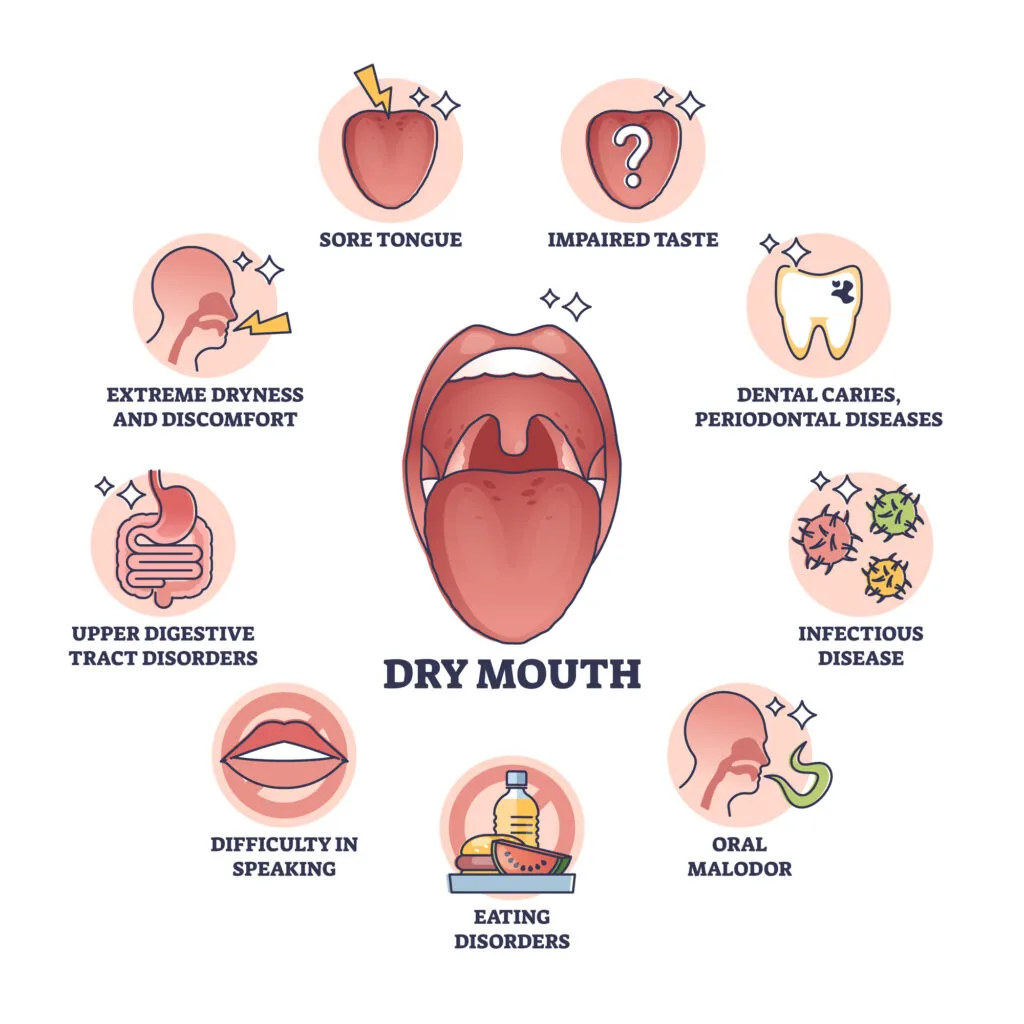
What Are the Oral Health Effects of Dry Mouth at Night?
Saliva plays an important role in the body. It stimulates the digestive process and neutralizes harmful bacteria in the mouth. Saliva also helps teeth to remineralize, which prevents tooth decay.
The American Dental Association reports that saliva is a primary, natural defense against harmful pathogens. Without it, our bodies are more susceptible to infection and oral health problems.
Common oral health issues that can arise with dry mouth include:
- Tooth decay
- Bad breath
- Fungal infections like thrush
- Plaque buildup, leading to gum disease
- Reduced success of dental prosthetics like implants, crowns, and bridges
- Dietary and digestive problems, leading to overall health problems
- Burning mouth syndrome
Treatment Options for Dry Mouth at Night
Simple home remedies like staying hydrated and chewing sugarless gum can resolve most cases of dry mouth, while persistent cases may need professional treatment:
Home Remedies
Many simple at-home treatments can help resolve dry mouth. These include:
- Drinking plenty of water — Keep a glass or tumbler of water next to you so you’re reminded to drink water
- Chewing sugarless gum — Chewing promotes saliva production; look for brands that contain xylitol, as it’s beneficial for oral health
- Avoiding certain medications — Decongestants and antihistamines can cause dry mouth as a side effect; consult your doctor before doing this
- Humidifying the air — Humidifiers can keep air moist and prevent surroundings from being too dry; also beneficial for sinuses and nasal passages
Professional Treatments
You should always speak with a dental professional before using any medications or over-the-counter products to treat your dry mouth. Some dentists recommend using an affordable, over-the-counter toothpaste or mouthwash made by Biotene.
Biotene relieves those with dry mouth and helps moisturize your oral cavity. Products come in all forms, including a paste, lozenge, mouthwash, and spray.
Other treatments you can discuss with your dentist include:
- Fluoride — Your dentist may prescribe fluoride trays to help prevent the tooth demineralization and decay caused by dry mouth
- Medications — Saliva stimulants like Evoxac are FDA-approved to treat dry mouth
When to See a Doctor for Dry Mouth at Night
Dry mouth can be more than just an uncomfortable symptom. You may have an underlying cause or medical condition that can harm your overall health.
If you have chronic dry mouth, talk with your general dentist. They may refer you to another doctor or recommend testing for an underlying health condition.
3 Tips for Preventing Dry Mouth at Night
You can’t always prevent dry mouth, but you can do your best to help avoid the condition if possible.
1. Limit Alcohol and Tobacco Use
Try to avoid products like tobacco and alcohol, which can be drying. This even includes mouth rinses that contain alcohol. Instead, opt for an alcohol-free mouth rinse that contains fluoride to help protect your teeth from decay.
2. Visit Your Dentist Regularly
Attend routine dental visits and maintain good oral care habits like brushing and flossing regularly. Use an ADA-approved fluoride toothpaste to prevent tooth decay. An ADA seal of approval means that the dental product is reliable, safe, and high-quality.
3. Address Mouth Breathing and Other Breathing Problems
If you are a mouth breather, you may be a good candidate for myofunctional therapy. This therapy trains you to breathe through your nose and re-trains your tongue to sit in the correct position so you can sleep and breathe more comfortably.
Your dentist may also make you a night-time appliance to help with breathing and limit the amount of dry mouth you experience.
Summary
Dry mouth at night is a common complaint that most people experience from time to time. However, chronic dry mouth can indicate an underlying health condition that needs treatment.
Saliva is necessary for keeping the mouth moist, aiding digestion, and protecting the teeth and oral tissues. Left untreated, persistent dry mouth can lead to problems like cavities and gum disease.
There are many simple home treatments for dry mouth, including staying hydrated and chewing gum. If dry mouth worsens or doesn’t improve with home care, see a doctor.