


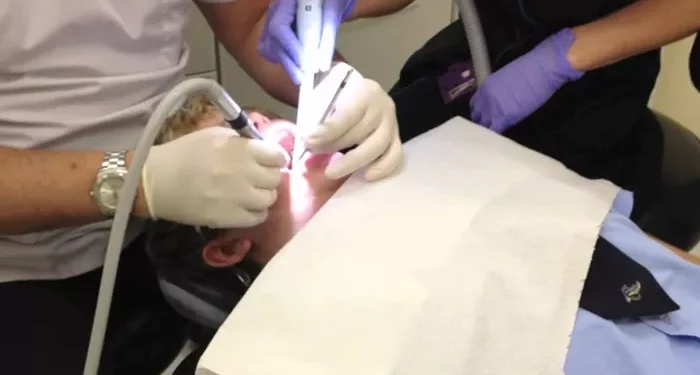
Dr. Hannah Flynn, 48, of Ramat Shalom, England, is a divorced mother of two grown children (ages 21 and 20).
Her story is a journey across borders and faiths—from a secular family in London to ultimately finding a sense of belonging in Israel.
Born in London to secular Christian parents, Hannah never attended church. At age 7, influenced by living with her grandmother, she began to believe in God.
After moving to the English Midlands at 14, she enrolled in the University of Leeds to study dentistry, where her interactions with classmates of diverse religious backgrounds sparked her curiosity and thirst for knowledge.
After graduating, she met her ex-husband, an Irish Catholic atheist, in York. They moved to Ireland, opened a dental practice, and had two children.
At 36, they separated. Five years later, with her children grown, she returned to London to pursue a master’s degree, where she met Israeli friends and first encountered Judaism.
Hannah describes this faith as giving her the sense of connection with God she had longed for—a direct dialogue with God. She began studying Judaism and mustered the courage to contact a local synagogue and meet with a rabbi. Four years ago, she eventually sold her clinic and moved back to London, officially beginning her journey to conversion.
In March 2023, she set foot on Israeli soil for the first time and was overcome with emotion upon reaching the Western Wall. After returning to London, she seriously considered immigrating.
After the October 7th attacks, she arrived in Israel through the volunteer organization Sar-El, packing food for soldiers and strengthening her resolve to immigrate amidst the war.
With the help of the Ministry of Immigration and Integration, Hannah overcame the arduous paperwork and officially settled in Israel last September. She enrolled in Ulpan to study Hebrew, obtained a local dental license, and began practicing.
While some have questioned her decision to move from the safety of London to the war-torn Israel, she says she has never considered turning back. The community connections and warmth of humanity here are unlike anything she’s experienced in the UK.
Now, she’s accustomed to making friends in the air-raid shelters and on the beach, and is often invited to Shabbat dinners. Despite missing her children overseas, she said confidently, “I have found the place where I truly belong. Immigration is one of the best decisions I have made in my life.”